Cuba — Second After North Korea: How Havana Supplies 'Builders' to the Front
# U.S. State Department Officially Confirms: Cuban Regime Knew and Facilitated Dispatch of Up to 5,000 Citizens to Fight for Russia The U.S. State Department has officially acknowledged that the Cuban government was aware of and actively facilitated the deployment of up to 5,000 of its citizens to fight for Russia. According to the department's findings, the recruitment scheme operated as follows: Cuban citizens were promised salaries 100 times higher than those available in Cuba. Upon recruitment, their passports were confiscated and they received two weeks of "training" before being sent into combat operations.

By Tetiana Suchkova-Ladik
April 15, 2026 · 3 min read
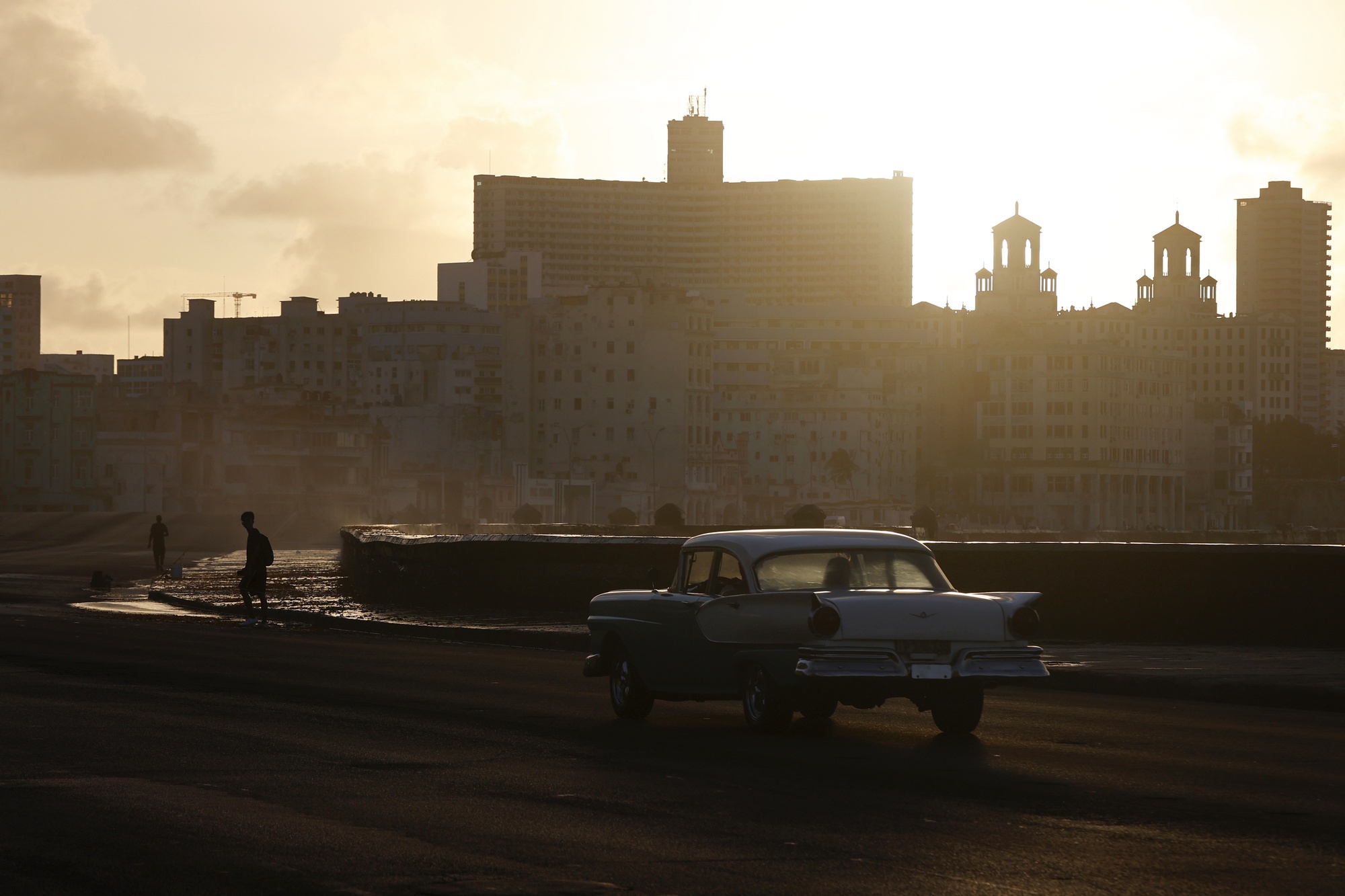
The Trump administration has sent Congress a five-page declassified State Department report in which Cuba is officially named for the first time as the second-largest — after North Korea — source of foreign fighters for the Russian army. According to U.S. estimates, up to 5,000 Cubans are on the front lines, and the Miguel Díaz-Canel regime knew about it, at minimum.
The recruitment scheme: "construction" at $2,000 a month
Recruitment began in the summer of 2023. Russian Vladimir Shkunov from the "Russia-Cuba Friendship Society" ran a Facebook group "Russia for Cubans" and offered former Cuban military personnel construction work at a salary of up to $2,000 — approximately 100 average Cuban monthly wages. A recruiter network in Ryazan, according to investigative data, attracted over 3,000 foreigners, predominantly Cubans.
The trap mechanism was uniform: after arriving in Moscow, recruits surrendered their passports, signed military contracts in a language they did not understand, and after two weeks of basic training found themselves in assault units on the front lines. Payments were delayed or not made at all.
"Public records do not prove that Havana officially sent all Cuban fighters. However, there are substantial indications that the regime knowingly tolerated, facilitated, or selectively facilitated this flow."
— from the U.S. State Department report
What is known about the scale
- Ukrainian intelligence GUR confirmed at least 1,076 Cubans in the ranks of the Russian army.
- The "I Want to Live" project published a list of 1,028 names of the recruited in May 2025.
- Ukraine's UN Ambassador Andriy Melnyk called Cubans the largest group of foreign mercenaries in the Russian army.
- Ukrainian intelligence estimates the total number of those recruited since 2022 at 20,000 people.
- The deaths of at least 39 Cubans have been confirmed; four are in captivity in Ukraine.
What Havana responded — and why Washington was not convinced
The Cuban government opened nine criminal cases against 40 defendants and claimed that human trafficking is prohibited by law. But the State Department rejected these arguments outright: "The regime's opaque judicial system makes these claims unverifiable."
On October 8, Russia and Cuba signed a military cooperation agreement. Under it, Moscow will supply the energy-deficit island with 1.64 million tons of oil annually. A week later — on October 11 — Cuba's Foreign Ministry called all accusations "false."
Ukraine responded concretely: it closed its embassy in Havana and officially accused the Cuban regime of complicity in the aggression. Foreign Minister Andriy Sybiga stated that Cuba is also helping Moscow circumvent Western sanctions.
Context for Trump: pressure coincides with interests
The report appeared at a time when the Trump administration is already intensifying pressure on Havana — up to a virtual blockade of oil supplies and, according to The New York Times, negotiations about removing Díaz-Canel from power. Recognition of Cuban complicity gives Washington additional legal grounds for sanctions without requiring direct evidence of an official order.
American lawmakers Mario Díaz-Balart, María Elvira Salazar, and Carlos Giménez have already called on the EU — Cuba's main trading partner, which has so far not imposed sanctions against Havana — to reconsider this position.
If Brussels indeed begins pressuring Havana, the "oil in exchange for manpower" scheme between Moscow and Cuba would lose its economic foundation — but only if the EU places this issue above its own trade interests.



