Kupiansk under Ukrainian Armed Forces control: the enemy's improvised fortress and the failure of Russian propaganda
Russia has announced three times that it had "taken" Kupiansk — in reality, several dozen occupiers remain in the city, holed up in two buildings. We explain why this is more than an informational victory for Ukraine.

By Tetiana Suchkova-Ladik
March 2, 2026 · 2 min read
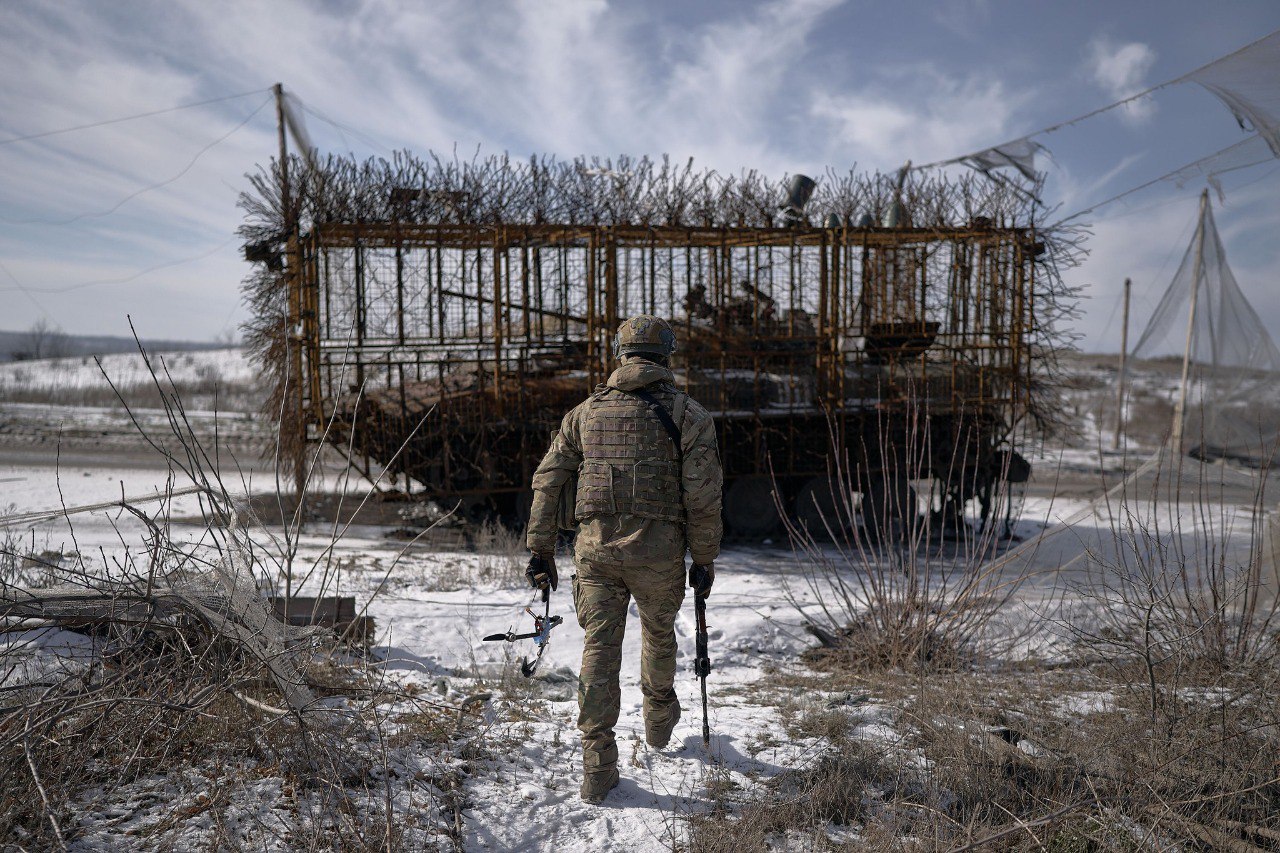
Position of Russian propaganda
Russian media have repeatedly claimed the complete capture of Kupiansk and the alleged encirclement of four brigades of the Armed Forces. These repeated claims were intended to create a sense of operational success — however, against the background of verified reports from the Ukrainian side they appear increasingly unlikely.
"It's such a fantasy that it no longer even fits in Russian heads. And it's a story that doesn't need to be repeated again."
— Viktor Trehubov, spokesman of the Joint Forces Group
What is happening on the ground
According to Ukrainian military sources, about 20–30 Russian occupiers remain in Kupiansk, holed up in two buildings and using them as an improvised fortress. The number of enemy fighters is decreasing, so there is currently no operational need for a large-scale assault — this allows the Armed Forces of Ukraine to keep losses to a minimum and to work methodically.
"There are not 25,000 tanks in the whole world combined, nor in the Russian Federation itself. So any story about Kupiansk — repeating now that they've taken it for the fourth time — would probably be too ridiculous even for Russian propagandists and their audience."
— Viktor Trehubov, spokesman of the Joint Forces Group
Context and consequences
The discrepancy between Kremlin statements and the situation on the ground is a typical example of an information strategy: many loud claims compensate for tactical defeats. However, in the case of Kupiansk this strategy is working against the propaganda itself — repetition of absurd claims undermines trust even among its own audience.
The social and military context supports the spokesman's statements: on February 16 the Armed Forces reported confident control of the city; on February 25 the GUR recorded the return of control over positions near Stepnohirsk in the Zaporizhzhia direction; and the commander-in-chief spoke of the liberation of eight settlements and the restoration of control over about 400 km² of territory. These facts point to systematic operational work that does not always make headlines but changes the real situation at the front.
What this means for us
First, the informational discrediting of Russian narratives strengthens Ukraine's position in international information and diplomatic circles — because trust shapes decision-making. Second, the AFU's tactical advantage in Kupiansk demonstrates that intelligence and maneuver tools accelerate de-occupation without unnecessary risks to civilians and defenders.
This is an example of how the combination of accurate intelligence reporting, restrained tactics, and control of the information field produces results: the enemy is forced to hide behind repeated fabricated claims rather than real successes.
Brief conclusion: while Kremlin narratives lose weight due to obvious inconsistencies with the facts, the Defense Forces are consolidating control over the area. It is now important to maintain consistency in actions and to verify information so that propaganda does not shape political decisions.



