Chinese Satellite Over American Bases: How the Chinese Military Obtained Intelligence from Orbit
Iranian military used Chinese commercial satellite TEE-01B to guide strikes against U.S. bases in the Middle East. Beijing remains silent, Trump writes letters — and already warns of "big problems."

By Tetiana Suchkova-Ladik
April 15, 2026 · 3 min read
When Iranian missiles and drones struck Prince Sultan Air Base in Saudi Arabia on March 27, 2026, damaging American refueling aircraft, commanders of the Islamic Revolutionary Guard Corps already had satellite images of the target in front of them — taken three days before the attack. The Financial Times investigation has only now identified the source of these images.
The Scheme: Commercial Satellite — Military Order
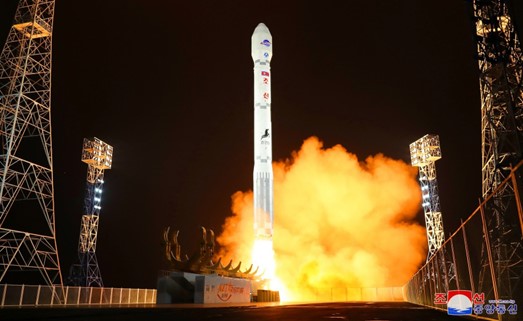
The IRGC Aerospace Force acquired the TEE-01B satellite in late 2024. It was built and launched from Chinese territory by Earth Eye Co — using an "in-orbit delivery" model, where the spacecraft is legally transferred to a foreign customer after reaching orbit. The deal was made in yuan.
In parallel, the IRGC gained access to the commercial ground stations of Emposat — a Beijing satellite management provider with a network across Asia, Latin America, and other regions. In other words, Iranian military personnel controlled the spacecraft through Chinese infrastructure — legally "civilian."
"You cannot simply strike a Chinese ground station located in another country."
— American satellite security expert, quoted by The Irish Times
This is precisely the strategic value of the scheme for Tehran: the vulnerability of its own facilities is shifted to Chinese assets, which the US and Israel are reluctant to attack.
What the Satellite Captured and When
According to FT, time stamps of coordinates and orbital analysis show that TEE-01B photographed Prince Sultan Air Base on March 13, 14, and 15 — two weeks before the strike. In other words, the satellite was not used for passive monitoring, but for targeted preparation of specific operations.
- Target: American military bases in the Middle East
- Method: images before and after missile and drone strikes to assess damage
- Coverage: Saudi Arabia and other regional facilities
Beijing Stays Silent, Washington Warns
Chinese Embassy spokesperson Liu Pengyu in Washington dismissed the requests as "disinformation with speculative insinuations," emphasizing that China "maintains an objective position and makes efforts for negotiations." Earth Eye, Emposat, and China's Foreign Ministry and Ministry of Defense did not respond to inquiries.
The White House did not directly comment on the connection between Emposat and the IRGC — instead, the press secretary cited Trump's words spoken on the eve of publication: if China supplies Iran with air defense systems, it will have "big problems." According to Bloomberg, Xi Jinping assured Trump in a letter that Beijing does not provide weapons to Tehran.
However, the FT investigation describes not a future deal — but one already completed. And not between two governments, but between the IRGC and Chinese commercial companies, which formally do not fall under sanctions restrictions.
Why This Matters Beyond the Iran File
China is the largest trading partner of Persian Gulf states and the main buyer of their oil. Evidence that Chinese satellite infrastructure was used to guide strikes on bases located in Saudi Arabia puts Beijing in an extremely awkward position before multiple audiences — not just before Washington.
The "in-orbit delivery" model — transferring the spacecraft after launch — has already become a tool for circumventing export controls. If the US does not impose sanctions directly against Earth Eye and Emposat, the scheme remains viable: the next buyer could be anyone.
The question is not whether Beijing knew — but whether Washington will impose secondary sanctions against Chinese companies before Trump's May summit with Xi: if not, the signal to the market will be unambiguous.



