Kyiv derailed Brussels' Plan B: how a personal attack on Orbán buried the mechanism to unlock €90bn
Ahead of the March EU summit there was a real scenario to bypass the Hungarian veto — similar to the one that worked in 2022 during the granting of Ukraine's candidate status. It was not implemented: according to Ambassador Yelisieiev, Zelensky chose open confrontation with Orbán at a moment when partners were preparing to play "good cop, bad cop."

By Tetiana Suchkova-Ladik
April 5, 2026 · 3 min read
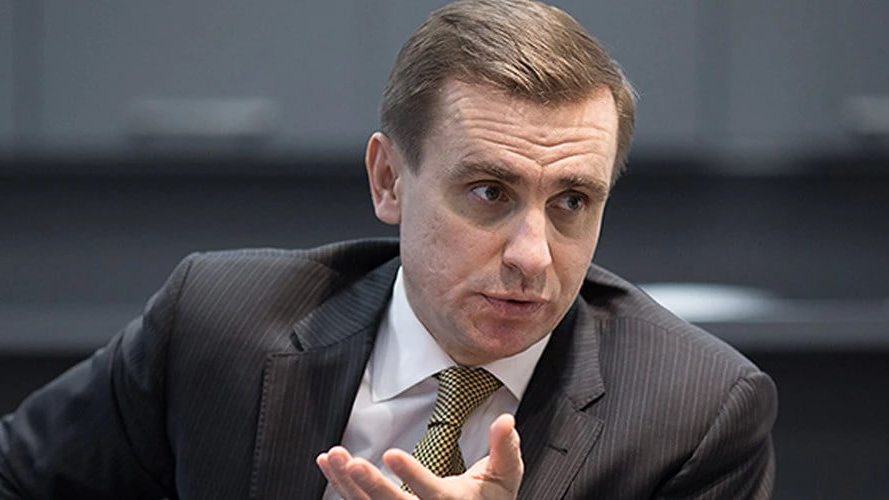
Ninety billion euros — that is two-thirds of Ukraine's financial needs for 2026–2027. Money for the army, pension payments, salaries for doctors. Right now this package is blocked by a single vote — the Hungarian one.
What Brussels had planned
Extraordinary and Plenipotentiary Ambassador of Ukraine Kostiantyn Yeliseyev told LIGA.net about the mechanism the EU was preparing ahead of the March summit. According to him, the scheme resembled the 2022 precedent: back then, despite Budapest's resistance, Ukraine received EU candidate status thanks to a procedural maneuver that effectively put the decision beyond the reach of the Hungarian veto.
The declaratory basis for the current loan already exists: in December 2025 EU leaders unanimously approved a €90 billion loan through the enhanced cooperation mechanism (Article 20 of the Treaty on European Union). Hungary, Slovakia and the Czech Republic received an exemption — they do not participate in the financial backing. But that proved insufficient: Orbán blocked the technical implementation of the decision, tying it to the resumption of oil flow through the Druzhba pipeline.
“We are ready to support Ukraine when we receive our oil that they are blocking. Until then — no decision.”
Viktor Orbán, EU summit, 19 March 2026
The pipeline was damaged by a strike from a Russian drone back in January. Kyiv insists the repair is dangerous and places responsibility on Moscow. Budapest accuses Ukraine of deliberately dragging its feet.
Where the plan broke down
German Chancellor Friedrich Merz and a number of other leaders had counted on Zelensky, in his video address to the summit, lowering the temperature of the conflict and reassuring Orbán of a readiness to hold talks over the pipeline. Instead, as Politico reports, the Ukrainian president “played tougher than expected.” “Zelensky chose to go on the offensive,” Brussels corridors recorded.
According to Euronews, in the closed part of the discussion European Council President António Costa criticized not only Orbán but also the sharp public statements by the Ukrainian side aimed at the Hungarian prime minister that had been made in previous weeks. It was this escalation, Yeliseyev said, that destroyed the space for a procedural maneuver.
Economist Dmytro Uss, analyzing the situation for UNN, noted that in the EU there are theoretically at least two mechanisms to bypass a blockade — excluding a participating country from the vote on a specific instrument and Article 7 of the Treaty on European Union, which allows suspending the voting rights of a member that systematically violates the bloc's values. However, both require political will, which is difficult to consolidate amid a public quarrel between Kyiv and Budapest.
What's at stake
Euronews calculated that if the veto is not lifted, already by mid-May Ukraine may exhaust its stock of foreign aid and will be forced to cut spending on social services. The first tranche is technically ready for payment within a few days after unblocking — the European Commission has already raised funds on the markets and is holding them in a liquidity reserve.
- €90 billion — agreed loan amount for 2026–2027
- ~⅔ of Ukraine's financial needs covered by this package
- 12 April — parliamentary elections in Hungary; opposition Péter Magyar leads Orbán by a double-digit percentage
- Mid-May — the critical date after which Kyiv may face a budget gap
If Péter Magyar wins on 12 April — the veto will likely be lifted within days. If Orbán retains power, the EU will face a real choice: either initiate Article 7 with all its political risks, or accept that €90 billion will remain frozen until the end of the electoral term in Budapest. The only question is whether the Ukrainian treasury can withstand that wait.



