'Lego' vs. 11,000 tanks: how Rheinmetall's CEO underestimated what he fears most
Armin Papperger called Ukrainian drones "kitchen-made junk" — and received a response from the very company he had tried to protect from awkward questions.

By Tetiana Suchkova-Ladik
March 29, 2026 · 3 min read
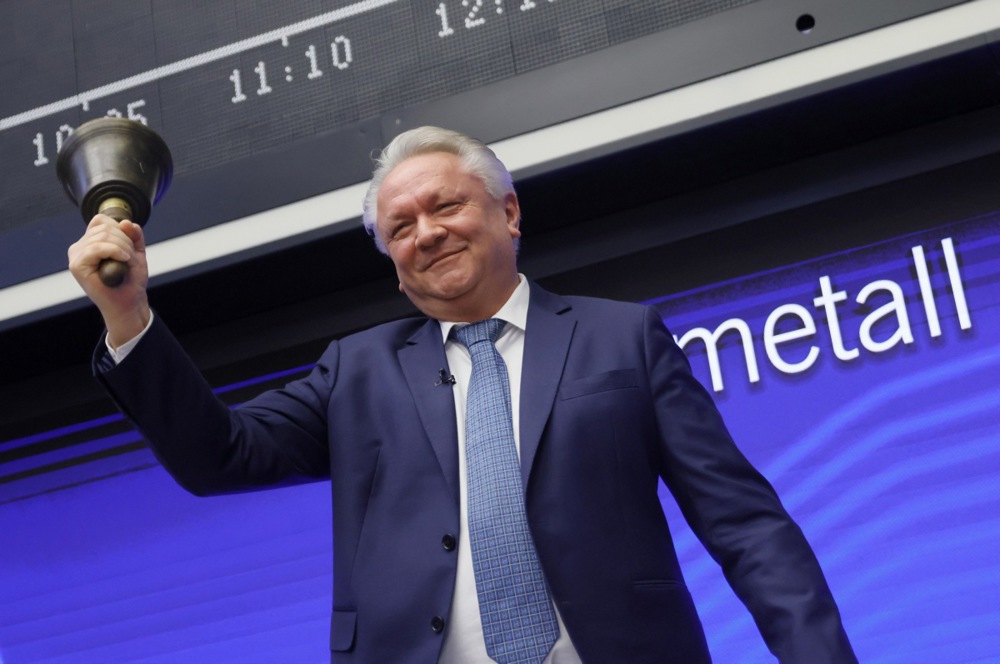
An article by journalist Simon Shuster was published in The Atlantic; he visited the Rheinmetall plant in Unterlüß — and tried to ask the company's CEO about the biggest challenge to his business. Armin Papperger clearly did not care for that conversation.
An awkward question
Shuster asked a simple one: if Ukraine is already stopping Russian tanks with cheap drones costing less than a thousand euros — drones that destroy equipment worth millions — what does that mean for a company that builds those very tanks? Papperger reacted irritably.
"It's like playing with a Lego set. What is Ukraine's innovation? There is no technological breakthrough. These are Ukrainian housewives. They have 3D printers in their kitchens, and they produce parts for drones. This is not innovation."
— Armin Papperger, CEO, Rheinmetall, The Atlantic, March 27
He did not answer substantively to concrete examples — manufacturers Fire Point and Skyfall, which supply the Armed Forces of Ukraine with hundreds of thousands of drones each month. Instead he added that Ukrainian companies will never be able to sell their drones to NATO: the Alliance's bureaucracy will not let them through. Papperger did not specify whether he was familiar with what happened next.
What happened next
The article was published on March 27. The next day Ukrainian media amplified it. On the 28th, presidential adviser Oleksandr Kamyshin responded on X:
"Rheinmetall says our #LEGODrones are made by housewives in kitchens. Fine. Meanwhile our #LEGODrones have already destroyed more than 11,000 Russian tanks."
— Oleksandr Kamyshin, @AKamyshin
On March 29 — less than 48 hours after the piece ran — Rheinmetall's official account posted, tagging that same Kamyshin:
"We express our deepest respect for the enormous efforts of the Ukrainian people... Every woman and every man makes an invaluable contribution. The power of the Ukrainian people's innovation and their fighting spirit is an inspiration to us."
— Rheinmetall AG, official X account, March 29
The conglomerate that builds Leopard tanks and supplies Ukraine with hundreds of millions of euros worth of weapons, in two days moved from "housewives" to "a source of inspiration" — without any explanation from Papperger himself.
The figure he did not name
As of 2025 Ukraine produces about 4 million drones a year — more than all NATO members combined, according to Bloomberg. Monthly FPV drone production capacity rose from 20,000 in 2024 to 200,000 in 2025. There are more than 500 manufacturing companies — compared with seven that existed before the full-scale invasion.
These very drones are responsible for 60–70% of Russian equipment losses. Drones that cost less than a thousand euros destroy tanks worth several million.
One of Rheinmetall's employees who accompanied Shuster during the factory visit casually admitted: the company has no protection for its own tanks against drone attacks — the kind of protection that both sides in the war have long been using on the battlefield.
The question isn't about drones
German military expert Nico Lange warned after the publication: complacency about the new economics of war — mass cheap drones instead of expensive heavy equipment — could become a serious security problem for Europe itself.
Papperger is right in a narrow technical sense: no FPV drone is an answer to a hypersonic missile. But the question he did not want to hear is different: will demand for million‑euro tanks persist in a world where they are destroyed for a thousand? The answer to that question will not come from NATO bureaucracy, but from the next few years of procurement on the defense markets of Europe, Asia and the Middle East — where Ukraine already stands in line as a supplier, not just as a buyer.



