Legal carbine, criminal past and medical certificate: what is known about the Holosiyivskyi shooter
A 58-year-old Dmitry Vasilchenkov killed six people on the streets of Kyiv with officially registered firearms. The tragedy exposed a loophole in the licensing system: a person with a criminal record obtained a rifle.

By Tetiana Suchkova-Ladik
April 18, 2026 · 2 min read
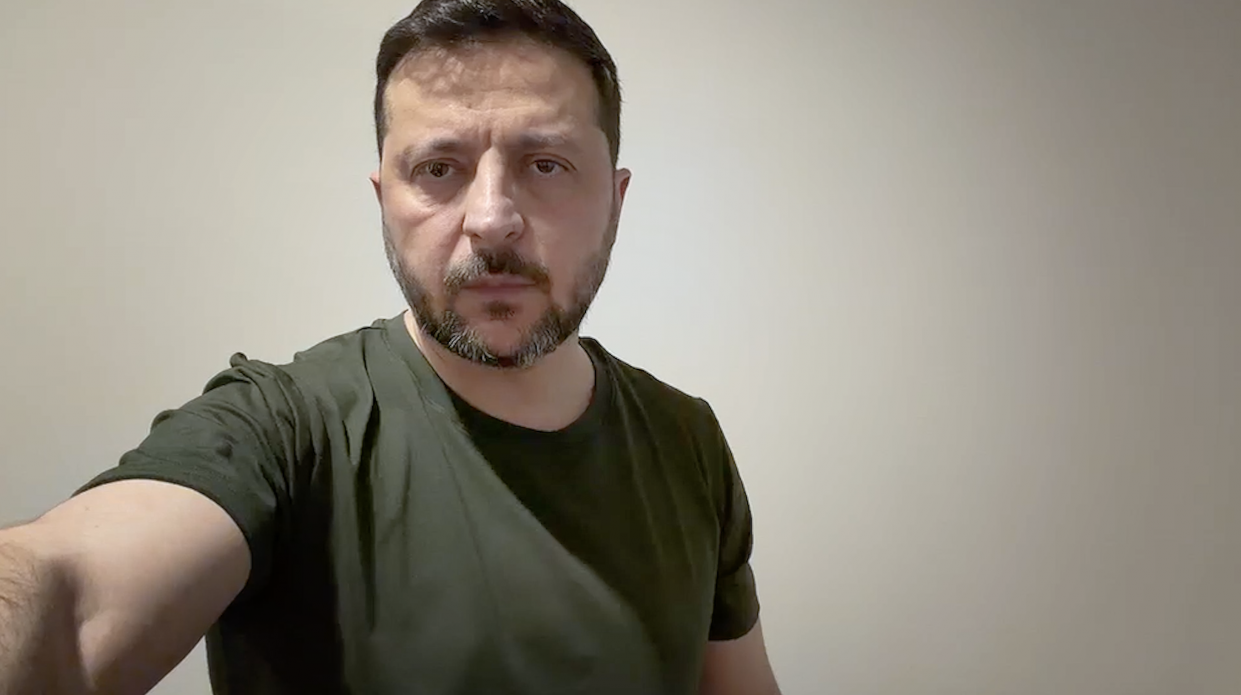
On April 18, 2025, the Holosiyivskyi district of Kyiv became the site of a mass killing. Dmytro Vasylchenko, 58 years old, walked through several streets with a carbine and shot people at close range — without demands, without pattern, without a single word to negotiators. Six were killed, 14 were wounded. Among the wounded was a child.
Who fired
Vasylchenko was born in Moscow and lived in Bakhmut before the full-scale invasion. After the city's occupation, he relocated to Kyiv as an internally displaced person. In recent years, he lived in the same Holosiyivskyi district where he committed the crime.
According to President Zelensky, the attacker had previously faced criminal charges. At the same time, he possessed legal firearms. As reported by Interior Minister Ihor Klymenko, the carbine was officially registered: in December 2024, Vasylchenko approached the licensing authorities, provided a medical certificate, and received permission.
"He was registered. He brought a medical certificate. The investigation will check who issued it."
Ihor Klymenko, Interior Minister
This is the central contradiction in the case: a person with a criminal past went through official procedures and obtained a firearm. Either the system did not conduct checks — or it did and let him through.
How it happened
According to Klymenko, the attacker moved from Demiyivska Street and acted chaotically. "He simply approached and shot people at close range. People had practically no chance of surviving," the minister described. The shooter fired single shots — methodically, but with no apparent logic in selecting victims.
When Vasylchenko barricaded himself in a supermarket, negotiators spent 40 minutes trying to make contact. The attacker did not respond and made no demands. After he shot another hostage inside, the KORD unit launched an assault. Vasylchenko was eliminated.
Three open questions
- Motive. The investigation is examining several versions. Zelensky emphasized that the attacker's connections and electronic devices are being analyzed. No version has been publicly confirmed.
- Medical certificate. Klymenko directly stated that the investigation would determine who issued the document to a person with a criminal past. If the certificate was issued knowingly — this is a separate criminal case.
- Licensing system. Ukraine still does not have a unified law on civilian firearm circulation. Background checks during permit issuance depend on departmental Interior Ministry instructions rather than direct legislation.
The tragedy in Holosiyivskyi is not the first case of mass violence committed by someone with legal weapons who theoretically had no right to obtain them. But it is the first such public failure of the licensing system during wartime, when society is already tense and vulnerable.
If the investigation confirms that the medical certificate was issued knowingly despite known criminal convictions — the question is no longer about the shooter, but about those who opened the path to weapons for him. Will the investigation reach specific officials in the licensing system — or will it end with the deceased attacker?



