Lithuania Launches "Shaheds" Over Kaunas — to Learn How to Catch Them
Lithuanian drone detection system Sky Fortress undergoes first real-world tests a week after an actual Shahed-type unmanned aircraft entered Lithuanian airspace and went missing for five days.

By Tetiana Suchkova-Ladik
May 25, 2026 · 2 min read
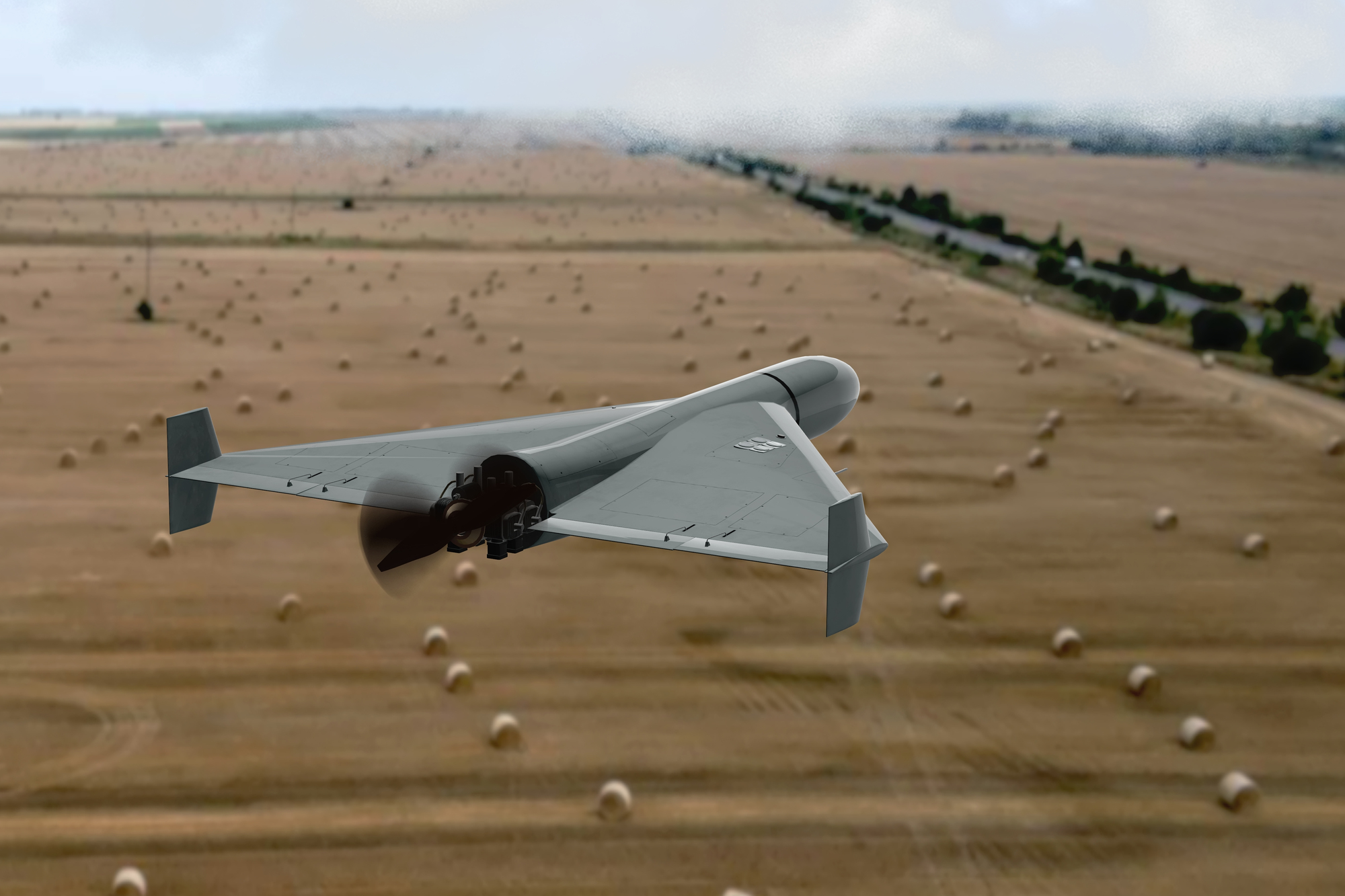
May 25–26, drones of the Shahed type are flying over the Kaunas District of Lithuania. This is not an attack — it is a test. The Lithuanian Radio and Television Center (LRTC), which was entrusted with organizing the exercises, warned residents of four zones: Jūragiai, Roks Polygon, Linksmakalnė and Paisės Forest — not to report drones in the sky to police. Flight altitude ranges from 250 to 1,000 meters.
The context that makes these exercises non-routine: on July 28, 2024, an unmanned aerial vehicle of the Geran type — the Russian version of the Iranian Shahed — crossed the Lithuanian border from Belarus. Lithuanian armed forces were unable to track it in time. The drone was found only five days later — it crashed on the territory of the Gaidžiunai military polygon and carried approximately two kilograms of explosives. According to the OSW analytical center, this was already the second similar incident in the same month.
"This year testing begins, funding is secured, deployment — from next year."
General Raimundas Vaiksnoraš, commander-in-chief of the Lithuanian armed forces, in a comment to LRT
The system now being tested over Kaunas is part of preparation for the deployment of Sky Fortress: a Ukrainian acoustic development that recognizes drones by sound signature rather than radar. This is a fundamental difference: radars poorly "see" low-flying or low-observable targets, while acoustic sensors do not emit a signal and are more difficult to counter with electronic warfare. According to Defense Mirror, as early as 2023, the system was demonstrated to representatives of 11 NATO countries at closed exercises in Europe — drone simulators of cruise missiles were detected and tracked.
In parallel, Lithuania is training at least 100 operators of interceptor drones. According to Defense Minister Robert Kaunas, despite developments in artificial intelligence, modern interception systems are still critically dependent on humans at the controls.
What is being tested and why "Shaheds" are the right target
The purpose of the tests is to verify the effectiveness of solutions for monitoring the lower airspace. It is there — between 250 and 1,000 meters — that strike unmanned aerial vehicles, which Russia uses against Ukraine and which have already appeared twice in the sky over Lithuania, operate. Full deployment of the air defense system, according to the current schedule, is planned for 2028.
- Two incidents with Russian Geran-type drones over Lithuania — both in July 2024
- The second drone was found after 5 days with 2 kg of explosives on board
- Sky Fortress — Ukrainian development, acoustic detection without radar emission
- System deployment — from 2026, full air defense integration — by 2028
A telling point: Lithuania chose precisely Ukrainian technology — that is, a system tested under conditions of real mass attack. This is not a laboratory prototype. But between "tested in Ukraine" and "deployed on NATO's borders" there is a distance of two years and the question of scaling: will there be enough acoustic sensors to cover the entire perimeter of the country before the next "wandering" drone arrives not at a polygon, but in a populated area?



