"Madyar won, but it's not easier for Ukraine: why Europe's rightward shift threatens European integration more than Orbán alone"
Tisa's Victory at Hungarian Elections Does Not Resolve Structural Problem: Far-Right Parties Growing Across Europe — and Most Oppose EU Expansion. Klimkin Believes Brussels Could Face Economic and Political Trap Simultaneously.

By Tetiana Suchkova-Ladik
April 14, 2026 · 3 min read
On April 12, Peter Magyar and his party "Tisza" won 138 out of 199 seats in Hungary's parliament in the elections — 53.6% of votes. Viktor Orbán, who led the country for 16 years, called his competitor to concede defeat. According to Al Jazeera, "Fidesz" received only 37.8%. The Hungarian scenario looks like a victory for pro-European forces — but former Foreign Minister Pavlo Klimkin warns against too optimistic an interpretation.
Orbán is gone — the structure remains
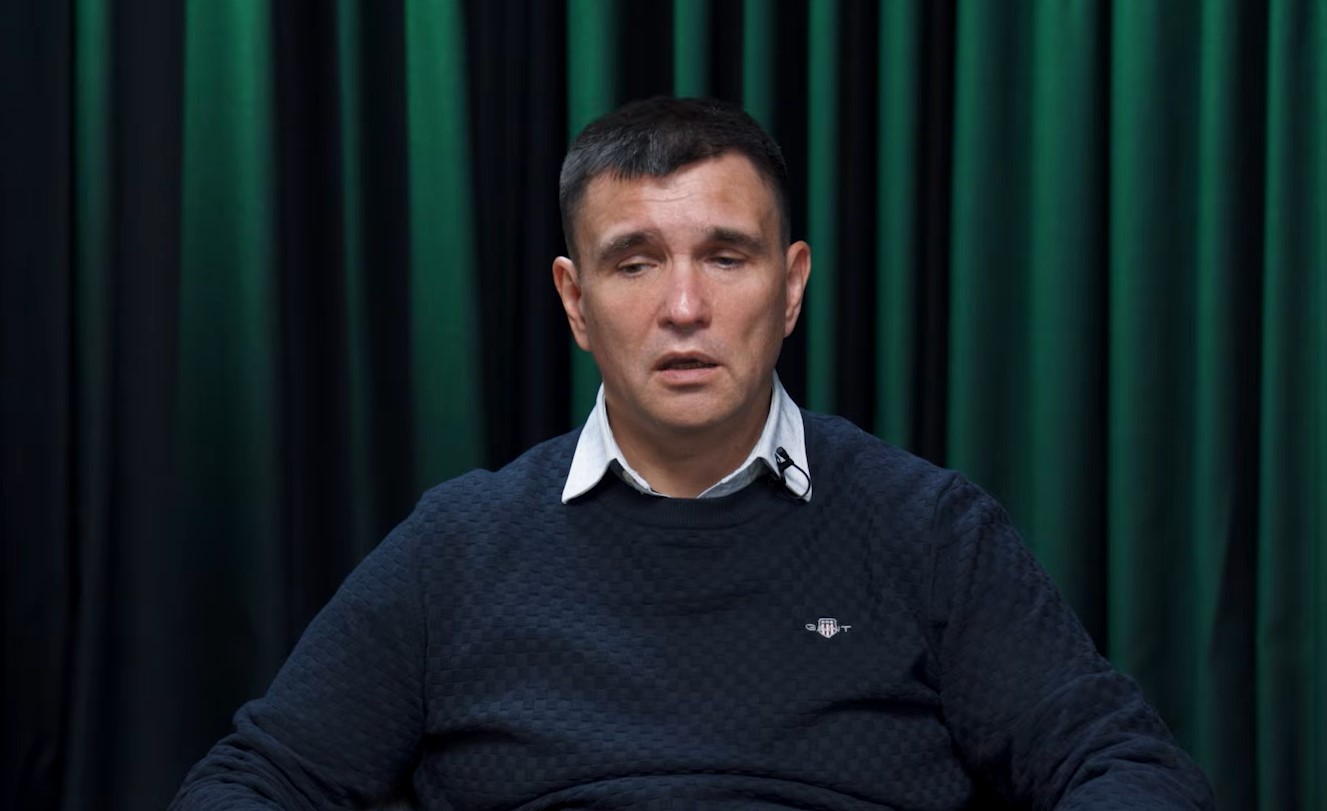
Klimkin in a comment for LIGA.net draws attention to a detail that is easy to overlook: Magyar is also a right-wing politician. For the first time in Orbán's political history, he faces opposition from the right spectrum rather than from the left or liberal camp. This means that right-wing views have not disappeared from Hungarian society — they have simply been redistributed between two right-wing parties.
The broader picture confirms this logic. Far-right parties are gaining support in 16 European countries — from France and Germany to Austria and the Netherlands. According to NV, most of these forces are united by anti-immigration rhetoric, Euroskepticism, and a position against spending to support Ukraine.
"An anti-Ukraine wave of right-populist governments could grow even in Western Europe. The countries at greatest risk are France and Germany."
— researcher Petrov, VoxEurop
The Carnegie Endowment notes: the vast majority of radical right-wing parties are critical of EU enlargement — viewing it as economically costly and stimulating migration. Among the most consistent opponents of new members joining are the French RN, Dutch PVV, Austrian FPÖ, and German AfD.
For Ukraine, this is not an abstract threat. Membership decisions are made unanimously: one veto is enough — and the negotiation process stops. Orbán demonstrated this for years. After his departure, there may be more potential blockers, not fewer.
Economic background: between stagnation and recession
Klimkin also points to the risk of recession in the EU. Economic data gives reason for such concern. Goldman Sachs' chief economist for Europe Sven Jari Stein predicts eurozone growth of only 0.8% in 2025 — compared to Bloomberg's consensus of 1.2%. Germany's GDP, according to this forecast, will shrink by 0.3%, France's by 0.7%. Goldman Sachs estimates the probability of a full-fledged recession in the eurozone at 30%.
EY warns of additional risks: US tariffs, competition from China, rising energy prices, and uncertainty from the war in Ukraine and the Middle East. Businesses and consumers are postponing decisions — and this is already slowing recovery.
For Ukraine, the connection is direct: over 55% of Ukrainian exports go to the EU. A slowdown in the European Union means falling demand for Ukrainian goods, reduced customs revenues, and pressure on the budget during wartime. A recession in Brussels means less money and less political will to finance enlargement.
What holds back and what accelerates
At the same time, there is pressure to accelerate. EU foreign policy chief Kaja Kallas stated in November that new accessions by 2030 are possible. The negotiation process with Ukraine continues — despite the war and internal resistance from certain members.
Magyar's position after his victory looks like this: support for the EU loan to Ukraine of 90 billion euros — but without accelerated membership. "The EU will not be able to accept a country at war," he said, according to Telex. A Hungarian referendum on Ukraine's membership remains in his plans as a final barrier.
So instead of one Orbán openly blocking, Kyiv gets a new prime minister who formally does not block but does not support either — and retains veto as a tool.
If far-right forces in the next electoral cycle enter government coalitions in France or Germany, will the consensus on EU enlargement withstand even a formal review of Ukraine's application by 2030?



