Nearly a hundred drones across Ukraine: air defenses shot down 80, but there are damages and casualties in Odesa, Dnipropetrovsk and other regions
In a nighttime attack, Russia used 94 drones, about 55 of them "Shaheds." Air defenses destroyed most of the targets, but debris, fires and the injured are a reminder: the defense is working while civilian infrastructure remains vulnerable. We look at the situation by region and what this means for security and needs.

By Tetiana Suchkova-Ladik
January 22, 2026 · 3 min read
What is known
On the night of January 22 the Ukrainian Air Force recorded a mass attack by Russian drones — a total of 94 aircraft, around 55 of them strike 'Shaheds'. According to the agency's estimates, the Armed Forces of Ukraine and air defense systems destroyed or suppressed about 80 drones, however a number of impacts caused damage and casualties in various regions.
"On the night of January 22 the enemy attacked with almost a hundred drones, a significant portion were strike 'Shaheds'. Air defense systems worked, but there are losses on the ground"
— Ukrainian Air Force
Regional consequences
Odesa region. In Odesa district a drone struck between the 18th and 19th floors of a high-rise — there was no explosion, but the facade, glazing and parked cars were damaged. 58 people were evacuated from the building, including eight children.
"58 people were evacuated from the high-rise, including 8 children"
— Oleh Kiper, head of the Odesa Regional Military Administration
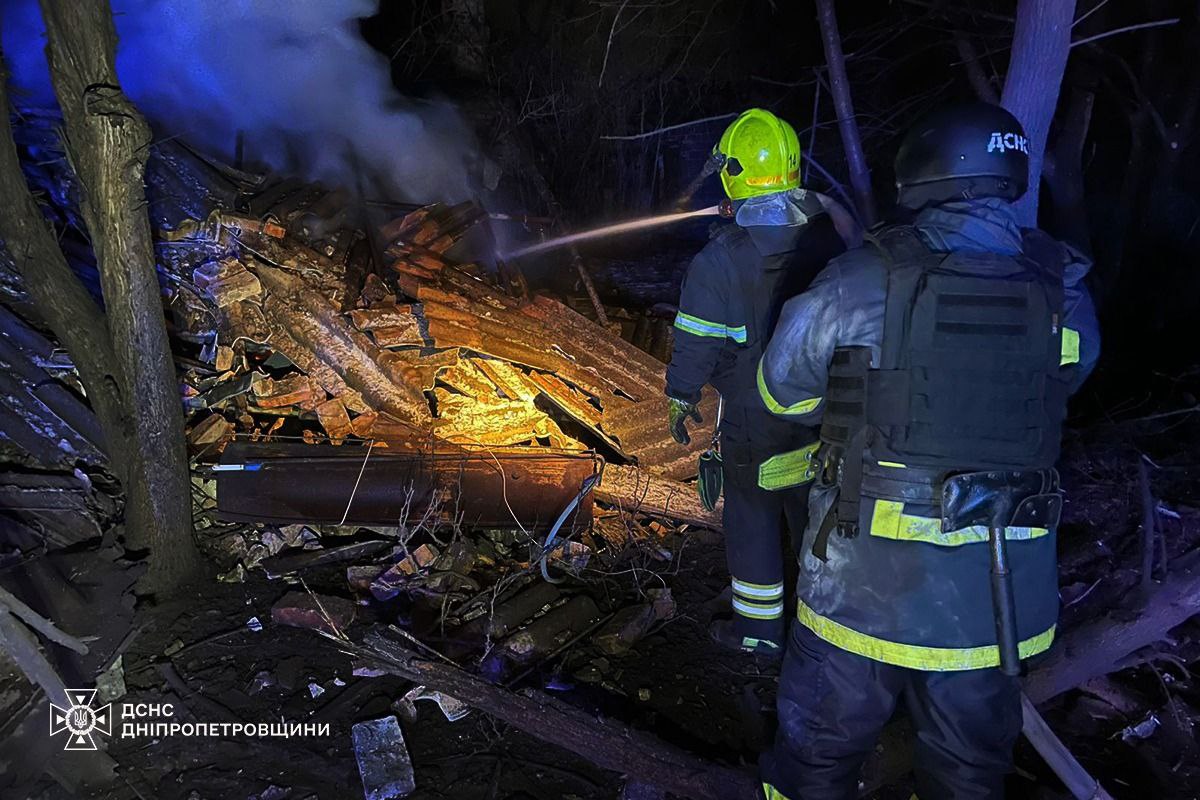
Dnipropetrovsk region. As a result of the attacks two people were injured; residential houses, an office building and a gas pipeline were damaged; fires broke out in several locations, which rescuers contained.
"In Dnipropetrovsk region two people were injured as a result of drone attacks"
— State Emergency Service (SES)
Synelnykove district (Vasylkivka community). An 82-year-old woman was injured, residential development was damaged; firefighters and emergency crews were operating on site.
Kryvyi Rih. A 70-year-old woman was injured in the strike; a private house caught fire.
Pavlohrad. Damage to private houses and vehicles was recorded in the city.
Chernihiv. According to the local administration, a 'Shahed' fell without exploding — fragments were found at the scene.
"In Chernihiv a 'Shahed' was recorded to have fallen, without an explosion"
— Dmytro Bryzhynskyi, head of the Military Administration
In addition, on the evening of January 21 Zaporizhzhia was also struck by drones — the impact was registered in the area of the parking lot of the Epicenter shopping center.
Analysis and context
This attack demonstrates several important points. First, Russia continues to use the tactic of mass strikes with cheap strike UAVs — a pragmatic attempt to exhaust air defenses and create chaos across Ukraine. Second, the figure of 80 shot down out of 94 signals high effectiveness of air defenses, but also that even with successful interception debris and incomplete detonations cause damage to civilian objects.
Defense analysts note that in this asymmetric war it is not only the number of shot-down targets that matters, but also the resilience of infrastructure, the speed of emergency response and the ability to contain the consequences of attacks — from fires to damage to gas and power networks.
The financial and logistical context also matters: even if air defenses work effectively, repairing damage, evacuating people and providing medical care are ongoing costs for communities and the state. That is why investment in additional air-defense systems, early warning systems and civil protection remains a priority.
What's next
In the short term — the risk of repeated mass attacks remains: the adversary has the material and logistical capability to launch waves of drones. Medium-term priorities — strengthening air-defense capabilities and resources for rapid infrastructure recovery on the ground. Long-term — additional systems, international support and investment in community resilience are needed.
Conclusion
Air defenses again demonstrated their capability — this reduced the scale of destruction. But even with a high interception rate the consequences for people and buildings remain real. Whether partners will turn declarations into additional air-defense systems and aid for reconstruction is the key question in the coming weeks.



