Macron in Davos: "a shift toward a world without rules" — what it means for the security of Europe and Ukraine
At the World Economic Forum, Emmanuel Macron warned of a departure from the rules of the international order — we explain why this matters for our security right now.

By Tetiana Suchkova-Ladik
January 20, 2026 · 1 min read
A Quiet Signal from Davos
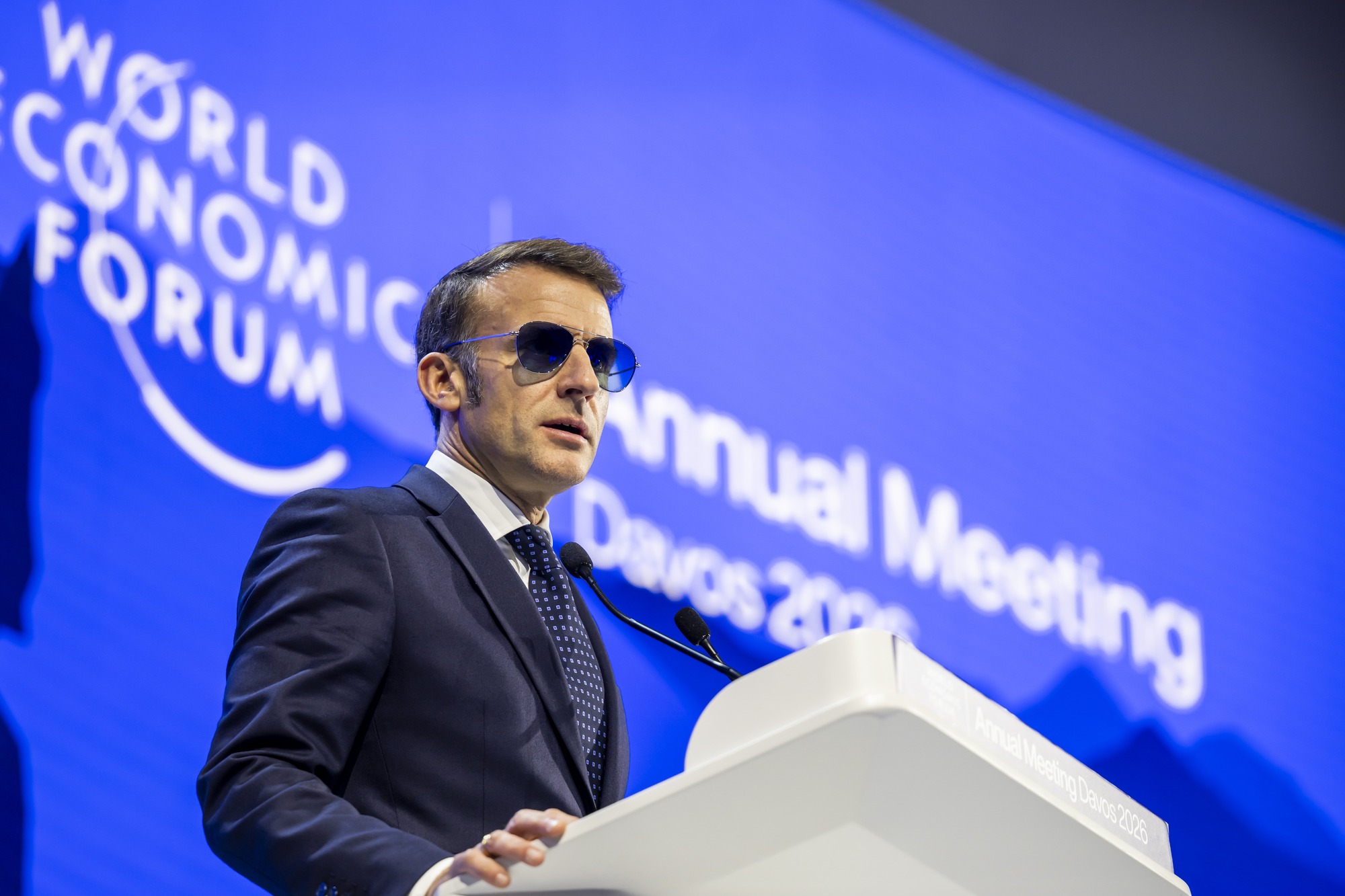
On 8 January 2026 at the World Economic Forum in Davos, French President Emmanuel Macron warned of a “shift to a world without rules.” Reuters cites his words as a warning: in international relations the law of the strongest increasingly prevails over norms of law. A statement from the leader of one of Europe’s leading states has practical significance for the continent’s security and, in particular, for Ukraine.
“This is a shift toward a world without rules, where international law is trampled and where the only law that seems to matter is the law of the strongest.”
— Emmanuel Macron, President of France (Reuters)
Context: why this was said now
Macron tied his warnings to a number of international incidents: from attempts to gain control over Greenland to events related to Venezuela. He did not name specific actors directly, but the message was general — a resurgence of imperial ambitions and a weakening of the norms that govern international relations.
Consequences for Ukraine
The erosion of rules plays into the hands of revisionist forces seeking to change the status quo by force. According to international analysts, such a trend complicates coordination among allies, makes long-term guarantees less reliable, and raises the risk that support for countries defending their sovereignty will become fragmented. For Ukraine this means: political signals must be transformed into concrete, legally binding mechanisms of support.
What next?
Macron offered a political diagnosis — now the question to allies is whether there is enough institutional will to stop the “shift” and restore the rules of the game. For Ukraine this is not rhetoric but a direct security guarantee: strengthening the norms of international law and clear guarantees from partners are the best protection against forces that rely on coercion.
Analytical conclusion: the words in Davos are a signal to act. The question is whether capitals will turn declarations into legal and military-economic instruments that can actually change the balance of power.



