Meloni calls on Europe to talk to Russia — what the risks are and what it means for Ukraine
Italy’s prime minister echoed Macron’s view on dialogue with the Kremlin, but warned of the danger of “piecemeal and disorderly” contacts. We examine why this matters right now and what guarantees Ukraine needs.

By Tetiana Suchkova-Ladik
January 9, 2026 · 2 min read
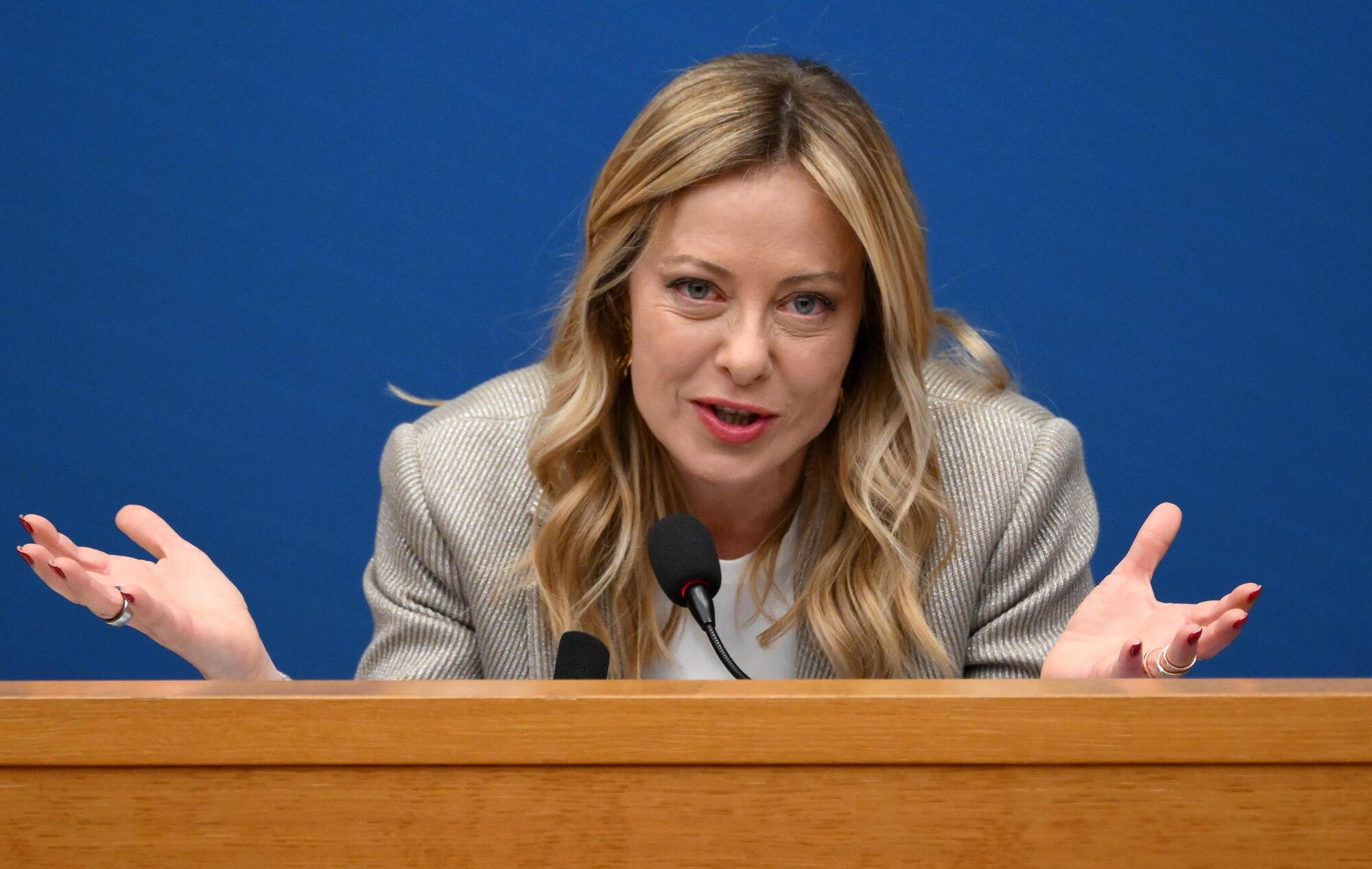
In high-level diplomacy, what matters are not loud statements but the rules by which agreements are made
Italian Prime Minister Giorgia Meloni said that it is time for Europe to restore dialogue with Russia — a view that echoes recent remarks by French President Emmanuel Macron. At the same time Meloni made a clear caveat: if contacts are fragmentary or uncoordinated, they will more likely help the Kremlin than serve Ukraine’s interests. Reports Bloomberg.
What Meloni actually said
“I think Macron is right; it is time for Europe to talk with Russia.”
— Giorgia Meloni, Prime Minister of Italy
At the same time Meloni stressed that such steps can have only a “limited” effect if they are implemented “partially and chaotically.” “The last thing I want is to do Putin a favor,” she added.
Why this is happening now
There are several interrelated reasons. First, France is openly pushing the EU to seek channels of communication with the Kremlin as an element of diplomatic pressure and stabilization (a position voiced by Emmanuel Macron). Second, after Donald Trump’s return to the White House, Europe bears a greater share of responsibility for Ukraine’s financial and military support — this is being felt in budgets and political priorities across capitals. Third, Italy’s domestic politics (the presence in the coalition of a Russia-friendly partner, the League leader Matteo Salvini) makes Rome’s messages more ambiguous.
Facts to remember
The Italian government has already sent at least $2.9 billion in aid to Ukraine since the start of the full-scale invasion, including air defense systems. This underlines that talk of dialogue is not equivalent to abandoning support — but it does not remove the risks if dialogue takes place without guarantees and coordination with partners.
What they are saying in Kyiv and Paris
“We need to fight for US participation in the peace dialogue.”
— Volodymyr Zelensky, President of Ukraine
France, for its part, insists that direct talks with Putin can become a useful tool if they occur within the context of a broad international consensus and do not replace the guarantees that ensure Ukraine’s security.
What this means for Ukraine and what steps are needed
For Ukraine the key is not merely the fact of Europe’s contacts with Russia, but their format and purpose. Four practical conclusions:
- European contacts with the Kremlin must be coordinated with the United States and Kyiv so as not to create unilateral concessions.
- Dialogue should be accompanied by legally binding security guarantees and firm support for military-technical assistance.
- Any negotiations must not legitimize Russia’s retention of Ukrainian territories or weaken the sanctions framework.
- Ukraine should step up diplomatic and information work to clearly define its “red lines” and mobilize partners around them.
Conclusion
The discussion about dialogue with Russia is not just a diplomatic episode but a test of the EU’s and its allies’ ability to combine pragmatism with principles. If contacts are coordinated and backed by concrete security guarantees, they can help. If they remain a series of separate initiatives — the Kremlin wins, not Ukraine. Now it is up to the partners: will they turn declarations into mechanisms that actually protect our state?



