Merz: Russia 'in a state of deep barbarism' — what it means for the security of Europe and Ukraine
German Chancellor Friedrich Merz says that normal relations with Russia are currently unlikely. We explain why his assessment matters for Ukraine's security and for European strategy.

By Tetiana Suchkova-Ladik
February 19, 2026 · 2 min read
Essence of the statement
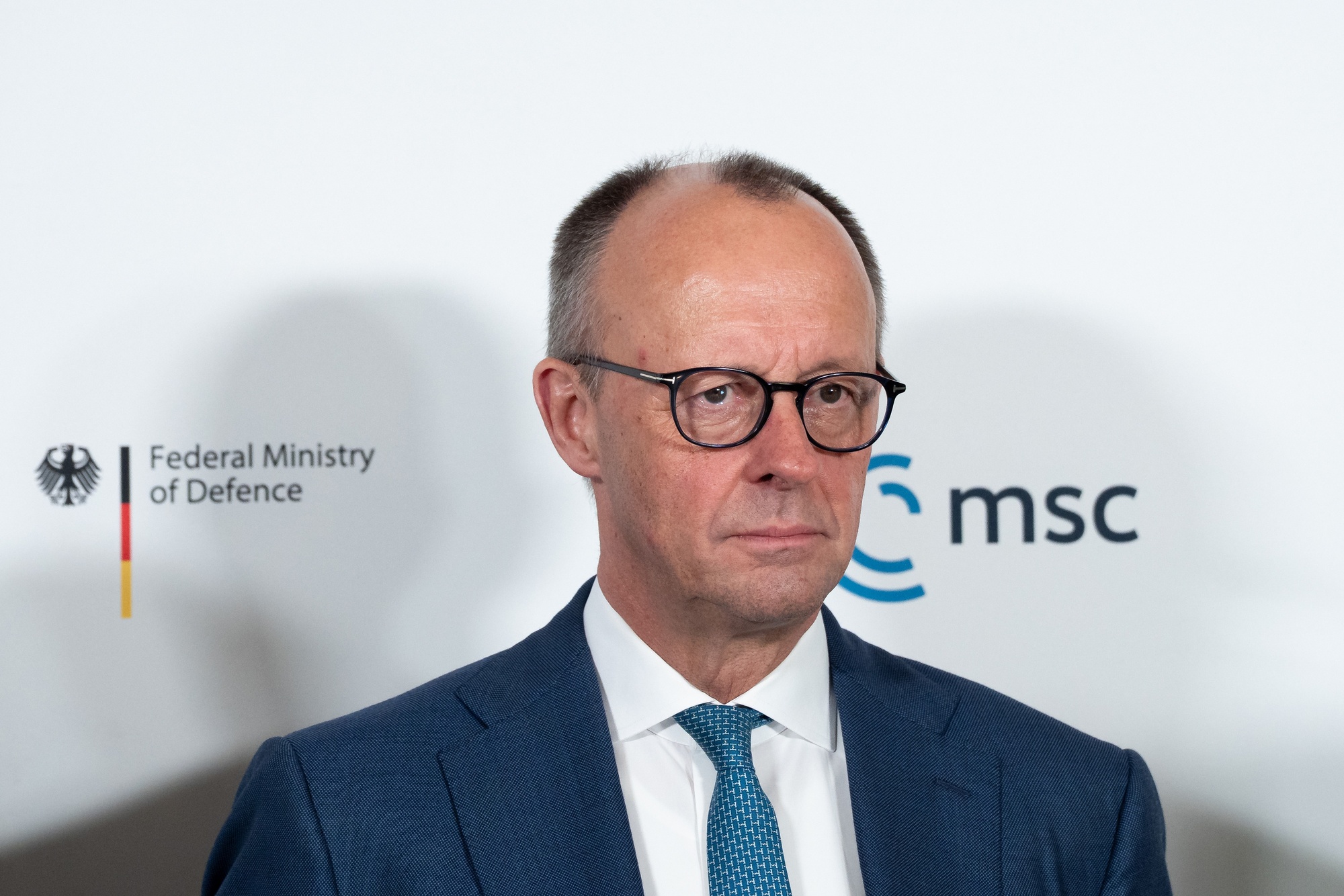
Friedrich Merz's interview for the German outlet Die Rheinpfalz contains a harsh diagnosis: in his view, Russia today is "a country in a state of deep barbarism," and a return to "normal" relations is unlikely. Merz links this position to the idea that the regime allegedly has no internal demobilization plan and therefore must maintain its war machine.
"So we should have no illusions: the Russian authorities cannot do without war in the near future. They must keep the war machine running..."
— Friedrich Merz, Chancellor of the Federal Republic of Germany (interview with Die Rheinpfalz)
Why this matters for Ukraine
Merz offers not only a moral assessment but also a practical conclusion: the war, in his view, will end when one side is exhausted militarily or economically. Therefore, Europe's working goal is to reduce Russia's ability to fight and to finance the war. For Ukraine, this means: partners' attention must focus not only on declarations but on supplying weapons, sanctions pressure, and economic measures that actually reduce the aggressor's resources.
"I consider this practically impossible. Looking at this regime and this blind, unrestrained terror, I have almost no hope"
— Friedrich Merz, on the possibility of restoring normal relations with Putin (interview with Die Rheinpfalz)
Context in European politics
This harsh assessment coincides with part of the European debate about how to deal with the Kremlin. On 19 December 2025 Emmanuel Macron expressed the view that Europe should renew dialogue with Russia. By contrast, on 14 February 2026 Volodymyr Zelensky called for coordination of negotiating approaches, warning that Putin would try to divide Europe. The difference in approaches — between a desire for diplomatic return and the need to maintain pressure — is already shaping partners' policy.
Practical consequences
If Merz's assessment withstands the test of time, the conclusions are clear: a long-term strategy of deterrence and reconstruction must be planned. This includes strengthening sanction mechanisms, controlling flows of financing to Russia, resilient supply chains for defense equipment, and preparation for rebuilding infrastructure in Ukraine. European experts emphasize that decisions must be systemic — from policy to budgets.
Conclusion
Merz challenges illusions about a quick return to pre-war normality. The question is whether European capitals will turn this diagnosis into concrete steps that strengthen Ukraine's security and reduce Russia's ability to wage war. Whether there will be sufficient political will and resources is the key question for the coming months.



