Minimal Plan, Not Victory: What Budanov Actually Said About Mobilization
The head of the Presidential Office acknowledged that over the past six months, Ukraine has been meeting only the minimum recruitment threshold, while Russia has already completed its annual recruitment plan for 2025 — 403,000 people — ahead of schedule.

By Tetiana Suchkova-Ladik
April 18, 2026 · 2 min read
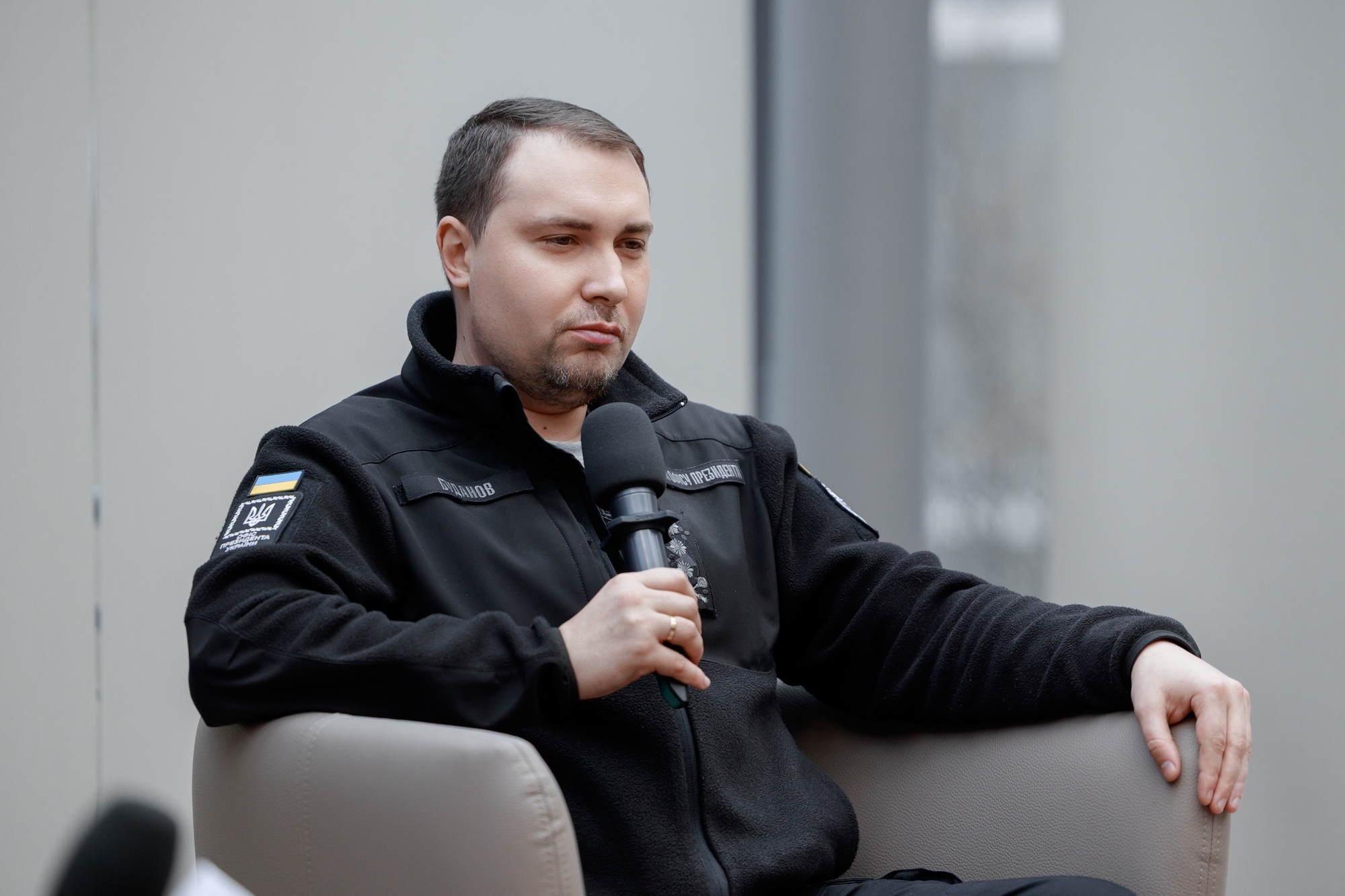
Head of the President's Office Kyrylo Budanov, speaking at CEO Club Ukraine and in an interview with Moldovan publication "Malenkaya Strana," confirmed: over the past six months, Ukraine has "quite" coped with recruitment — but only with a minimal plan, not with the army's needs under ideal conditions.
What "minimal plan" means
According to Budanov, the minimal plan is not a development guideline, but a survival threshold: the minimum number of people needed to prevent the front from collapsing. "Either we support the front with necessary resources, or the front may weaken and collapse," he stated in a direct formulation without diplomatic softening.
Budanov characterized the process itself as chaotic — while acknowledging that it cannot be resolved during active combat operations. A separate point: TCC reform — a change in name or structure — will not fundamentally change anything, as the essence of the process remains the same.
"The army needs human resources. People watch TV, the internet, Telegram — and don't really want to go to war."
Kyrylo Budanov, Head of the President's Office
Mirror: how this looks against Russia
In parallel, Budanov, as a former GUR chief, disclosed data on the adversary: Russia not only fulfilled its recruitment plan for 2025 — 403,000 people — but did so ahead of schedule, before December began. For 2026, the plan has been set: 409,000. The main source of replenishment is contract soldiers, whom the Kremlin attracts with increasingly higher payments.
- Ukraine: meeting the minimal plan over the last 6 months, the process is chaotic
- Russia: exceeded the 2025 plan ahead of schedule, set a higher figure for 2026
- Both countries are facing a decline in voluntary enlistment — but are solving this with different tools
A structural problem invisible behind the numbers
Budanov articulated what is usually discussed more cautiously: after 12.5 years of war and over four years of full-scale invasion, motivational resources are being depleted — and this, according to him, is "an absolutely logical course of events." People see the war in real time through social networks and are in no hurry to go to the TCC. If they don't come voluntarily — they are forcibly mobilized: this is how the logic of the minimal plan works.
The open question here is not rhetorical. If Ukraine is only meeting the minimum, while Russia is widening its quantitative lead — how long will the minimal plan be sufficient if the rate of losses at the front increases?



