Estonia's Defense Minister: Europe is not ready to defend itself alone — and relies on the US
Hanno Pevkur openly acknowledged: without the American security umbrella, Europe is currently vulnerable. But this frankness raises an uncomfortable question about the pace of its own defense efforts.

By Tetiana Suchkova-Ladik
April 17, 2026 · 1 min read
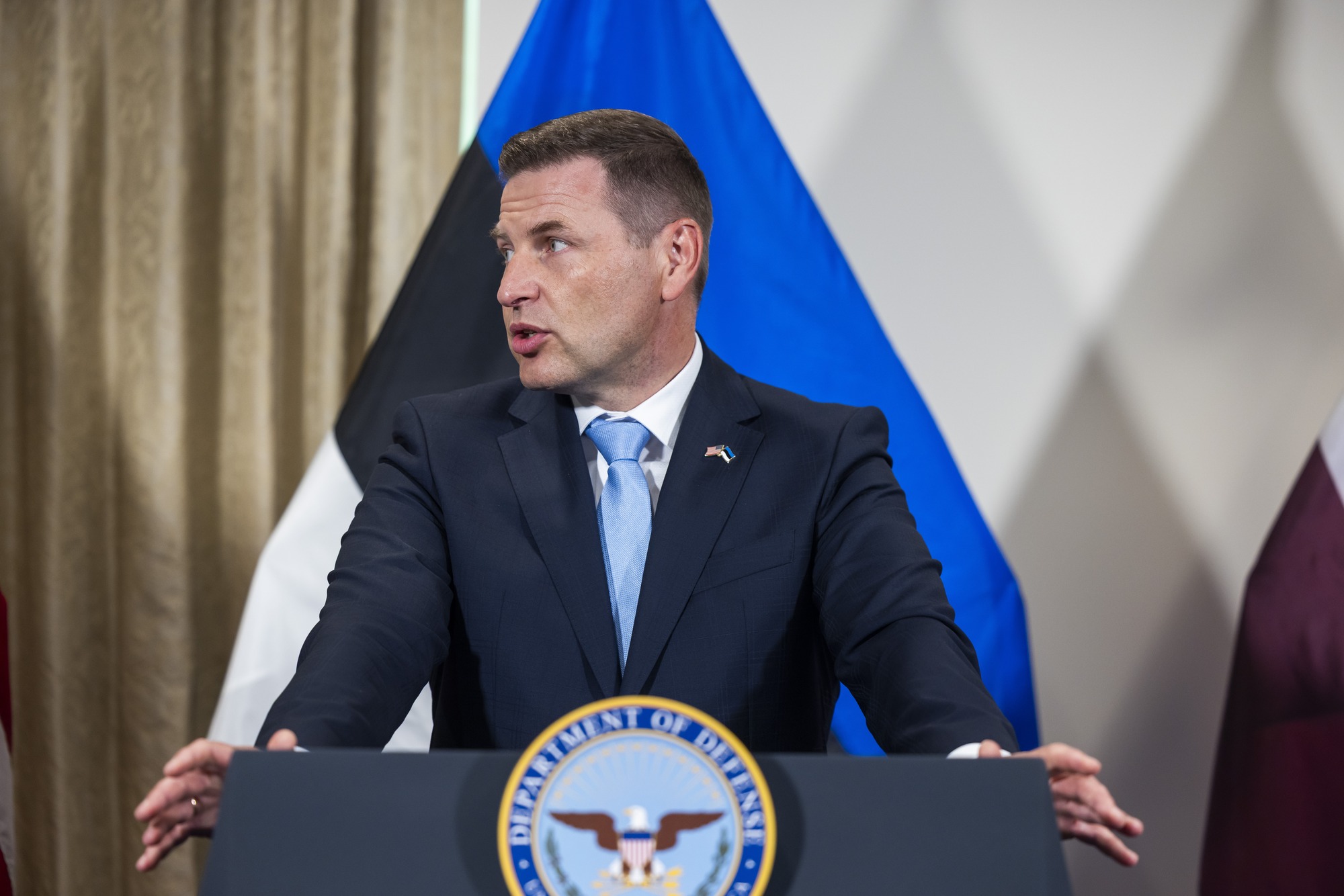
Estonian Defence Minister Hanno Pevkur publicly confirmed what Brussels prefers to discuss more cautiously: Europe today is unable to independently ensure its own military security. According to him, in the event of Russian aggression, the USA will protect NATO allies — and the current balance of deterrence rests on this.
The Estonian minister's statement sounded not as a warning, but as a statement of fact. Estonia — a country with a population of 1.4 million and a shared border with Russia — has long spent over 3% of its GDP on defence and understands the real cost of security better than most alliance partners. This is why Pevkur's words should be read not as reassurance, but as a diagnosis.
The problem is not that the USA theoretically might not protect Europe. The problem is that dependence on a single guarantor is a structural vulnerability that Moscow carefully calculates. Any domestic political turbulence in Washington, any bargaining over the conditions for support transforms this dependence into a variable, not a constant.
Most EU countries have still not reached even the minimum NATO threshold of 2% of GDP for defence. The European defence initiative exists mainly in the form of declarations and start-up funds — without a common army, without unified command, without consensus on strategic autonomy.
Pevkur, in effect, said out loud what is a working prerequisite of NATO planning. But this honesty sharpens the question that still remains unanswered: if Europe knows about its unpreparedness — by what criteria and by what year does it plan to overcome this unpreparedness?



