Moscow Published Addresses — Medvedev Called Them Targets. Prague Reacted First
# Russian Defense Ministry Lists Ukrainian Drone Suppliers as Potential Targets The Russian Ministry of Defense has released a list of 11 companies across 12 countries that it claims manufacture drones for Ukraine. Two of the companies are Czech. Dmitry Medvedev openly called the list "potential targets for Russian armed forces." The Czech Republic responded by summoning the Russian ambassador, but the question of the EU's broader response remains unclear.

By Tetiana Suchkova-Ladik
April 17, 2026 · 3 min read
On April 15, Russia's Ministry of Defense published a list of companies from 12 countries — the United Kingdom, Germany, the Netherlands, Denmark, Latvia, Lithuania, Poland, Czechia, Spain, Italy, Turkey, and Israel. According to the department, these enterprises produce strike drones or their components for Ukraine. Along with addresses — a direct warning: increasing drone supplies leads to "unpredictable consequences" and "acute escalation across the entire European continent."
The next day, Dmitry Medvedev, deputy chairman of Russia's Security Council, did what the ministry itself did not — spelled it out clearly.
"This is a list of potential targets for Russian armed forces. When strikes become reality — depends on what happens next. Sleep well, European partners!"
Dmitry Medvedev, deputy chairman of Russia's Security Council, in a post on X
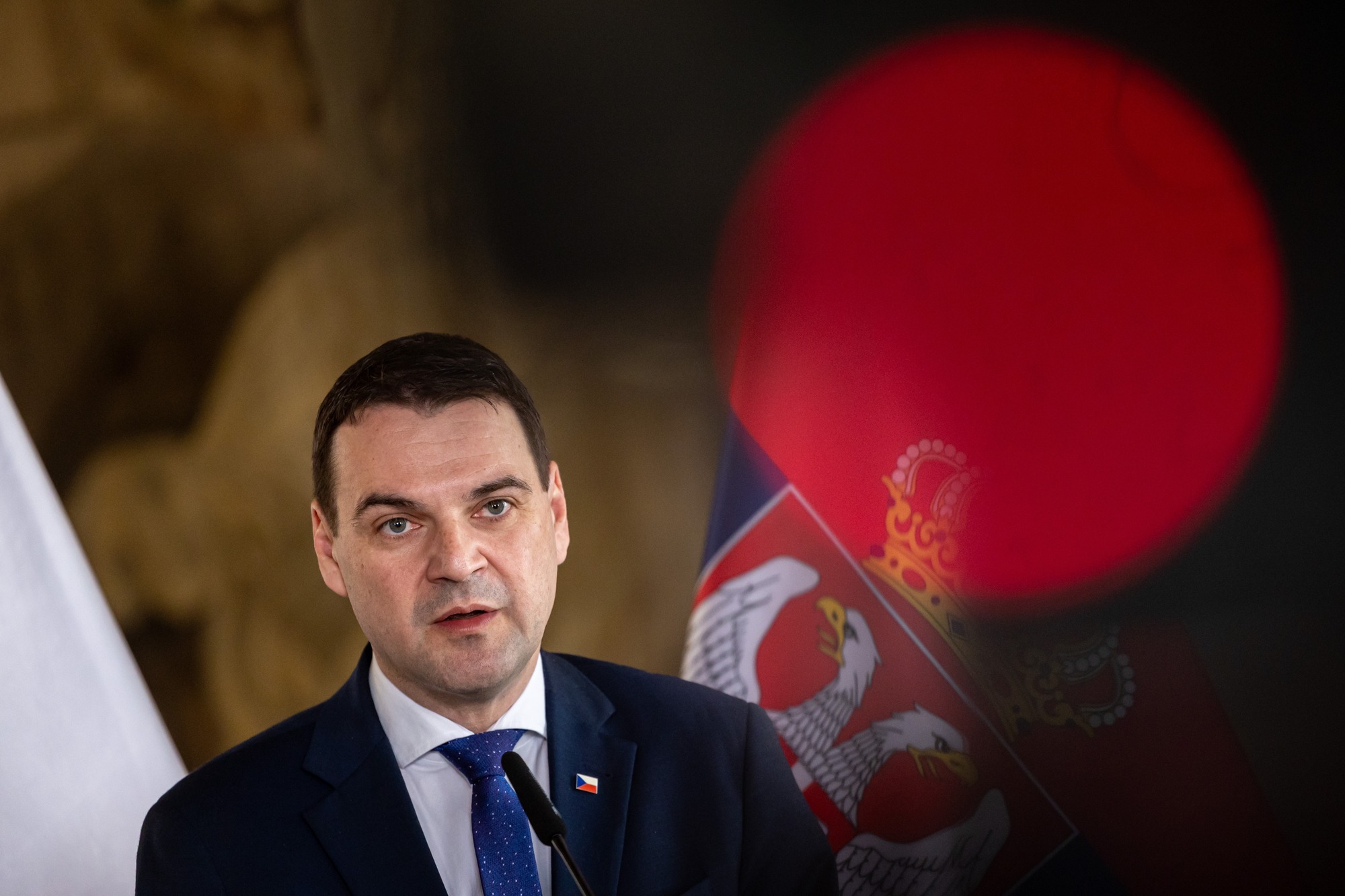
The list includes two Czech companies. On April 16, Czech Foreign Minister Petr Mačinga summoned the Russian ambassador in Prague for explanations. According to the Foreign Ministry's press service, the ambassador was to appear for the meeting at the beginning of the following week.
What is actually in that list
The credibility of the Russian Ministry of Defense's "intelligence data" was immediately questioned. Journalists from Meduza verified one of the Munich addresses from the list — at the coordinates where a "secret branch of a Ukrainian military factory" supposedly located, there is an ordinary residential building. Lithuanian public broadcaster LRT found that the Vilnius street indicated by the Russians is the registration address of over 700 companies — none of them related to drone manufacturing.
That is, the publication of the list performs not a reconnaissance function, but a communicative one: to make European business and governments think twice before signing contracts with Ukraine for the production of UAVs.
Why now
The appearance of the list is not spontaneous. According to the Russian Ministry of Defense, on March 26, the leadership of several European states allegedly decided to increase the production and supply of drones to Ukraine for strikes on Russian territory. Several EU countries have indeed announced plans to deepen defense cooperation with Kyiv, including joint production of unmanned aerial vehicles.
- The Netherlands signed a defense cooperation agreement with Ukraine.
- A number of EU countries publicly announced intentions to learn from Ukraine's combat experience with drones.
- In parallel, Brussels discussed the concept of a "drone wall" on the Alliance's eastern border.
Against this backdrop, the publication of the list is Moscow's attempt to introduce the cost of cooperation with Ukraine: not sanctions or diplomatic, but a direct threat to physical infrastructure.
Reaction: Prague — first, but not the only victim
Czechia reacted fastest, but the list includes companies from 11 European countries. According to Reuters, the Czech Foreign Ministry called the statements ones that "concerned a number of Czech companies identified by Moscow as possible targets for attacks." As of April 16, no other EU country announced that it had summoned its ambassador to Russia.
This is either diplomatic restraint or the absence of a coordinated response — which in itself is a signal for Moscow.
If EU countries whose companies made it onto the list do not develop a common position — for example, through a statement by the High Representative for Foreign Affairs or at the EU Council level — Russia will get confirmation that the tactic of individual pressure on states works more effectively than any package of sanctions.



