US and Iran Close to Deal Within 60 Days That Trump Allies Are Already Criticizing
State Secretary Rubio announced "good news" regarding the Strait of Hormuz — while Trump says the deal is "basically agreed," Republican hawks in the Senate call it a disaster.

By Tetiana Suchkova-Ladik
May 24, 2026 · 3 min read
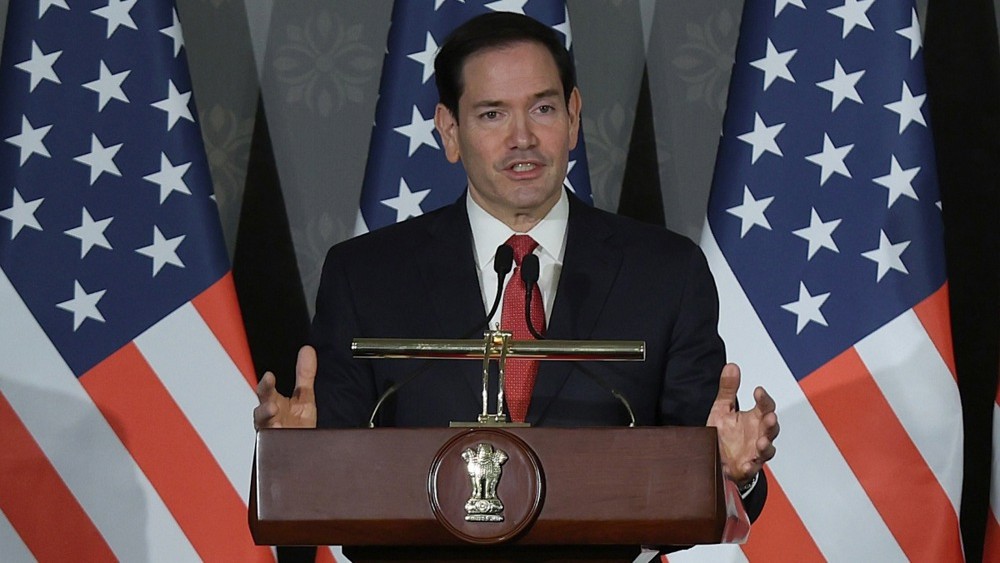
On Saturday, during a visit to New Delhi, U.S. State Secretary Marco Rubio told journalists that "there is a possibility that within the next few hours the world will receive some good news — at least regarding straits." According to Rubio, "significant progress" has been achieved in negotiations with Iran, though he clarified it is "not final."
In parallel, Trump told Middle Eastern leaders in a call that a peace agreement is "basically agreed" and will include the opening of the Strait of Hormuz. According to Axios, on the table is a 60-day memorandum of understanding (MOU) with the possibility of extension.
What's in the deal: steps in exchange, not guarantees
According to details published by Axios citing an American official, the scheme is built on the principle of "easing in exchange for action":
- Iran opens the strait without charging tolls and demines it within 30 days.
- The United States lifts the blockade of Iranian ports and introduces temporary sanctions exemptions, allowing Tehran to sell oil.
- During the 60-day window, the parties conduct negotiations on the nuclear program — freezing uranium enrichment and removing enriched stockpiles.
- American forces remain in the region; withdrawal only after a final agreement.
A critical detail: Iran has so far only given verbal commitments regarding nuclear concessions, with nothing recorded in writing. Iran's semi-official Tasnim agency emphasizes that "the Strait of Hormuz will remain under Iranian control" even if the agreement is signed.
Why Rubio is in India — it's no coincidence
The choice of location to announce "good news" is not accidental. India is the second-largest importer of oil through the Strait of Hormuz after China: 74% of all crude oil passing through the strait is consumed by four countries — China, India, Japan, and South Korea. The closure of the strait hit India's economy hard, and fuel prices soared.
"The United States will not allow Iran to hold the global energy market hostage"
— Marco Rubio, according to State Department spokesman Tommy Pigotta after a meeting with Prime Minister Modi
Rubio also tried to ease tensions in U.S.-India relations following Trump's tariff policy and Washington's close ties with Pakistan — Delhi's rival. Nuclear diplomacy and energy became a convenient common denominator.
Allies sound the alarm
While Rubio formulated optimism, criticism was heard in Washington — and not from Democrats. Senator Roger Wicker, head of the Senate Armed Services Committee, wrote on X: "Rumors of a 60-day ceasefire — contingent on Iran someday acting in good faith — would be a catastrophe," adding that everything achieved by Operation "Epic Fury" would be nullified.
Senator Lindsey Graham, a long-time hawk on Tehran, warned: if the deal cements the inability to protect the strait from Iran, "Iran will be perceived as a dominant force requiring a diplomatic solution" — essentially de facto recognition of its regional hegemony.
Netanyahu, according to media reports, also expressed concern in a phone call with Trump — though Trump himself characterized the call as going "very well."
What's next
The agreement has not yet been signed. The MOU lacks a strong verification mechanism for nuclear commitments — only verbal assurances through intermediaries. Pakistani Prime Minister Shehbaz Sharif confirmed his mediating role and conducted negotiations with Tehran, but details remain unclear.
If within the 30-day window Iran fails to demine the strait or delays nuclear negotiations, an American official cited by Axios stated directly: the agreement may not last all 60 days. The question is whether this lever is sufficient — or does it turn the MOU into free insurance for Tehran without a real commitment.



