Muraev Received New Suspicion from SBU: Propaganda as an Instrument of War
# SBU Suspects Former Lawmaker of Justifying and Denying Russian Aggression: What This Means Legally and Why Murayev's Case Matters Beyond One Person The Security Service of Ukraine has opened a case against a former member of parliament, accusing him of justifying and denying Russian aggression. This investigation raises important questions about the legal framework behind such charges and the broader implications for Ukrainian society and rule of law during wartime. The case centers on allegations that the former lawmaker publicly made statements that either justified Russia's military actions or denied that Russian aggression was taking place—positions that contradict Ukraine's official position and the widely documented evidence of the invasion. Under Ukrainian law, such conduct can constitute a criminal offense, particularly under legislation designed to protect national security and prevent the spread of pro-Russian propaganda. What makes this case significant extends beyond the individual involved. It reflects Ukraine's efforts to enforce laws protecting the integrity of public discourse during an existential conflict, while simultaneously raising questions about the balance between national security and freedom of expression. The case serves as a test of how Ukraine's legal system applies such laws and whether safeguards exist to prevent abuse. This situation underscores broader concerns about maintaining democratic principles while defending against information warfare—a central component of Russia's campaign against Ukraine.

By Tetiana Suchkova-Ladik
May 11, 2026 · 1 min read
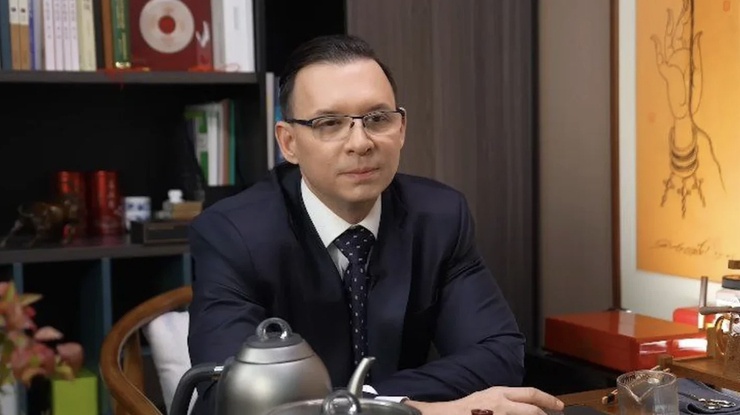
The Security Service of Ukraine has announced new charges against former People's Deputy Yevhen Muraiev. He is accused of justifying and denying Russia's armed aggression against Ukraine — articles that appeared in the Criminal Code after February 24, 2022.
Muraiev is not a new name in the context of pro-Russian activity. Even before the full-scale invasion, he was the owner of the NewsOne television channel, which the National Council of Television and Radio Broadcasting of Ukraine repeatedly warned for retransmitting narratives favorable to the Kremlin. In January 2022, British intelligence named him among people Moscow allegedly considered as candidates for the role of puppet leader of Ukraine. Muraiev himself denied this.
The new charge is not the first. This means that the investigation is documenting new episodes or expanding the evidence base for existing ones. The problem is that suspicion in Ukrainian law is a beginning, not a verdict. There is a chasm between "the SBU suspects" and "the court convicted," which the domestic judicial system crosses slowly, and cases against pro-Russian media figures cross especially slowly.
The broader context is fundamentally important: Russia is waging an information war not just with missiles and drones. Narratives about "fraternal peoples," "NATO provocations," or "Western responsibility" are weapons that work to demoralize from within. Criminal prosecution for spreading such narratives is an attempt by the state to set a legal barrier. But the attempt is effective only when it reaches a verdict with real consequences.
The Muraiev case will become exemplary not because of his surname, but because of the answer to a simple question: Is Ukrainian justice capable, during wartime, of bringing a case about information cooperation with the aggressor to court—and doing so transparently, without signs of political orders?



