NABU on Kozin Estates: Zelensky Outside the Case, Yermak Inside It
# NABU Director Separates President from "Midas: Dynasty" Operation NABU Director Semen Krivonos clarified at a briefing that the president is not involved in the "Midas: Dynasty" operation — an investigation in which former head of the Presidential Office Andriy Yermak has already been served a notice of suspicion for laundering over 460 million hryvnias through the construction of elite residences near Kyiv.

By Tetiana Suchkova-Ladik
May 12, 2026 · 2 min read
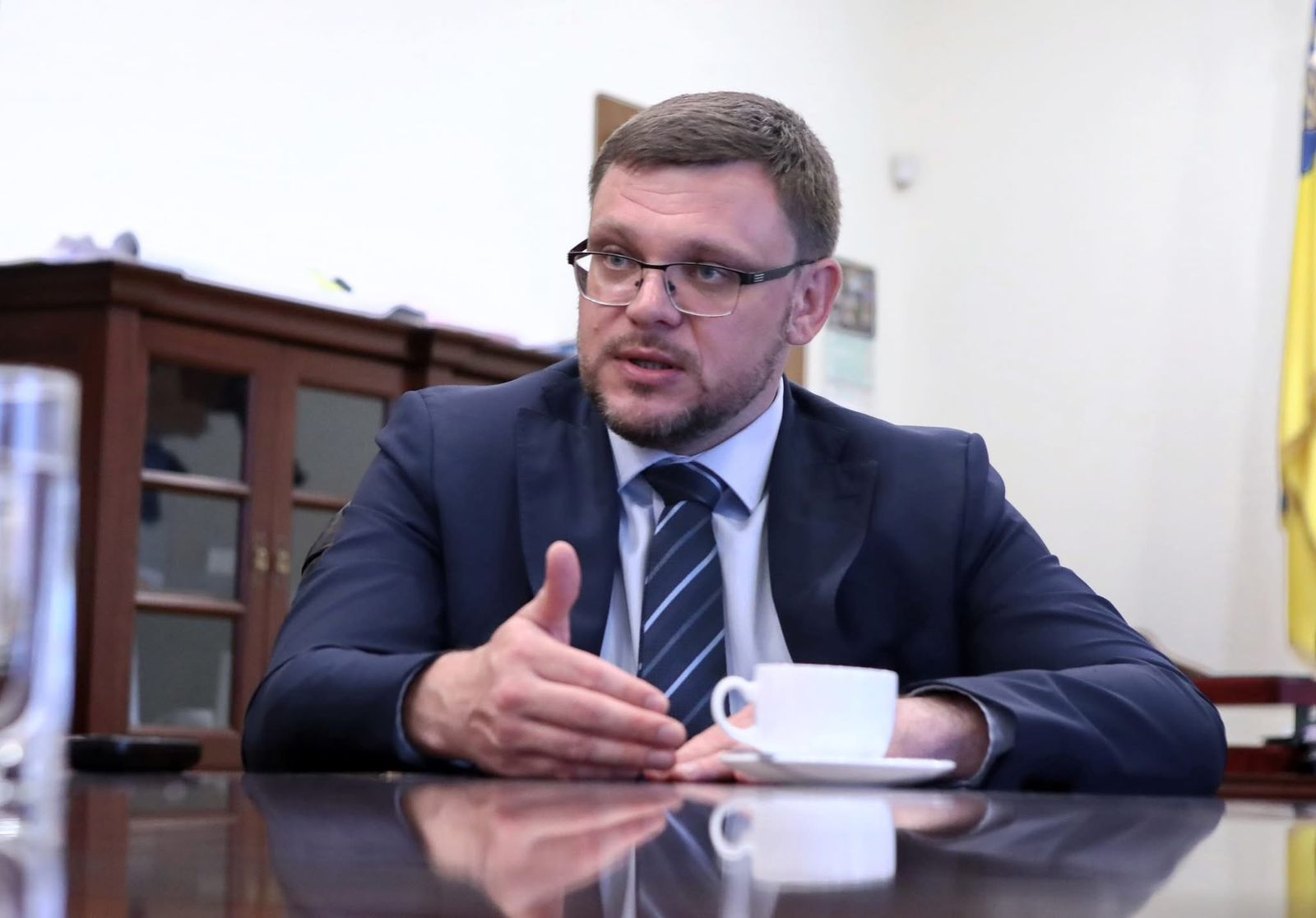
President Volodymyr Zelensky does not appear and has not appeared in investigations within the "Midas" operation, including regarding money laundering. This was confirmed by the director of the National Anti-Corruption Bureau Semen Kryvonog at a briefing, clarifying that the verification of property ownership in Kozyn is being conducted as part of a pre-trial investigation — and Zelensky has no connection to it.
Scheme: Kickbacks from Energoatom — into walls near Kyiv
Operation "Midas: Dynasty" launched on November 10, 2025. According to the investigation, an organized group laundered over 460 million hrn ($9 million) during 2021–2025 through the construction of five private residences in Kozyn village in the Kyiv region. The funds came from corruption schemes at the state-owned "Energoatom" — the operator of nuclear power stations that generates more than half of the country's electricity.
The mechanism was two-channel: approximately 10% of the sum went through "white" channels — via the housing cooperative "Sonyachnyy bereg" (Sunny Shore). The rest was paid in cash through the so-called "laundry," where kickbacks amounting to 10–15% of Energoatom contracts accumulated. After the full-scale invasion began, construction did not stop — instead, according to the investigation, one of the suspects demanded work in two shifts.
Who received suspicions
- Andrii Yermak — former head of the Presidential Office, suspected of legalizing proceeds from crime (Part 3, Article 209 of the CCU)
- Oleksiy Chernysov — former vice prime minister, identified as one of the leaders of the organized group
- Timur Mindich — businessman and co-owner of the "Kvartal 95" studio
- at least three other participants of the scheme received suspicions in the third wave of notifications
"We are not making a TV series, we are investigating crimes"
Semen Kryvonog, director of NABU
What NABU says about the investigation status
According to Kryvonog, the investigation has moved into the financial investigation stage: detectives are focused on proving their case in court, not publishing audio recordings. Recordings of conversations between suspects are released only after declassifying covert investigative actions. The Bureau also dismissed the version about FBI involvement — according to the director, the operation is exclusively a development of NABU detectives and SAP prosecutors. The investigation lasted 15 months, with more than 70 searches conducted, 1000 hours of audio recordings preserved, and $4 million in cash seized.
In July 2025, construction in Kozyn was suspended. Asset seizure has already been imposed.
Suspicion ≠ verdict: all named individuals deny their involvement, and the case is at the pre-trial investigation stage.
The question that will determine the weight of the case
Operation "Midas" leads for the first time in Ukrainian practice to the dock individuals of such a level — if SAP proves the charges in court. Whether the 1000 hours of audio and financial traces collected will be sufficient for the court to find guilty the former head of the Presidential Office and members of his network — this will be a test not only of NABU's evidence base but also of the anti-corruption system's ability to operate without political concessions.



