Over Sumy — interceptors or Russian FPV drones? 'Kursk' denies the expert's assessment — what it means for the city
The "Kursk" group claims that the objects in the sky over Sumy are Ukrainian interceptor drones, not Russian FPV. This contradicts a video by expert Serhiy "Flesh" and statements from local authorities. We examine the facts and the risks to civilian safety.

By Tetiana Suchkova-Ladik
January 26, 2026 · 3 min read
What happened
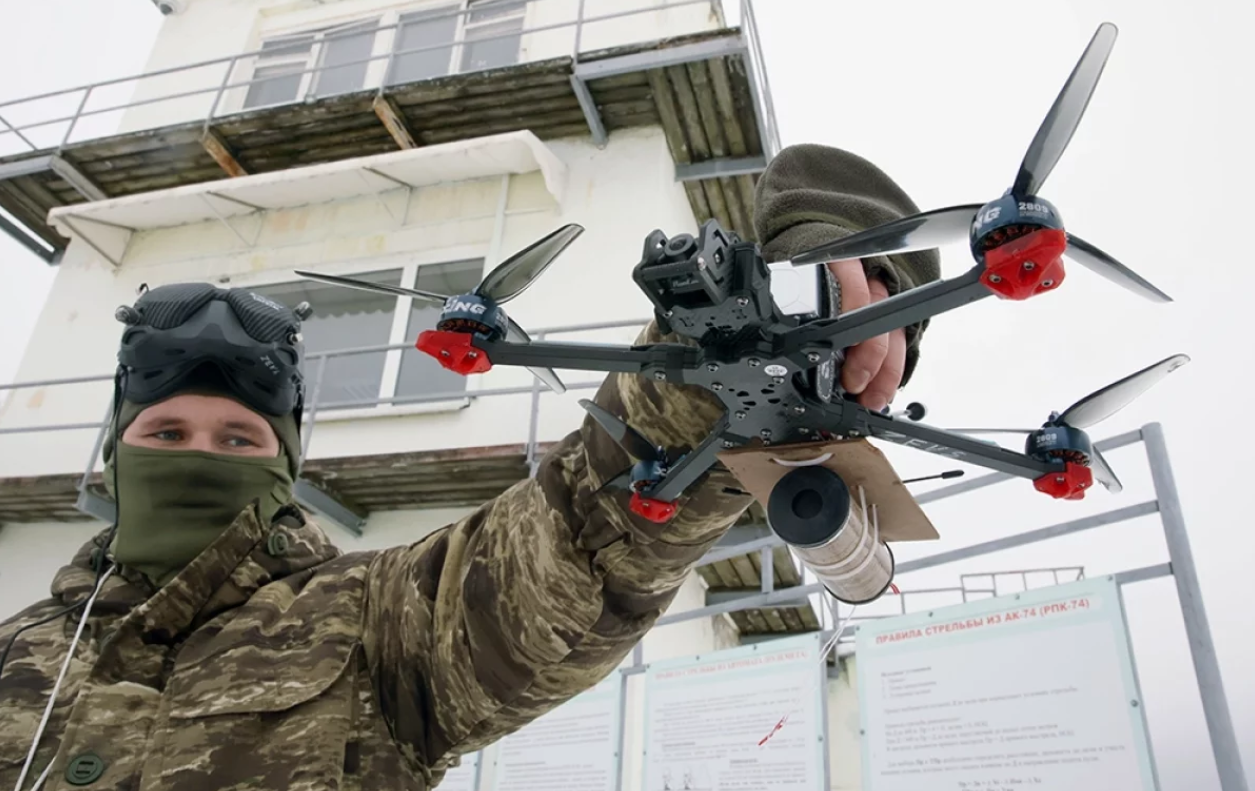
The communications center of the "Kursk" grouping published a statement: in their version, the unidentified unmanned aerial vehicles over Sumy are Ukrainian drone‑interceptors, not enemy FPV drones. The message came against the backdrop of several posts and videos, including a clip from radio engineer Serhiy “Flesh,” who says he recorded the “picture” from a Russian FPV drone.
Evidence and timeline
Briefly, by the facts:
- 15 January — Serhiy “Flesh” published a video in which, he says, a signal from an FPV drone allegedly belonging to the “Rubicon” unit was intercepted.
- 18 January — the head of the Sumy Regional Military Administration, Serhiy Kryvosheyenko, reported a drone crash in the Kovpakivskyi district: five windows were damaged, there were no casualties.
- Before that — several Telegram reports about FPV strikes in the suburbs of Sumy (Stetskivskyi starostate).
- The "Kursk" grouping officially stated that flights of enemy FPV drones over the city are “physically impossible” and that what people saw were interceptor drones.
“We officially appeal to the local community, local media and local authorities: flights of enemy FPV drones in the city’s sky are physically impossible. What people saw with their own eyes or in the media were Ukrainian drone‑interceptors. They are used to defend against hostile strike UAVs such as 'Shahed', 'Geran', 'Molniya', 'Italmas'…”
— Communications Center of the "Kursk" grouping
Why it matters
Explaining without emotion: this is not only about labeling objects in the sky. The answer to “who is it?” determines air‑defence tactics, rules of conduct for civilians and risk assessment. If the objects are interceptors, it means active air defence operations; if they are enemy FPV drones, it means the need to strengthen the protection of residential areas and inform the public about the risk of falling debris.
Technical context
Radio‑technology experts point out: FPV drones are controlled in a direct video‑link mode and have limitations in range and line of sight. Interceptors are a different category; they can jam or spoof control channels. However, the two versions are not mutually exclusive: the objects seen in the sky could be the result of interaction between attacks and countermeasures.
Context for residents
The distance from Sumy to the front line is roughly 18 km as the crow flies. This makes it possible to employ FPV and other types of UAVs from the occupied territory or nearby positions. For civilian safety the key point is not who launched a drone, but how quickly and clearly authorities communicate the risks and protective measures.
What the expert community says
Analysts and specialists in radio electronics emphasize: additional technical analysis of recordings and interceptions is needed. Social evidence: well‑known experts, including those who work with interceptions, confirm that external symptoms (light in the sky, falling objects) are easy to misinterpret without spectral and radio‑frequency analysis.
Conclusion
The "Kursk" statement casts doubt on a simple interpretation of what was seen in the sky — but it does not remove the actual risks to residents. While versions continue to be exchanged, it is more important that security agencies provide transparent technical conclusions and guidance for citizens. The question is not only who launched the drone: it is a question of the effectiveness of the city’s defence and the quality of communication with the public.
Now the ball is in the court of confirmations — whether detailed interceptions, spectral data or additional testimonies will appear that unequivocally determine the nature of the objects in the sky over Sumy.



