FPV Drone Launched From "Herbera" Spotted Over Sumy — What It Means for Regional Security
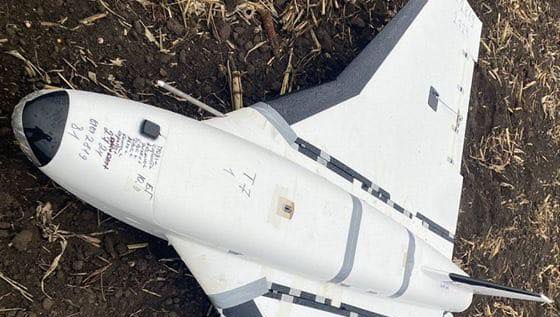
The video released by an adviser to the Ministry of Defense shows the moment an FPV drone was launched from the "Gerbera" UAV. We examine why this is more than just another incident in the skies over Sumy region.

By Tetiana Suchkova-Ladik
February 9, 2026 · 2 min read
Briefly
Another instance of a Russian FPV drone being used has been recorded over Sumy, which, according to adviser to the Minister of Defense Serhii Beskrestnov (Flash), was launched from a "Gerbera" drone. The authors of the video claim that such launches occur daily, but full confirmation is still lacking.
"The video shows the moment an FPV is launched from a 'Gerbera', and such uses are recorded daily."
— Serhii Beskrestnov, adviser to the Minister of Defense, specialist in military radio technologies (Flash)
Details and versions
There are several key points in the timeline of incidents: on February 3 Flash reported the first recorded use of a "Gerbera" as a carrier for FPV — at that time fragments or the drone itself could not be found. Earlier, on January 15, Flash published a video of the interception of the "picture", allegedly from a Russian FPV drone over Sumy.
At the same time, the "Kursk" group denied that these were Russian FPVs: they claimed that the drones recorded were Ukrainian UAV interceptors. "Kursk" does not rule out the possibility of FPVs being launched from mothership drones, but called the classic use of such systems from ground stations over the city "highly unlikely."
"The unknown drones being recorded over Sumy are Ukrainian UAV interceptors, not Russian FPVs."
— The 'Kursk' group
Why it matters
If the practice of launching FPVs from carriers like the "Gerbera" is confirmed, it would indicate a tactical shift: the enemy is trying to field more resilient, maneuverable strike groups at range while minimizing risk to their operators. Such solutions make detection harder and increase the burden on air defence and intelligence systems.
What this gives the enemy: more reliable channels for delivering small strike UAVs, greater distance between the operator and the target, and higher chances of avoiding local air defence. What it means for us: the need for faster and more precise signal identification, focus on counter-battery intelligence, and interception solutions on the approaches, not only in the air above the city.
What to expect next
For now the evidence base is limited: videos and interceptions provide grounds for suspicion, but the origin and launch method can only be definitively confirmed after analysis of fragments or more detailed reconnaissance. Analysts and military experts draw attention to the increase in complex combinations of unmanned systems in the conflict zone — this is shifting priorities in defense and intelligence.
Whether this will become a systemic threat to populated areas depends on how quickly intelligence and air defence operate. For now it is important to record facts, verify materials and adapt security measures, rather than draw premature conclusions.



