Attack on the "Russian House" in Prague: what it reveals about Russia's "soft power" and Europe's security
On the evening of March 26, unknown individuals threw bottles filled with an incendiary mixture at a Russian centre in the Dejvice district. This is not only a criminal matter — the incident raises questions about security, influence and responsibility amid the war in Europe.

By Tetiana Suchkova-Ladik
March 27, 2026 · 2 min read
What happened
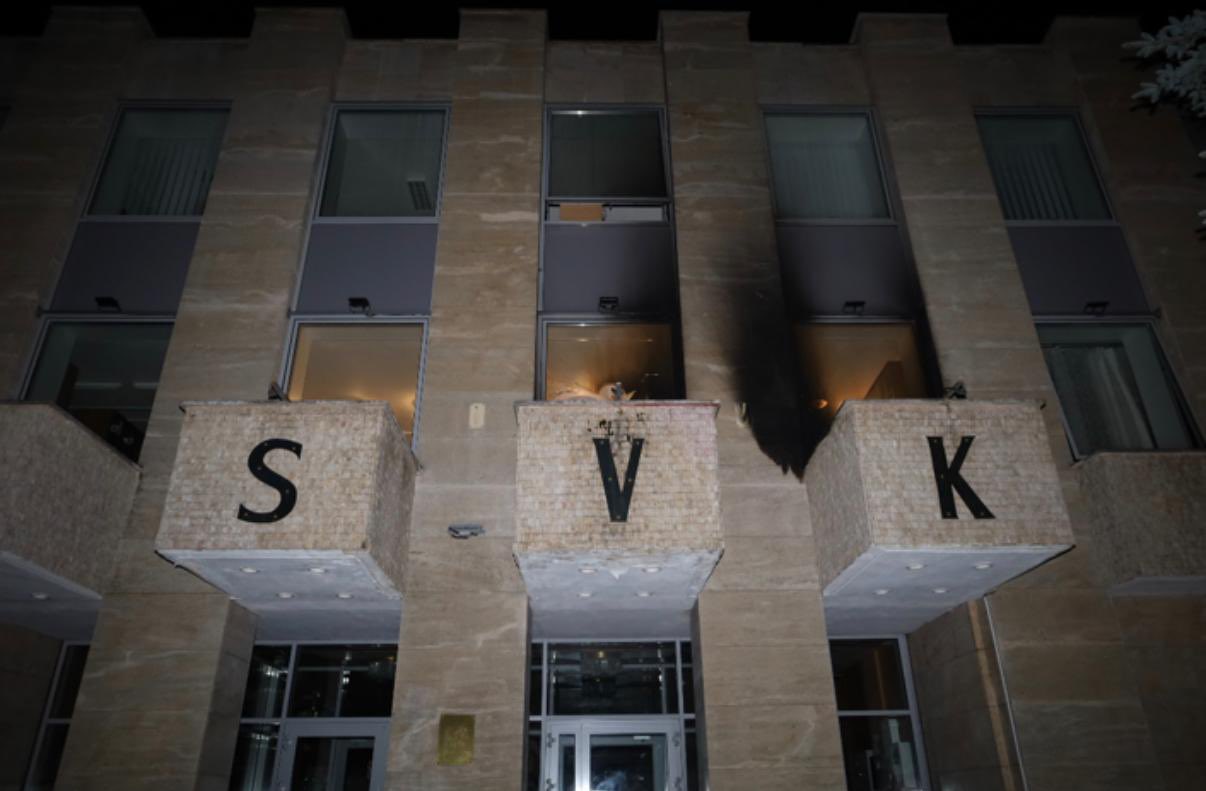
On the evening of Thursday, March 26, unknown individuals damaged a building known as 'Russian House' in Prague, the Czech police press service reported. According to law enforcement, several Molotov cocktails were thrown at the building on Na Zátorci Street (Prague 6, Dejvice district) — a search for suspects is underway on suspicion of damaging someone else's property.
"Since last night we have been investigating an attack in which someone threw several Molotov cocktails at the 'Russian House' on Na Zátorci Street, Prague 6"
— Czech police press service
The center's director, Ihor Hirenko, said the bottles did not explode inside and that the damaged windows belong to the library. The center has been under the authority of the Russian agency Rossotrudnichestvo since 1971; the Czech Republic does not recognize the building as diplomatic.
"The bottles thrown inside the building did not explode. The windows that were targeted belong to the library."
— Ihor Hirenko, director of the center
Why it matters
At first glance — an offense and property damage. However, in the broader context this is a marker of the debate about the role of Russian cultural centers in Europe: officially they promote language and culture, but in many countries they are viewed as elements of "soft power" with the potential for political influence. After the full-scale invasion of Ukraine, the activities of some such institutions were restricted or suspended.
Journalists and analysts (Seznam, LIGA.net) note that such incidents push European capitals to review the legal status and control practices of these centers — the balance between cultural freedom and security becomes a matter of priority.
Reaction of authorities and possible consequences
"I consider an attack on any facility unacceptable without exception, regardless of its character or affiliation. It is a serious unlawful act that poses a threat to security. The police are investigating this case..."
— Lubomir Metnar, Czech Minister of the Interior
The official reaction — condemnation and a promise of investigation. In practice this could mean increased monitoring, legal initiatives regarding the status of such institutions, and a public discussion about how EU countries protect their information space. The example of Moldova and Azerbaijan (closure/denunciation of agreements with 'Russian Houses') indicates a trend that may spread.
What next for Ukraine and Europe
The incident in Prague is a signal that the issue of cultural influence is becoming an element of security policy. It is important for Ukraine to monitor developments: how Western partners will react, whether they will strengthen legal instruments to counter foreign propaganda, and which mechanisms to protect the information space will be implemented.
While investigative actions are underway, the main thing is to separate the criminal offense from political conclusions, but not to ignore the systemic risks that such incidents reveal. Whether this case will become a catalyst for stricter regulation of similar centers in the EU depends on the response of politicians and law enforcement in the coming weeks.



