Nazariy Husakov placed under nightly house arrest: what it means for trust in charitable fundraising
The court chose a milder preventive measure than the prosecution had requested. We examine why the decision matters not only for the suspect but for everyone who relies on fundraisers for medical treatment.

By Tetiana Suchkova-Ladik
March 26, 2026 · 2 min read
The court decision — what you need to know right now
The Pecherskyi District Court of Kyiv on Thursday, March 26, placed Lviv resident Nazariy Husakov under night-time house arrest — from 10:00 p.m. to 6:00 a.m. This was reported by an hromadske correspondent from the courtroom. His passport for travel abroad was also seized.
What happened
Husakov is suspected of embezzling donations raised for the treatment of spinal muscular atrophy (SMA). The prosecution insisted on round-the-clock house arrest at his place of residence in Lviv; the defense asked for night-time house arrest and emphasized the suspect’s medical condition.
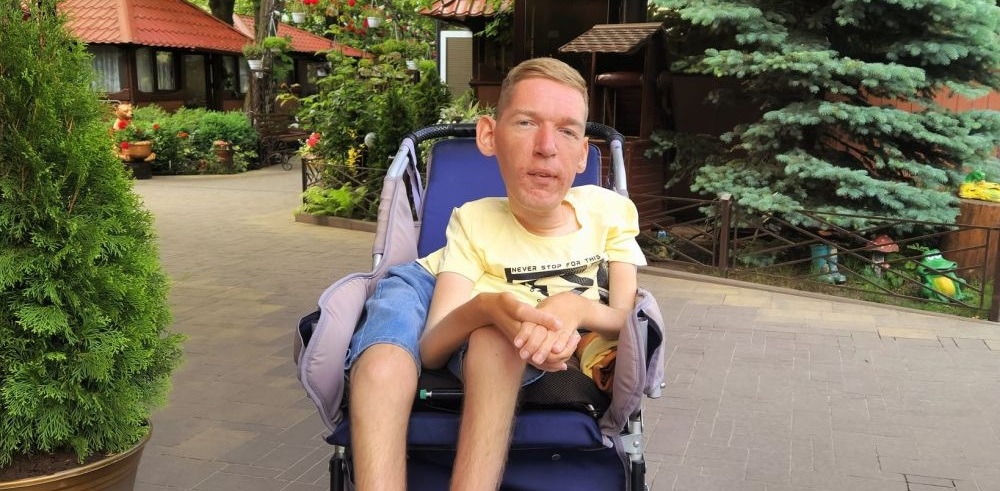
"His health has deteriorated significantly. He cannot go to the toilet by himself. He has to be carried there. He cannot appear in court at all. All he can do is join via video link. But he does not obstruct the investigation and provides testimony."
— Nazariy Husakov's lawyer
According to the Prosecutor General's Office, notice of the change in suspicion was served after the suspect returned to Ukraine on March 25. As Prosecutor General Ruslan Kravchenko reported, the number of victims in the case has risen from 34 to 96 people, and the amount of damage is now estimated at 2 million hryvnias.
Context and consequences
The scandal over the fundraisers erupted on June 17, 2025 — journalist Khudetska drew attention to suspicious details in public campaigns. The mayor of Lviv then reported that the city and the drug manufacturer had been supplying the medication free of charge for years. On June 22 the matter reached the highest level: the president was briefed on the case, and law enforcement opened two proceedings.
The court’s decision can be read as a measured compromise: the court apparently sought to balance the defense’s medical arguments with the need to prevent flight or obstruction of the investigation — hence the passport seizure. That is why it is important now to pay attention not only to the individual case, but to the broader effect on the charitable system.
Why this matters to the reader
This story touches on basic trust: when it comes to fundraising for treatment, society has the right to expect transparency and guarantees that donations will reach the patient. The increase in the number of victims and the amount of damage strengthens arguments for greater verification of crowdfunding campaigns and official procedures when transferring costly medicines.
Experts and human rights advocates are already pointing to the need for control mechanisms: from electronic registries of charitable collections to rapid access to medical records to verify the need for medications.
What’s next
The investigation continues. Appeals against the preventive measure and further investigative actions are possible, which could clarify which specific operations and transactions are considered embezzlement. For society the key question is whether this case will become a driver of reforms in the charity sector or remain an isolated scandal.
Readers should remain critical: verify the sources of fundraisers, use official channels (hospitals, well-known funds) and pay attention to public reports on the use of funds. While the legal process continues, trust requires not emotions but transparent rules.
Read more about what SMA is and how this disease is treated in Ukraine in a column by Svitlana Solovyova on LIGA.net.



