No confirmation of 'Oreshnik' deployment in Belarus — what it means for Ukraine's security
BelPol says propaganda footage does not prove the presence of a launcher. We examine why verification matters and the consequences for partners' responses and sanctions policy.

By Tetiana Suchkova-Ladik
February 21, 2026 · 2 min read
What is known
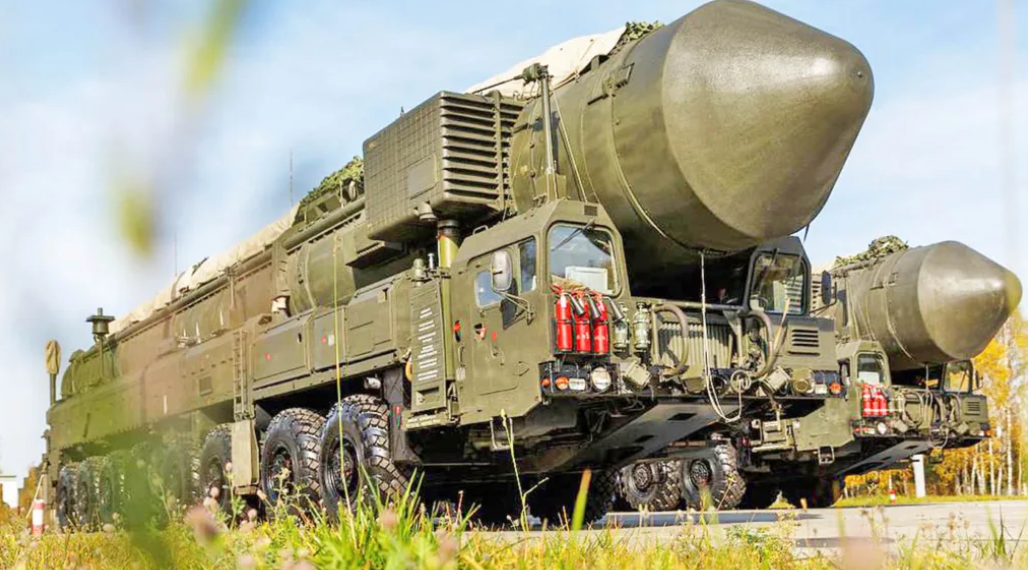
Representatives of the association of former Belarusian security officers BelPol told LIGA.net that there is currently no confirmed information about the placement of a launcher for the Russian medium-range ballistic missile "Oreshnik" on the territory of Belarus. They note that the published footage does not provide direct evidence of the presence of that specific system.
"What the propaganda showed has nothing directly to do with 'Oreshnik'. They showed vehicles that can be used outside the context of the 'Oreshnik', so to speak"
— Representatives of BelPol, the association of former Belarusian security officers (comment to LIGA.net)
BelPol also draws attention to satellite images: the placement of technical "boxes" is too dense, so in the event of a strike one object would easily hit the neighboring one — this does not look like a typical deployed position for strategic missiles.
At the same time, Alexander Lukashenko said that the "Oreshnik" has allegedly been in Belarus since December 17, 2025 and has gone on combat duty, and Reuters reported a possible deployment of the system at a former air base in the east of the country. The president of Ukraine ordered intelligence to prepare response options for such scenarios.
Why it matters
The difference between an actual deployment and a propagandistic demonstration has direct consequences for security and sanctions policy. If these are decoys or auxiliary equipment, the need for immediate military action is different than in the case of an actual deployment of medium-range missiles.
For Ukraine and its partners, correctly interpreting satellite data and local sources is the basis for a proportionate and effective response, including diplomatic pressure and sanctions against manufacturers and suppliers.
What sources and analysts say
BelPol points to the possibility of the movement of auxiliary equipment or fake installations brought in from Russia, but does not see evidence of the presence of strategic missile forces. Reuters names the approximate location — a former air base in eastern Belarus — but these are currently operational assumptions, not verified data.
Analysts emphasize: the appearance of "hot" images in the media is often accompanied by statements that precede fact-checking. Social and diplomatic pressure can force premature decisions if verification standards are not followed.
Consequences and response options
Possible resolution scenarios: 1) confirmation of deployment — then operational defensive measures and increased sanctions follow; 2) detection of decoys or auxiliary equipment — a diplomatic response and increased intelligence-gathering; 3) uncertainty — a prolonged phase of monitoring with public coordination with partners.
Given this, it is important for Ukraine and its allies to: inform the public transparently, bolster intelligence with independent sources, and translate declarations into concrete steps — from sanctions to increased defense readiness.
Short forecast
So far there is no confirmation of the deployment of the "Oreshnik", but the risk of information provocations is high. The coming days should show whether Lukashenko's statements will turn into facts verified by satellite and intelligence data, or remain an element of the Kremlin's information strategy.
Now the ball is in the partners' court: will they be able to gather enough verified evidence to pressure suppliers and reduce risks for Ukraine?



