"Neptune" - strike on the plant supplying drones to the front: Taganrog, April 2025
Ukraine's Navy struck the "Atlant Aero" enterprise in Taganrog with Neptune cruise missiles — a producer of Molniya attack drones that Russia uses to strike Kharkiv and frontline cities. Satellite imagery confirms damage to at least three workshops.

By Tetiana Suchkova-Ladik
April 19, 2026 · 2 min read
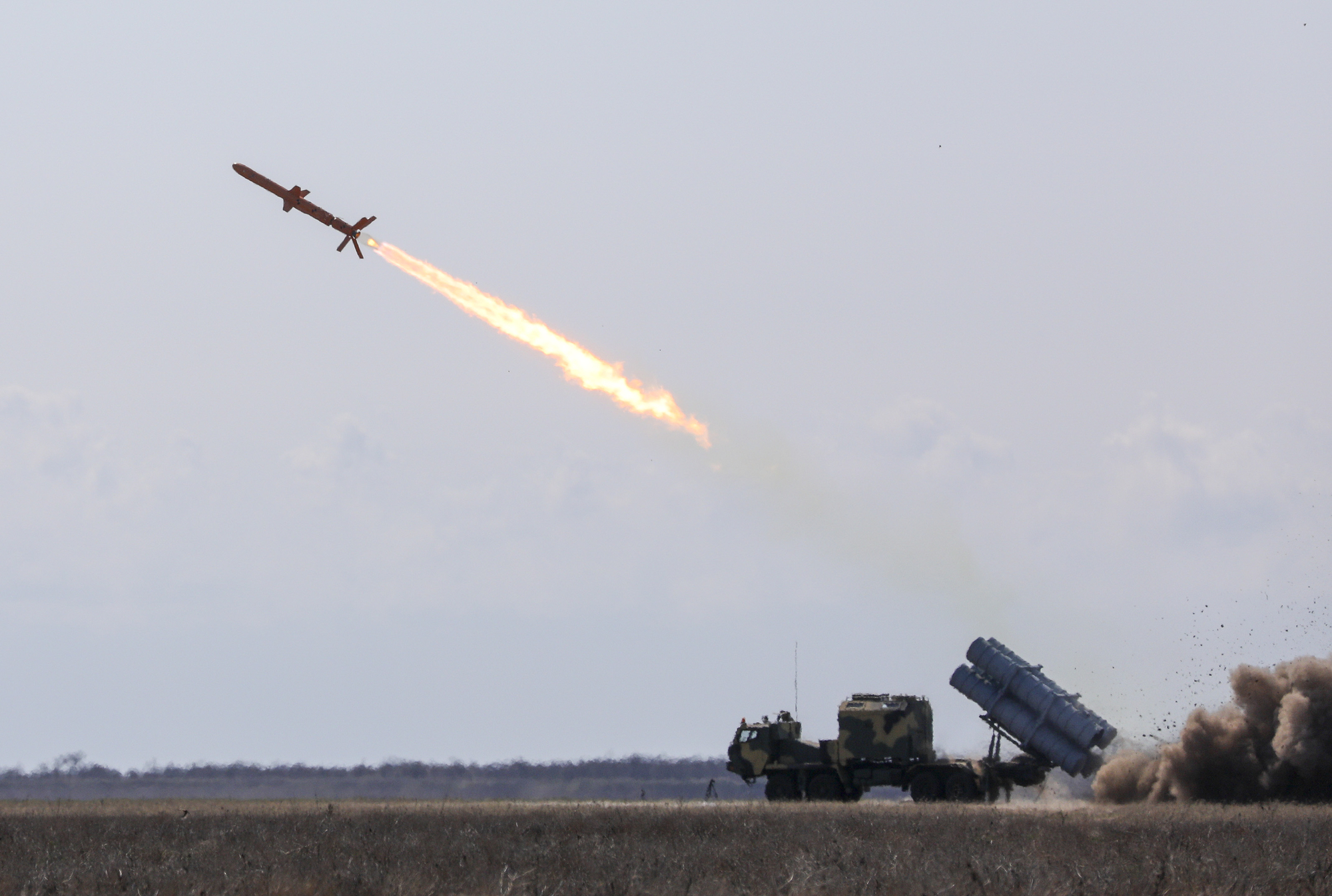
On the night of April 19, the Naval Forces of Ukraine struck the Atlant Aero plant in Taganrog, Rostov Region, with Neptune cruise missiles. The General Staff of the Armed Forces of Ukraine confirmed the hit and fire at the facility. Rostov Region Governor Yuri Slyusar acknowledged the attack and reported that three city residents sought medical assistance and commercial infrastructure was damaged.
What Atlant Aero Produces
The enterprise carries out the full cycle of design and production of attack and reconnaissance unmanned aerial vehicles. According to the War & Sanctions portal of the Main Intelligence Directorate of Ukraine's Defense Ministry, Atlant Aero manufactures FPV kamikaze drones "Molniya-1" and "Molniya-2", as well as the reconnaissance version "Molniya-2R" and components for the "Orion" drone — a carrier of guided bombs and missiles with a payload capacity of up to 250 kg.
"Molniya" is a loitering munition made of plywood, plastic and cardboard. This makes it inconspicuous to radar and difficult to detect by air defense systems.
Wikipedia, article "Molniya (UAV)"
Russia first struck Kharkiv with this drone on November 12, 2024. Since the beginning of 2025, "Molniya" has been regularly used against front-line cities. With speeds of up to 800 km/h and a body made of inexpensive materials, it makes for a cheap alternative to the "Lancet" — but with similar tactical effect.
Scale of Damage
OSINT analysis by the ASTRA channel confirmed a direct hit on the Atlant Aero plant. Satellite images circulated after the strike document damage to at least three production workshops, including the final assembly shop for UAVs. This is not the first strike on the facility: in November 2024, during a large-scale attack on Taganrog, Atlant Aero was hit along with the TANTK named after Belyayev aircraft repair plant, and again in January 2025. The General Staff then clarified damage to two production workshops and an administrative building.
- November 2024: first confirmed hit on Atlant Aero — as part of an operation with Neptune missiles and Bars UAVs
- January 13, 2025: repeated strike, damage to final assembly shop and two production buildings confirmed
- April 19, 2025: new Neptune strike, three workshops damaged according to satellite data
Tactical Context
Neptune is a Ukrainian cruise missile, developed primarily for striking surface targets, but adapted for strikes against ground facilities. Taganrog is located approximately 80 km from the front line — within the effective range of Neptune without the use of ATACMS or Storm Shadow. The series of repeated strikes on a single enterprise indicates a targeted strategy: to destroy the production cycle, not just inflict one-time damage.
In parallel that same night, the Armed Forces of Ukraine struck other facilities in Russian territory and occupied areas — the General Staff did not specify details, citing ongoing assessment of consequences.
If Atlant Aero indeed lost its final assembly workshop after three consecutive strikes, the key question is whether the enterprise managed to relocate production lines to backup sites, which Russia traditionally does not report publicly.



