Novynskyi funds 90% of new Russian Orthodox Church parishes in Europe — intelligence report on a tool for influencing Ukrainians
According to the Foreign Intelligence Service (SZR) and LIGA.net, a sanctioned oligarch is channeling funds to a religious network that is masquerading as the Ukrainian Orthodox Church and drawing in Ukrainian refugees. We unpack how this works and why it matters for Ukraine’s security abroad.

By Tetiana Suchkova-Ladik
March 16, 2026 · 2 min read
In Brief
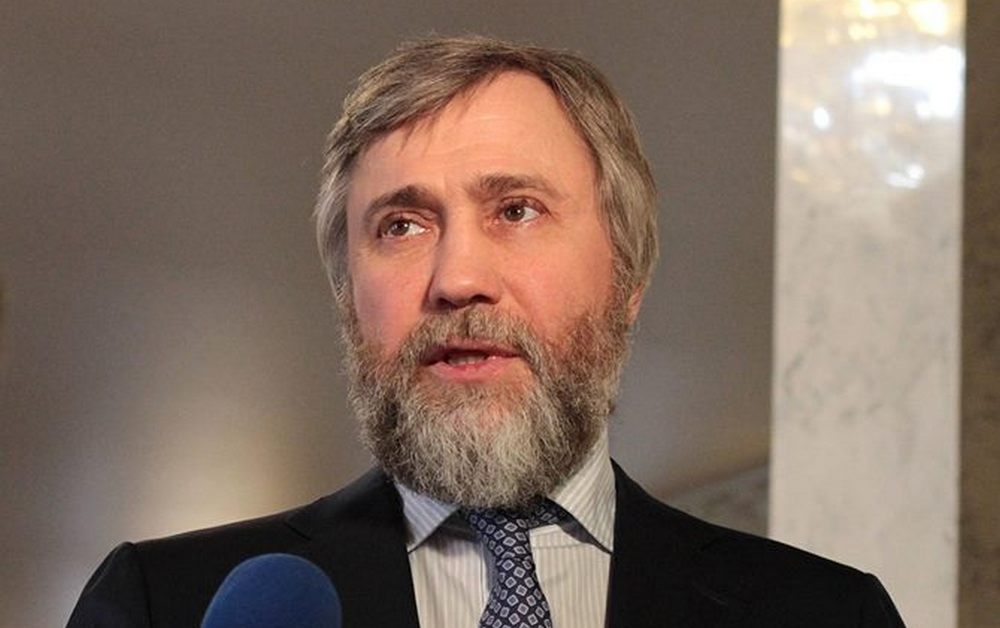
The Foreign Intelligence Service (SZR) told LIGA.net that sanctioned oligarch and former MP Vadim Novinsky is the main donor behind the expansion of religious centers that formally present themselves as the Ukrainian Orthodox Church but in fact operate in synergy with Russia. According to an SZR interlocutor, Novinsky finances about 90% of new parishes in Europe that attract Ukrainian refugees where there are no churches of the Orthodox Church of Ukraine.
What the sources said
"Novinsky finances 90% of new parishes in Europe that are intercepting Ukrainians in cities where there are no OCU churches"
— an interlocutor at the Foreign Intelligence Service, LIGA.net
According to the interlocutor, these centers operate under the cover of charity: in premises often rented by Russian or pro‑Russian priests (notably in Brussels), Ukrainian refugees gather, databases and contact lists are formed that can later be used for political influence. The SZR also points out that funding for Kremlin soft‑power projects abroad increased by 40–45% in 2026 — the specific amount was not disclosed.
Mechanism of influence
The formula is clear and not new: absence of a local OCU church + humanitarian needs of displaced people = high willingness to join any community. In such a space, religious initiatives become a platform for collecting contacts, gauging public sentiment and mobilizing an electorate. Analysts note that such networks operate not only culturally and religiously, but also as an element of a long‑term influence strategy.
Legal and social context
This is happening against the backdrop of the fact that, according to LIGA.net, 7,826 churches of the Moscow Patriarchate continued to function in Ukraine in December, despite a law that prohibits the activities of organizations connected with the Russian Federation. In European capitals, the issue is complicated by the legal status of local communities and freedom of religion, which leaves room for different interpretations and the use of church networks.
Why this matters to the reader
This story is about more than religious formalities. It concerns the security of the Ukrainian diaspora, trust in institutions, and how political sentiments are formed outside the country during wartime. For displaced people in Europe, it is a question of access to support and, at the same time, the risk of ending up in an influence network that may use their data and trust for political purposes.
What’s next
Expert communities in Ukraine and abroad are calling for more transparent reporting on the financing of religious initiatives and active monitoring of communities that work with vulnerable groups. Practical steps include strengthening the OCU's information work in cities with large numbers of refugees, coordinating with local EU authorities, and verifying sources of funding for civic initiatives.
Conclusion
This is an example of how soft power turns into an instrument of political influence. While part of the attention is focused on the front and humanitarian aid, work on information security and the transparency of diaspora institutions should become an integral part of the national strategy. The question remains open: will Ukrainian communities in the EU be able to preserve autonomy from geopolitical influences — and what steps are needed today to achieve that?



