Newsom: Trump’s approach to peace in Ukraine is not yielding results — what this means for Kyiv
California Governor Gavin Newsom, at the Munich conference, sharply criticized the current U.S. strategy on peace efforts and urged more decisive support for Ukraine. The statement signals not only U.S. domestic political dynamics, but also how quickly and to what extent Kyiv can expect assistance.

By Tetiana Suchkova-Ladik
February 13, 2026 · 2 min read
On the statement in Munich
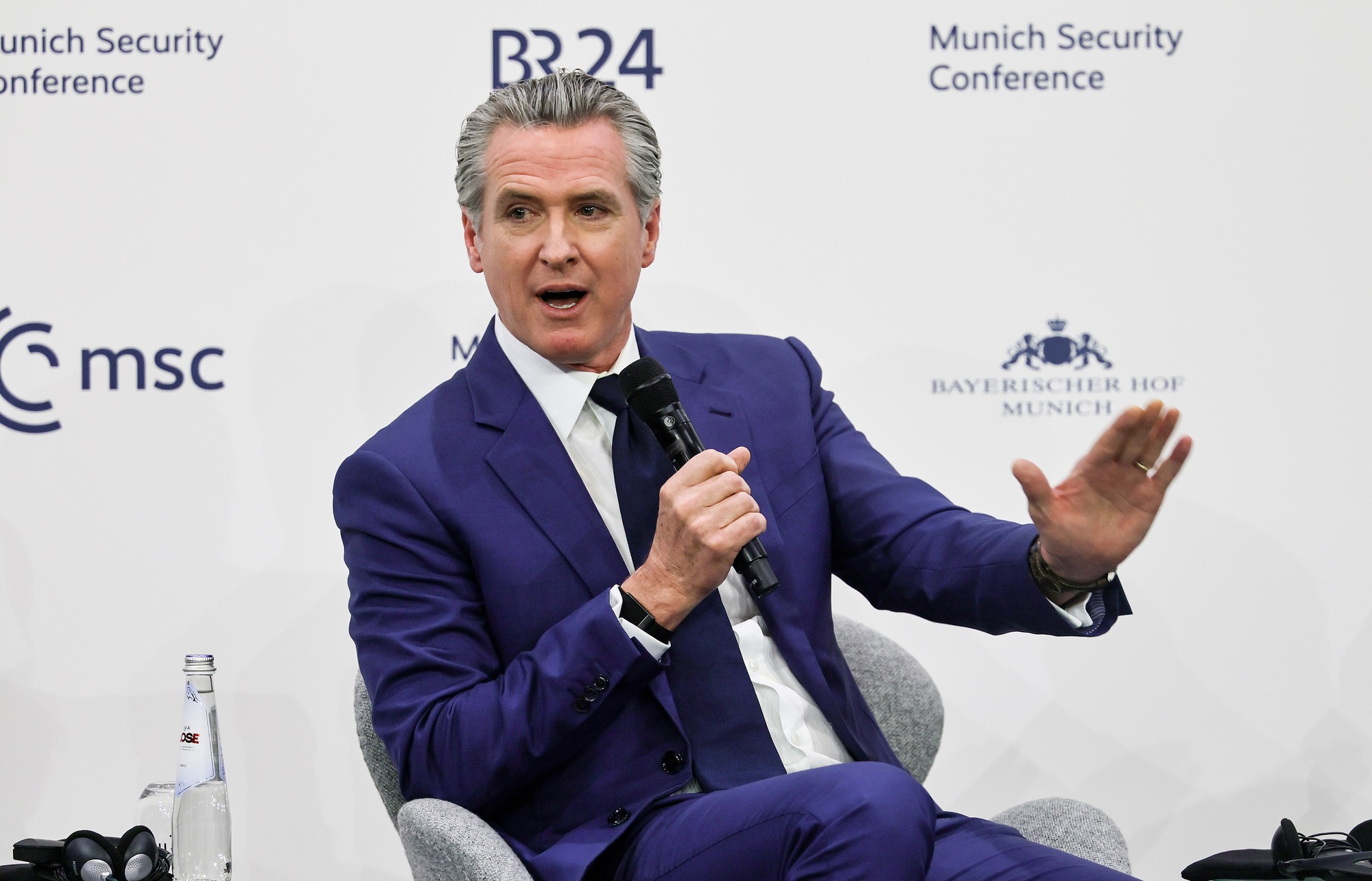
Gavin Newsom, during a conversation with reporters at the Munich Security Conference, characterized the Donald Trump administration's approach to resolving the war in Ukraine as "not delivering real results", reports an LIGA.net correspondent. He expressed hope that the position would be adjusted toward a more decisive and supportive policy — in particular in financial and other areas.
"And I appreciate that. I think we all should [appreciate it]. I think we all in the United States do. So I hope he will adjust his approach. And I hope his approach will be a bit more decisive, a bit clearer, a bit more supportive in financial and other areas."
— Gavin Newsom, Governor of California
Why this is important for Ukraine
Newsom's words are more than just criticism of American policy. They reflect an internal debate in the United States that determines the scale and nature of aid to Kyiv. When one of the most prominent opponents of the current administration openly speaks about the ineffectiveness of the approach, it creates public and political pressure that can accelerate or alter decisions on assistance packages.
Against the backdrop of new massive strikes on Ukrainian infrastructure, the argument for increased financial and material-technical assistance gains greater weight. Experts note: diplomatic rhetoric turns into practical solutions when there is political will within key allies.
Political background in the US
Newsom is one of the most prominent critics of Trump and a potential Democratic candidate in future elections. His assessment adds weight to the opposition's position and may increase pressure on the administration to adopt a clearer strategy. At the same time, it's a signal to Kyiv: American policy toward Ukraine depends not only on administrative decisions but also on internal party disputes and public opinion.
The context for Newsom's remarks includes recent statements by Volodymyr Zelensky: on February 7 the president said that the US had allegedly offered to end the war by the beginning of summer, and on February 12 he noted that ending the war would be a major victory for Trump. These public timelines amplify the significance of any discussions in Washington.
Conclusion
Newsom's criticism is not only a political statement. It is part of a broader conversation in the United States about what real, not symbolic, support for Ukraine should look like. Kyiv must closely watch the development of this debate: the speed and nature of future decisions on funding, supplies, and diplomatic initiatives depend on it.
Experts generally agree: if rhetoric turns into concrete steps, it could change the dynamics on the front without additional lengthy procedures. Now it's up to the partners — whether they will back words with actions, and how quickly.



