Newsom in Munich: Trump Not for Decades — What It Means for the West and Ukraine
At the Munich Security Conference, California Governor Gavin Newsom called the Trump administration temporary — we explain why this matters for European unity and for security support for Ukraine.

By Tetiana Suchkova-Ladik
February 15, 2026 · 2 min read
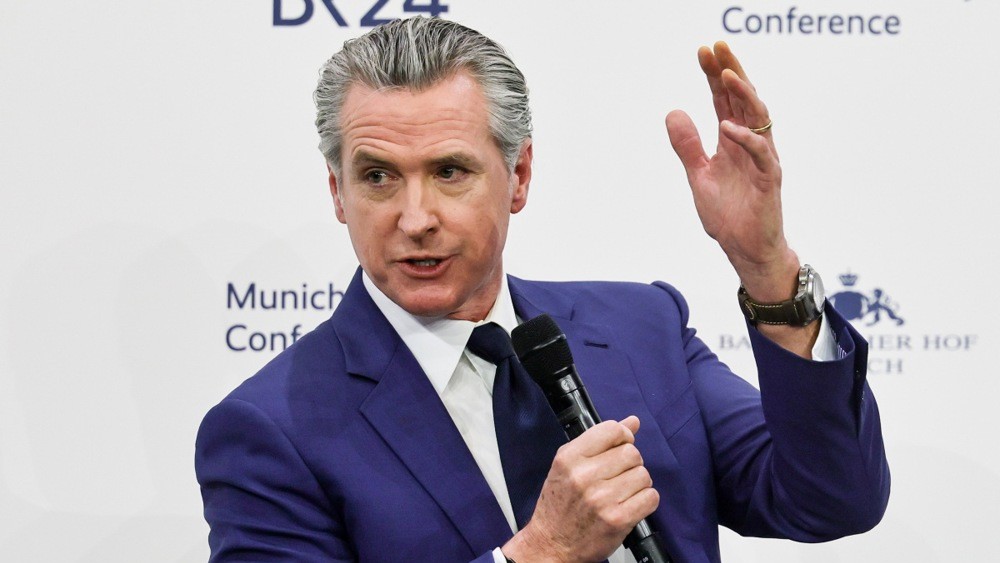
What was discussed in Munich
At the Munich Security Conference (MSC) California Governor Gavin Newsom said the current administration of U.S. President Donald Trump is temporary and "will be measured in years, not decades," Bloomberg reports (14 February). Newsom linked that temporariness to expected losses by Republicans in the midterm elections and to possible legal limits on the president's powers, notably on tariffs.
"It will be measured in years, not decades"
— Gavin Newsom, governor of California
Key messages of the speech
Newsom distinguished the style of the current administration from enduring American institutions, urging European leaders to maintain stable partnerships not only with the U.S. federal government but also with powerful states like California. According to him, European capitals have become more cohesive in response to uncertainty in Washington.
"Perhaps that is Donald Trump's only contribution"
— Gavin Newsom, governor of California
Conservatives' stance and balance of interests
As reported, Senator Marco Rubio at the MSC also drew attention to a double message: Europe's fate is closely tied to the U.S., but there are questions about whether some European decisions align with Western values. Newsom partially agreed with the emphasis on the rule of law, but warned against concentrating power in a single set of hands.
Why this matters for Ukraine
This statement is more than domestic U.S. politics. First, the influence of the federal center on international policy can fluctuate, and in such periods states and subnational actors must take on an additional role in supporting partners. Second, likely legal and political constraints on the president regarding tariffs and external economic policy could affect supply chains and industrial projects important for defense cooperation.
For Ukraine this means: strengthening not only contacts with Washington, but also direct ties with U.S. states, investors and civil society; betting on multi-level support that can withstand fluctuations at the federal level.
Political background in the U.S.
Newsom is a prominent figure in the Democratic Party and a potential presidential contender in the future. His warnings combine a political assessment of risks for the U.S. with a call for Europeans to rely on a broader spectrum of American partners. This is part of a wider discussion about the stability of transatlantic relations during a period of political uncertainty.
Conclusion
Statements in Munich indicate two things: first, awareness is growing in North America and Europe of the short-term nature of certain political cycles; second, it is a signal to allies, including Ukraine, to activate multi-level diplomacy. The ball is now in the courts of European capitals and Kyiv — to turn rhetorical support into practical cooperation mechanisms that can withstand political changes in Washington.
Sources: Bloomberg, Munich Security Conference (MSC), speeches by Gavin Newsom and Marco Rubio.



