"They Doused the Mayor — and This Isn't the First Conflict: What's Behind the Attack on Sadovyi"
At Market Square, a 46-year-old Lviv resident suddenly doused the mayor with a liquid of unknown composition. The incident occurred against the backdrop of an acute public confrontation between Sadovyi and the regional military administration.

By Tetiana Suchkova-Ladik
May 15, 2026 · 2 min read
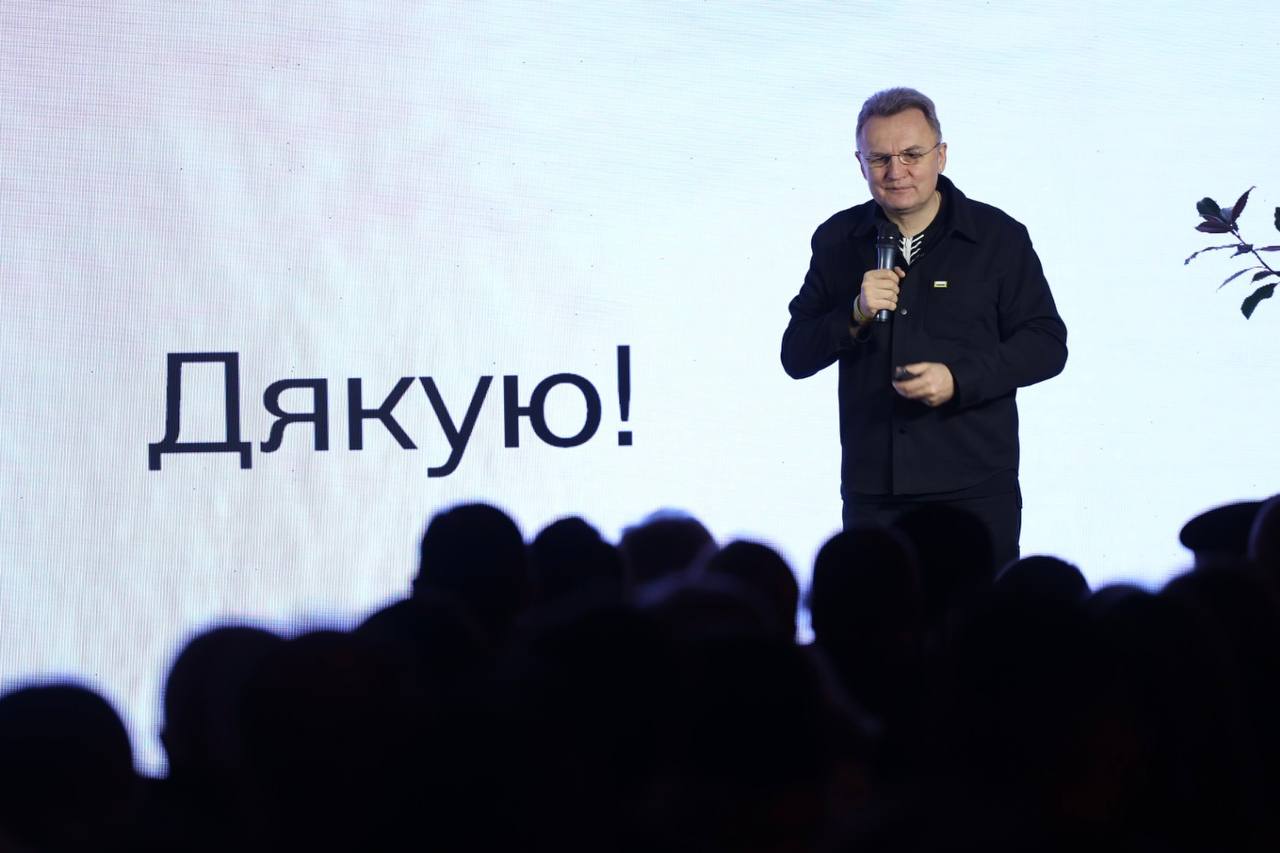
On May 15 at 10:40 on Rynok Square in Lviv, directly near the building of the city council, a 46-year-old local resident ran up to Mayor Andriy Sadovyy and suddenly splashed him with a liquid of unknown composition. The police of Lviv region identified the attacker on the same day and opened a criminal case under Part 1 of Article 296 of the Criminal Code of Ukraine — hooliganism. The composition of the liquid is currently being determined, and the pre-trial investigation is ongoing.
Mayor without protection in the city center
Sadovyy has led Lviv since April 2006 — already his 20th year. During this time, he has survived a garbage blockade, land scandals, public accusations and, by his own account, threats. However, this very incident is documented as the first documented physical attack on him in the open — in the tourist heart of the city, in broad daylight. Neither Sadovyy himself nor the city council publicly commented on the event.
Context preceding the attack
Three weeks before the incident — on April 24 — the Lviv Regional State Administration signed a memorandum of cooperation with the airport and the Sokilnyky authorities regarding the development of territories adjacent to Lviv Danylo Halytskyi Airport. Sadovyy reacted sharply.
"In fact, we are being proposed to stop the development of the city and abandon the future of the airport. Since Soviet times, this land has been a strategic reserve for the development of the airfield. Today, during the war, someone decided that the community would swallow this."
Andriy Sadovyy, Mayor of Lviv, April 2025
The mayor called the memorandum "one of the greatest crimes against the Lviv community" and warned of a threat of "the largest land fraud in recent decades." According to him, he sent dozens of appeals — to the President, Prime Minister, the National Security and Defense Council, and relevant ministers — without results.
Hooliganism or a signal?
The police qualified the event as hooliganism — the lightest article that could be applied. The attacker's motive has not been publicly established. However, there is a striking coincidence: a man without weapons, without demands, without a manifesto — just liquid and escape. Such tactics in Ukrainian and European practice are often used as a form of public humiliation of an official, rather than a real threat to physical safety.
- The person was identified on the day of the incident — a 46-year-old Lviv resident
- Article: Part 1 of Article 296 of the Criminal Code of Ukraine, penalty — up to 4 years of restriction of liberty or corrective labor
- The composition of the liquid has not been officially announced
- No comments from Sadovyy or the city council as of the time of publication
If the investigation establishes that the attacker is connected to any of the parties to the land conflict around the airport — the case will go far beyond hooliganism. If not — the question remains: why is the mayor of Lviv in the 20th year of his tenure still accessible to anyone on the main square of the city without any visible protection?



