"Slugs' Paradise": How Russia's Slowdown on the Front Became an Argument for Allies
The pace of the Russian army's advance has fallen threefold over 18 months — and Latvia's foreign minister used this to urge partners to take more decisive action while Ukraine maintains the initiative.

By Tetiana Suchkova-Ladik
May 18, 2026 · 2 min read
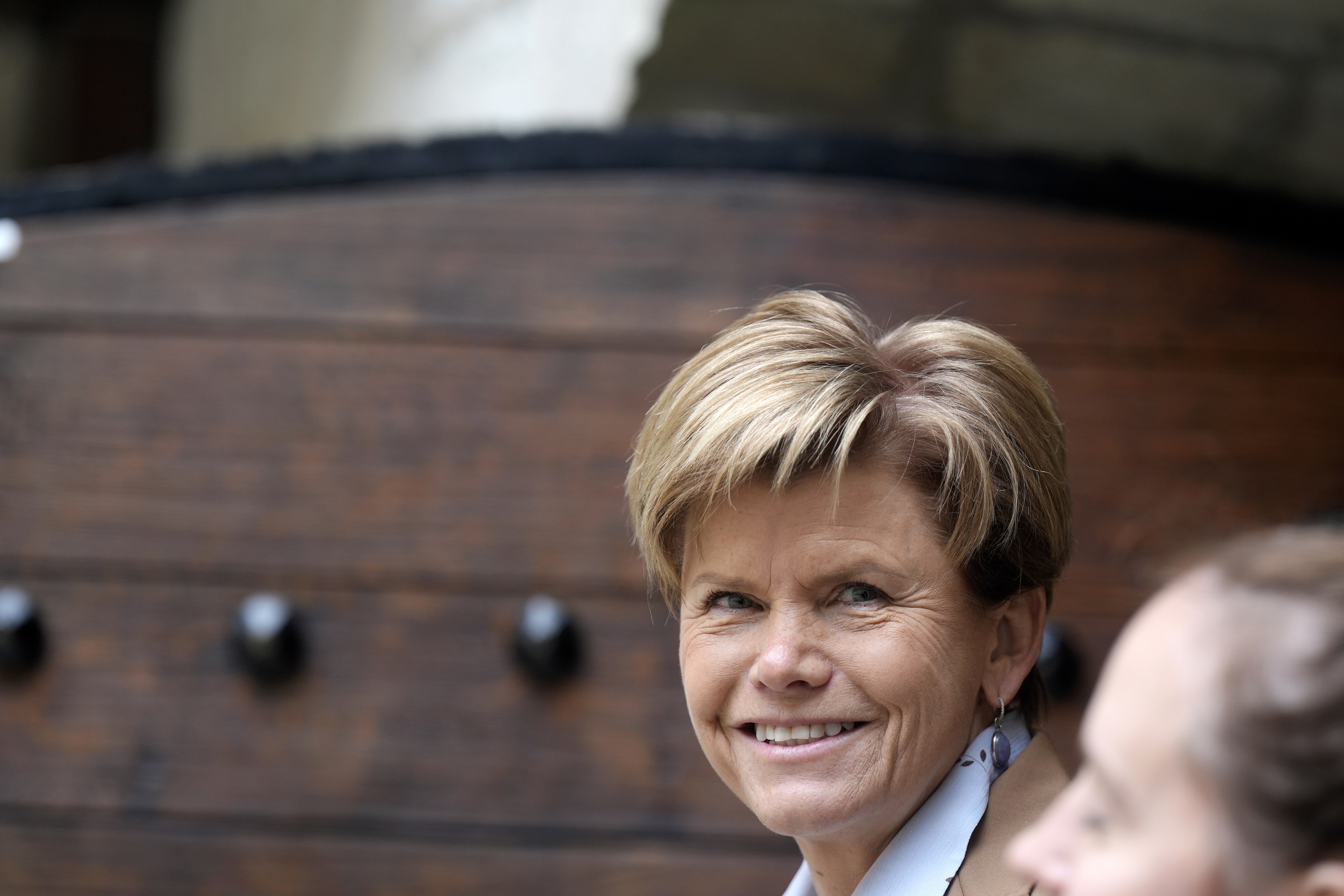
Acting Minister of Foreign Affairs of Latvia Baiba Braze at the Lennart Meri Conference in Tallinn on May 16 allowed herself unconventional rhetoric: "To say that the Russian army is advancing at the speed of a snail is an insult to snails." The phrase sounded not as a metaphor in a vacuum, but as a reference to specific figures and a specific request to allies.
What the figures show
Context comes from the ISW. According to analysts at the institute, the average pace of Russia's territorial captures has decreased at least two to three times compared to its peak: from over 14 sq. km per day in autumn 2024 to less than 3 sq. km in early 2026. In April 2026, Russia for the first time since August 2024 lost more territory than it captured: Ukraine reclaimed approximately 116 sq. km along several sections of the front, including in Sumy and Zaporizhzhia regions.
This is what Braze called "seizing the initiative" and drew a conclusion opposite to what one might expect from a diplomat: not "now we can weaken support," but "now is precisely the time to strengthen it."
Four directions — one message
In her conference speech, the minister outlined four priorities for strengthening European security:
- building up Europe's military capabilities and defense industry;
- expanding NATO presence on the eastern flank;
- long-term support for Ukraine;
- weakening Russia through sanctions and political pressure.
All four points are united by one logic: the window of opportunity is open now, while Russia is spending personnel and equipment significantly faster than it advances. In April, Kyiv reported over 35,000 enemy losses in a month — killed and seriously wounded.
The Baltic position in broader context
Braze's participation in the conference came immediately after the EU Council meeting on foreign affairs on May 11, where a 90 billion euro credit for Ukraine was approved and a 20th sanctions package against Russia was adopted. At that meeting, the Latvian minister personally emphasized the need to "continue and strengthen" support for Kyiv — in the presence of Ukraine's Foreign Minister Andrii Sybiha.
"Support for Ukraine is an investment in European security"
Baiba Braze, EU Council on Foreign Affairs, May 11, 2026
In Tallinn, a tactical argument was added to this thesis: the pace that Braze called "an insult to snails" is not a reason for complacency, but precisely the condition under which pressure on Moscow is most effective.
What comes next
The ISW notes that the slowdown in Russia's advance is real — but also points out that the nature of hostilities has changed: Russia increasingly uses infiltration tactics instead of massed assaults, which complicates direct comparisons with previous years. The question is not whether the pace has really slowed — the data confirms it. The question is whether the allies can convert this moment into a systemic advantage: if the 20th sanctions package and a 90 billion euro credit really limit Russian defense industry financing by year's end, Braze's quip about snails will become not just a joke, but an accurate description of the Kremlin's strategic failure.



