Operation "Omega‑West": blowing up a building in Rodynske weakened occupiers' positions in Pokrovsk district
A National Guard special unit released footage of an operation in which explosive charges and precision fire destroyed enemy fortifications. Why this matters for the local front line — concise and analytical.

By Tetiana Suchkova-Ladik
February 6, 2026 · 2 min read
What happened
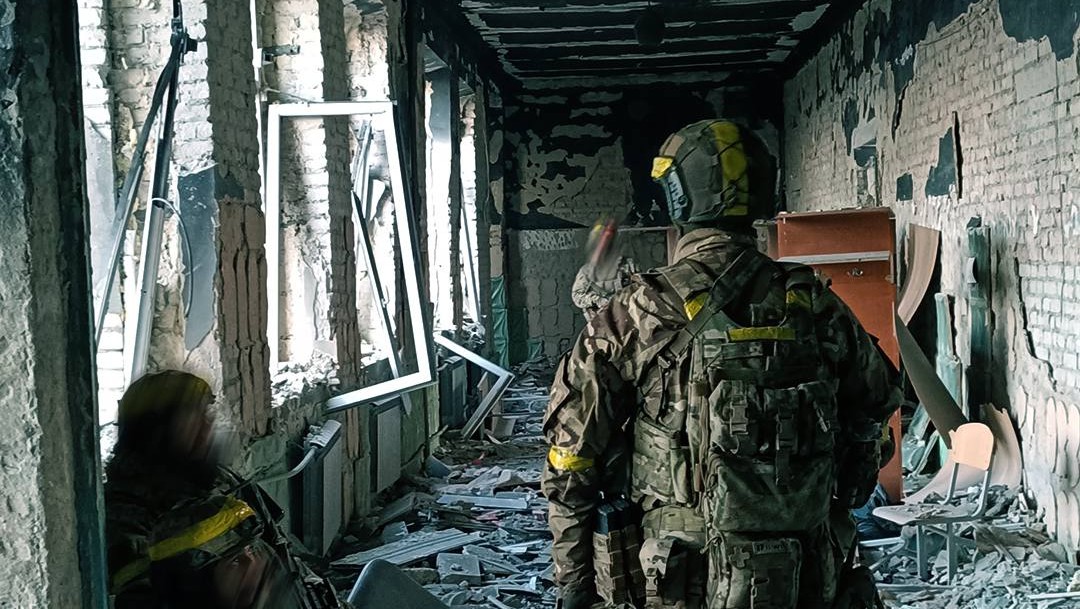
The National Guard's special operations detachment "Omega‑West" released a video and commented on an operation in the village of Rodynske (Pokrovsk district, Donetsk region). According to fighters who spoke to LIGA.net, the unit received intelligence that in one of the grid squares the Russians had entrenched themselves in two buildings.
Tactics: combining reconnaissance, fire, and mining
As they approached, the soldiers detected enemy movement — some of the occupiers were trying to change positions. The unit suppressed them with fire, deployed snipers, and employed sapper assets. One of the buildings was set ablaze by drops from a bomber; the other was neutralized by mining using an anti‑tank mine TM‑62. After placing the charge, the unit withdrew to a safe distance and initiated the detonation.
"After the blast there was a clear effect: the building was made of aerated concrete blocks, so it was blown cleanly apart; the occupiers were eliminated"
— Brodyaha, fighter of the "Omega‑West" special unit, National Guard
The operation was conducted jointly with a group from the General Kulchytskyi Battalion. The military did not specify the exact date of the action.
Context and consequences for the front
This incident is an example of the combined use of intelligence, fire support, and engineering assets. A few points are important for the reader: first, such pinpoint operations reduce the enemy's ability to entrench in populated areas; second, they require coordination between intelligence, sappers, and fire teams, which increases the risk for the occupiers while at the same time preserving civilian lives when operations are carried out on precise intelligence.
"By spring the Russian army may be exhausted in the Pokrovsk‑Myrnohrad agglomeration and slightly slow its tempo of advance. At the same time, the Russian Federation may commit reserves, for example the naval infantry"
— Commander of the 7th Corps of the Air Assault Forces, Lasiichuk
The commander of the Air Assault Forces, Apostol, adds that fully restoring control over Pokrovsk would require significant resources that are not currently available. This underscores that isolated tactical successes are important, but not always sufficient for a strategic change in the situation without external support and additional resources.
Conclusion
Operation "Omega‑West" is a demonstrative example of how combining intelligence, tactical fire, and engineering measures produces results on the ground. Sustained advances require larger resources and continuous operational support. The question remains open: will partners and Ukrainian command be able to turn such tactical successes into a lasting advantage in the region?
Source: fighters' comments and LIGA.net materials. The video contains profanity.



