Pashinyan Refused Putin Twice: Skipped Parade and Rejected Role as Ally
Armenia's Prime Minister publicly distances himself from Moscow on the war against Ukraine — amid the European Political Community summit in Yerevan and a month before parliamentary elections where neutrality carries concrete stakes.

By Tetiana Suchkova-Ladik
May 7, 2026 · 2 min read
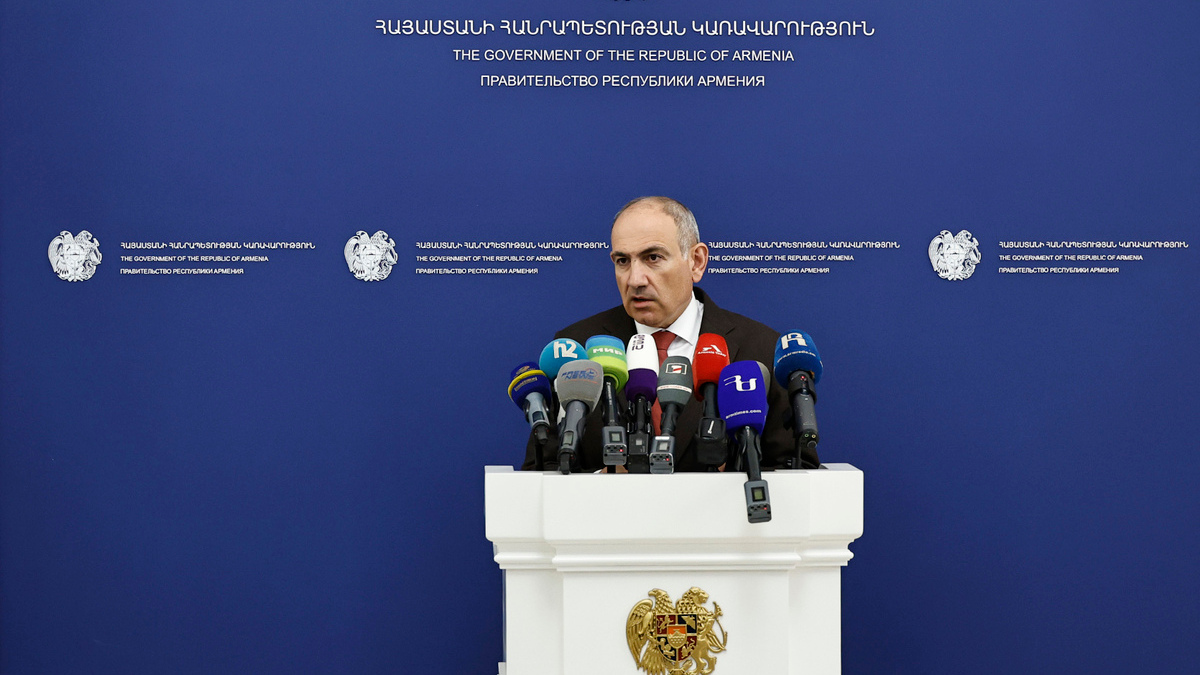
On May 7, Armenian Prime Minister Nikol Pashinyan made two statements that, individually, sound like diplomatic nuances, but together signal something clear: Yerevan is no longer silent about Ukraine.
What was said — and what wasn't
At a briefing following a government session, Pashinyan answered questions about Zelenskyy's recent visit to Yerevan. The response was brief:
"We sent humanitarian aid to Ukraine, and I have already said that on the Ukraine issue we are not allies of Russia".
Nikol Pashinyan, briefing May 7
He did not call Russia an aggressor, did not support sanctions, and did not announce a change in alliances. But in the context of a country that remains a member of the CSTO and hosts a Russian military base, even such a phrase represents a departure from previous ambiguity.
Regarding the May 9 parade — Pashinyan explained his absence by citing the election campaign: elections are scheduled for June 7, and the campaign officially starts May 8. However, this is the second consecutive year he has not appeared in Moscow — in 2024 he also did not attend, citing that he "had gone the year before".
Why now
On May 4, Yerevan hosted the VIII summit of the European Political Community — more than 30 leaders, NATO's secretary general, and Zelenskyy. For the latter, it was his first visit to Armenia since 2019 — and the first visit by a Ukrainian president to the country in 24 years.
Moscow's reaction was telling: a few days before the summit, Russia banned the import of Armenian mineral water. President Macron commented directly on the symbolism of the event: eight years ago, no one would have come here because many countries viewed Armenia as a "de facto satellite of Russia".
Context that is important not to miss:
- In March 2025, the Armenian parliament passed a law initiating the process of EU accession.
- Moscow responded by saying it "will not tolerate" Yerevan's rapprochement with the European Union.
- On May 1, Pashinyan met with Putin in Moscow — and at the same time announced he would not attend the parade.
- In the June 7 elections, blocs that, according to media reports, are supported by Russia are opposing Pashinyan's "Civil Contract" party.
The line between signal and commitment
Armenia remains a member of the Eurasian Economic Union. The Russian military base on Armenian soil has not disappeared anywhere. Humanitarian aid to Ukraine is real, but not military. Pashinyan says "we are not allies of Russia," but does not say "we support Ukraine".
This distinction is not a trifle. It is precisely what determines whether Pashinyan's statements represent the beginning of a new position or pre-election positioning for a domestic audience that is increasingly looking westward.
If after the June 7 elections Pashinyan's party retains its majority — the next real test will be the question: will Yerevan remove the Russian base or at least officially put this issue on the agenda of negotiations with the EU? Without this step, declarations about "non-alliance" will remain merely declarations.



