Beijing Calls for "Humane Treatment" — But Not Release: Stalemate Over Chinese Prisoners in Ukraine
Two Chinese citizens have been held in Ukrainian captivity for a year now, Russia is not taking them, China officially does not acknowledge the problem — and now asks Kyiv to comply with international law regarding people whom China itself called "adventurous individuals."

By Tetiana Suchkova-Ladik
May 6, 2026 · 3 min read
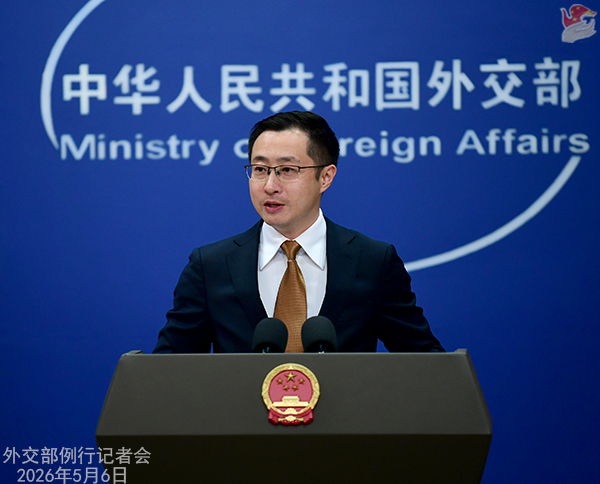
On May 6, Chinese Foreign Ministry spokesman Lin Jian responded to questions about the fate of two Chinese citizens captured by Ukrainian forces: Wang Guangjun and Zhang Renbo. Beijing, according to him, "urges the Ukrainian side to comply with international law." He did not demand their release.
A deadlock prescribed in the Geneva Conventions
The situation is legally frozen. Under international humanitarian law, Ukraine can transfer prisoners only to the country that recruited them into the armed forces — that is, Russia. But Moscow is not interested in taking people whose presence at the front the Kremlin officially does not recognize. China, in turn, is not a party to the conflict and has no legal grounds to demand their transfer. The prisoners are thus stuck between two countries, neither of which is willing to take responsibility for them.
Who are these people and how did they end up in the trenches
The SBU established that Wang Guangjun served in the 2nd Battalion of Russia's 157th Motorized Rifle Brigade and was captured near Tarasivka, while Zhang Renbo served in the 1st Battalion of the 81st Motorized Rifle Brigade, near Bilohorivka.
Both claim they were deceived. Wang Guangjun recounted that he was looking for a job after losing his position during the COVID-19 pandemic, agreed with a Russian recruiter on a position as a rehabilitation therapist for wounded soldiers, but after arriving in Russia "found himself in the army with no choice." According to him, communication with recruiters occurred through gestures and signs, detailed contract terms and payment conditions were never disclosed, and documents in Chinese were not provided.
"Before I got there, I had never held a weapon in my hands"
Wang Guangjun, SBU press conference, April 14, 2025
Zhang Renbo came to Russia as a tourist, then agreed to "earn some money." He was promised a salary of 80,000 to 260,000 rubles — but after receiving a card with 200,000 rubles, Russian soldiers immediately took his phone with the banking app and kept the money for themselves.
163 — and that's only those who were counted
On April 8, President Zelensky reported that over 163 Chinese citizens are fighting for Russia, with 155 of them on Ukrainian territory. The recruitment, it appears, was conducted openly: posts by Chinese mercenaries appeared on Douyin — the Chinese equivalent of TikTok. One of the prisoners said he was inspired by patriotic Chinese films like "Wolf Warrior," and he came to Russia because it was easy to get a tourist visa there.
Official Beijing denied all of this. In April, China's Foreign Ministry called claims about mass participation of its citizens in the war "absolutely unfounded." Lin Jian's statement on May 6 was the first time China publicly acknowledged the very fact that its citizens were being held in Ukraine, albeit in cautious diplomatic language.
What lies behind the "request"
Beijing's rhetoric is maintained in a format that doesn't obligate anything: an appeal to international law without specific demands, without acknowledging responsibility for recruitment, without offering a repatriation mechanism. This allows China to maintain the position of a "concerned observer," taking on no obligations either to Kyiv or to its own citizens.
- Ukraine holds the prisoners legally, but has no one to hand them over to.
- Russia is not interested in acknowledging the fact of foreign mercenaries in its ranks.
- China appeals to norms but offers no practical steps.
Wang Guangjun and Zhang Renbo have been in captivity for more than a year. If Beijing does not move from "requests" to direct negotiations with Kyiv on repatriation — with acknowledgment of responsibility for its citizens — this case will remain a diplomatic deadlock for an indefinite period.



