Ceasefire near the Zaporizhzhia NPP: Ukrainian forces say they did not carry out strikes, but safety risks remain
The IAEA recorded a local ceasefire to repair a line on December 28. A spokesperson for the Defense Forces confirms Ukraine’s restraint, but stresses that the Russians used the station for attacks.

By Tetiana Suchkova-Ladik
December 28, 2025 · 2 min read
What happened
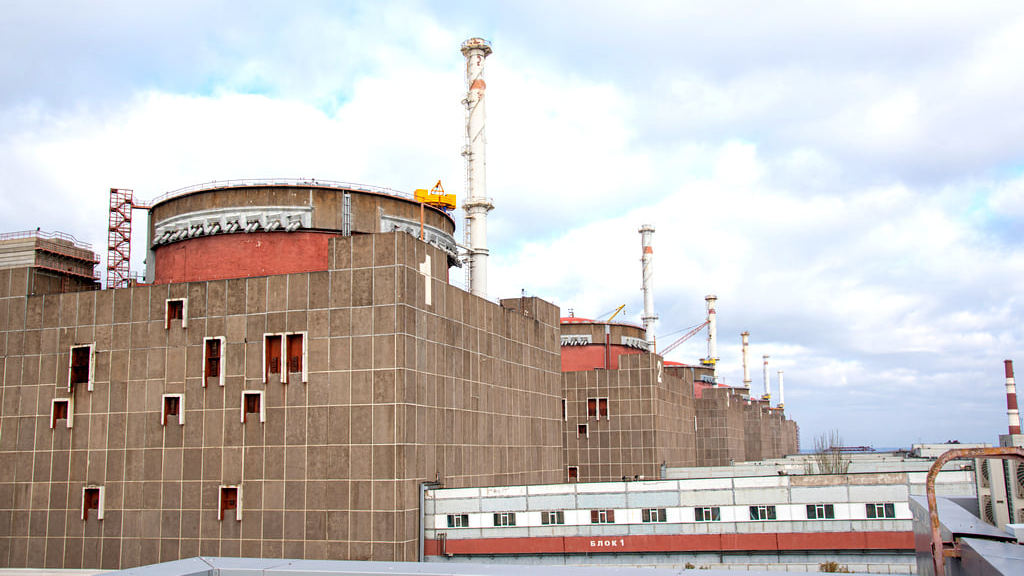
The International Atomic Energy Agency (IAEA) reported on 28 December a local ceasefire in the area of the Zaporizhzhia NPP (ZNPP) — to carry out repair work on a power line. This is an operational measure that has a direct impact on nuclear safety and electricity supply in the region.
Position of the Ukrainian Armed Forces
In a comment to LIGA.net, spokesman of the Southern Defense Forces Vladyslav Voloshyn confirmed: Ukrainian forces did not carry out strikes in the direction of the ZNPP before the ceasefire was announced and during it did not deliberately target the facility itself.
"Russia uses it as a platform to launch drones at Nikopol and Marhanets. From the territory of the ZNPP, strikes were carried out with multiple-launch rocket systems at Zaporizhzhia. We recorded this, but did not return fire, because this is a nuclear facility."
— Vladyslav Voloshyn, spokesman of the Southern Defense Forces
"We don't shoot there anyway. The main thing is that the Russians stop carrying out their attacks from there. In recent days we recorded fewer attacks from there, but they still occurred, and Russian servicemen remain on the territory of the ZNPP, using the plant as a military facility."
— Vladyslav Voloshyn, spokesman of the Southern Defense Forces
Why it matters
The ZNPP is not only a strategic energy facility but also a potential point of nuclear risk. Repair of the power line, coordinated by the IAEA, temporarily reduces the likelihood of accidents but does not remove the source of the threat: the presence and use of the plant by Russian troops to carry out attacks on civilian targets is a factor that increases the risk of an incident with widespread consequences for civilians and infrastructure.
Consequences and what's next
The restraint shown by the Ukrainian Armed Forces resonates on the information front and demonstrates a priority on safety. At the same time, a full assessment of whether the ceasefire is being observed requires time and independent monitoring. Analysts note: so far this is a local regime — guarantees, transparency and continuous monitoring by international missions are needed.
Questions for partners and citizens: will this temporary ceasefire turn into a lasting security mechanism around the nuclear plant, and what additional steps are needed to minimize risks to people and Ukraine's energy system?



