Ceasefire Signed — Strikes Continue: Netanyahu Orders IDF to Attack Hezbollah 48 Hours After Its Extension
Israeli Prime Minister issued orders for "vigorous strikes" against Hezbollah targets in Lebanon on the same day a three-week ceasefire agreed at the White House took effect. This is not the first cycle: the ceasefire continues — fighting does too.

By Tetiana Suchkova-Ladik
April 26, 2026 · 2 min read
An Order Contradicting Its Own Agreement
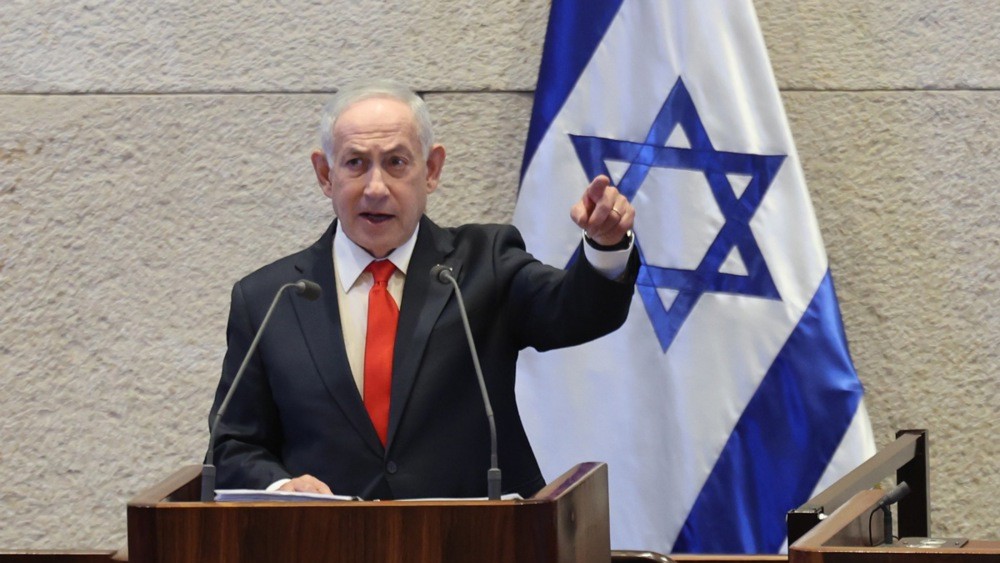
On April 26, the office of Israeli Prime Minister Benjamin Netanyahu released a laconic statement: the IDF received an order to "vigorously attack" Hezbollah targets in Lebanon. No details—just the order. This came two days after Trump personally announced the extension of the ceasefire between Israel and Lebanon for three weeks following negotiations at the White House.
The formal pretext was rocket and drone strikes by Hezbollah on northern Israel and IDF positions in southern Lebanon the same day. However, the Israeli army had been recording ceasefire violations by Hezbollah almost daily since the first 10-day ceasefire took effect on April 16.
"The ceasefire is senseless given Israel's persistence in hostile actions, including killings, destruction of homes, and continuation of occupation."
— Hezbollah, statement following the announcement of ceasefire extension
What Happened on April 26 on the Ground
Following Netanyahu's order, the Lebanese state agency NNA recorded strikes in four areas of southern Lebanon: twice in the Bint Jbeil area, in the Tyre area, and twice in the Nabatieh area. The IDF confirmed the operation, stating it "struck Hezbollah terrorist infrastructure used for military purposes throughout southern Lebanon," adding that it "will continue to act decisively against threats to Israeli civilians and soldiers."
According to the Lebanese Ministry of Health, four people were killed in an Israeli airstrike on a truck and motorcycle in Yahmar al-Shaqif. Hezbollah responded by stating it had attacked Israeli military transport in southern Lebanon.
Why This Matters: Conflict Within the Framework
When announcing the ceasefire extension, Trump specifically emphasized that the agreement does not prohibit Israel from striking in self-defense. Netanyahu, in turn, publicly stated that Israel "retains full freedom of action against any threat" and accused Hezbollah of attempting to sabotage negotiations.
- Israel continues to hold positions in southern Lebanon, despite the terms of the November 2024 ceasefire, which provided for troop withdrawal.
- Hezbollah claims its strikes are in response to Israeli violations—particularly the demolition of homes and killings in occupied territories.
- The Lebanese government is negotiating Israeli troop withdrawal and Hezbollah disarmament, but without any verification mechanism for compliance.
The April 26 strikes occurred north of the Litani River—that is, beyond the zone Israel designates as its area of operations. This is what Al Jazeera and the Lebanese side classify as escalation rather than a response within the framework of the agreements.
Why Now and Who Benefits
For Netanyahu, demonstrating toughness toward Hezbollah is a domestic political asset: Israel faces pressure from the right-wing coalition, which demands that military operations continue. Trump achieved a public success in the form of an "extended ceasefire," but real control over dynamics on the ground remains limited—an agreement without a monitoring mechanism stands only on restraint.
Hezbollah, which publicly called the ceasefire "senseless," gained justification for further strikes—while simultaneously demonstrating it can escalate at any moment without taking responsibility for breaking negotiations as the initiator.
If within the next 72 hours neither side takes steps to restore the ceasefire, the three-week pause may prove to be merely a pause between two escalations—not the beginning of broader negotiations that Washington publicly announced as its ultimate goal.



