After Two-Hour "Tirade of Insults" in Oval Office, Trump Writes About Greenland
# Trump's Meeting with NATO Secretary General Rutte Ends with Public Tirade Against Alliance on Truth Social — and Private Threats to "Punish" Allies Who Didn't Support Iran War A meeting between Trump and NATO Secretary General Rutte concluded with the former president publicly criticizing the alliance on Truth Social, while also making unpublicized threats to "punish" allies who failed to support a war against Iran. Rutte described the exchange as a "very frank conversation between two good friends."

By Tetiana Suchkova-Ladik
April 10, 2026 · 3 min read
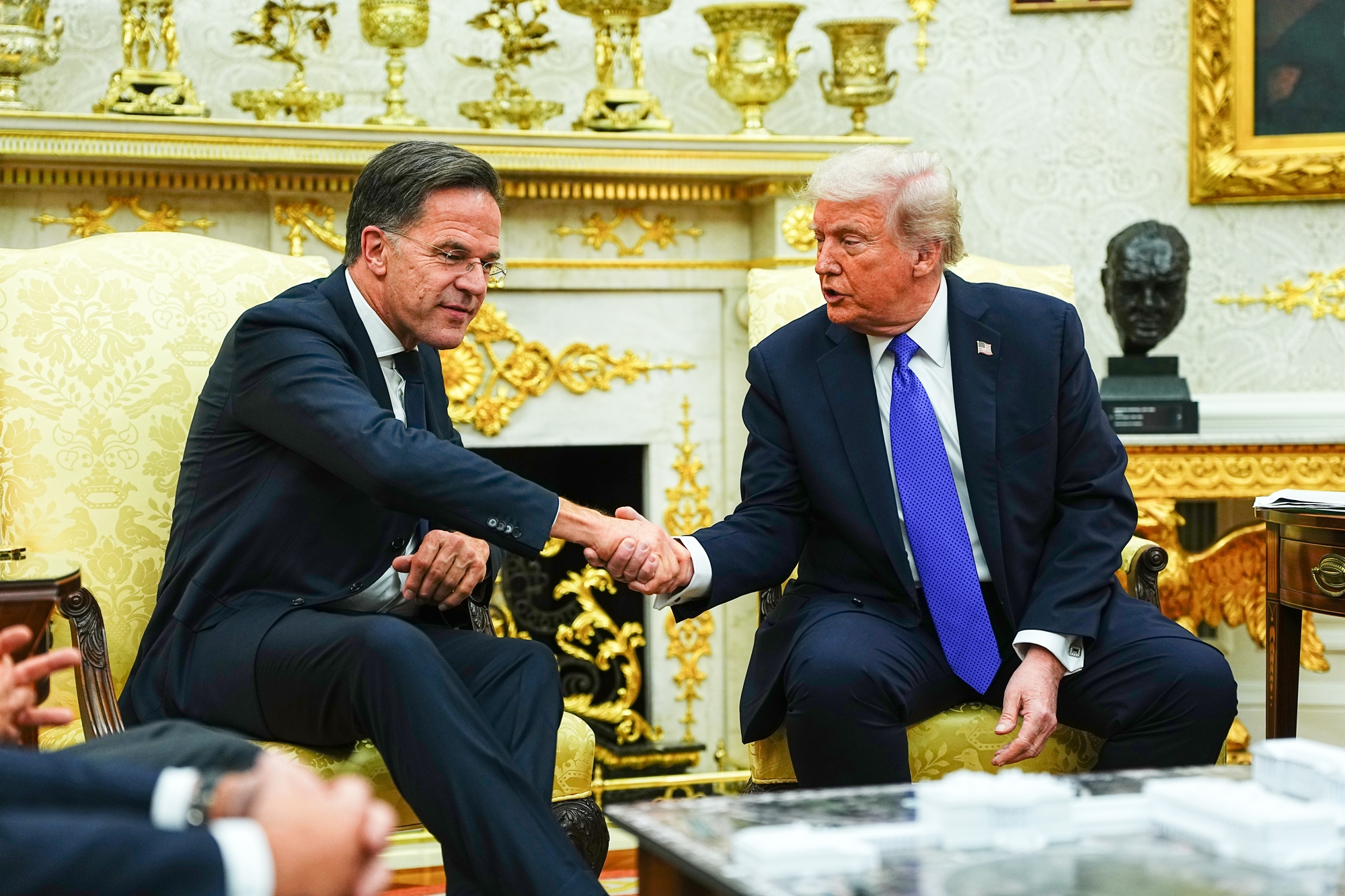
On July 14, Donald Trump received NATO Secretary General Mark Rutte in the Oval Office — exactly two days after the US and Iran announced a two-day ceasefire. The meeting lasted approximately two hours. That same evening, Trump posted in large letters on Truth Social: "NATO WAS NOT THERE WHEN WE NEEDED THEM, AND WILL NOT BE THERE IF WE NEED THEM AGAIN. REMEMBER GREENLAND, THAT GREAT, POORLY MANAGED CHUNK OF ICE!!!"
What happened behind closed doors
According to Politico, citing European officials familiar with the course of the conversation, the meeting was "nothing short of a tirade of insults". One source described it as a continuous stream of complaints: Trump used his audience with Rutte to vent frustration over Europe's reluctance to join Operation Epic Fury — an American-Israeli military campaign against Iran.
"Trump clearly threatened to do almost anything."
Politico source familiar with the meeting
Rutte publicly painted a different picture. According to him, it was "a very frank, very open conversation, but also a conversation between two good friends." He acknowledged that some allies were "somewhat slow" in providing logistical support, and added: "to be honest, they were also somewhat surprised" by the sudden start of the war.
What exactly Trump is angry about
During Operation Epic Fury, Iran blocked the Strait of Hormuz — the main artery for a quarter of the world's oil trade. Trump called on allies to join a military escort of vessels and restore shipping. Europe's response proved contrary to expectations:
- Spain closed its airspace to any aircraft related to the strikes — including American bombers taking off from Great Britain — and condemned the operation as "deeply illegal."
- Italy refused landing rights at Sigonella Air Base in Sicily, citing lack of prior coordination with Rome.
- France also restricted access to its bases and airspace.
- Britain and Romania — by contrast — allowed Americans to use their own bases; Ramstein in Germany recorded increased US Air Force traffic.
White House Press Secretary Karoline Leavitt stated before the meeting that allies "turned their backs on the American people," and quoted Trump: "They were tested — and they failed."
What Washington considers "punishment"
According to ABC News, citing an administrative source, the White House is considering the option of relocating American troops from "unreliable" NATO countries to those that supported the campaign. The Wall Street Journal clarifies that the idea is circulating among senior White House and National Security Council officials but remains in an early stage of discussion. Secretary of State Marco Rubio, who met separately with Rutte the same day, formulated the question harshly: "Why are we in NATO if at our time of need we are not allowed to use these bases?"
The limits of Trump's ultimatum
Trump cannot leave NATO unilaterally: a 2023 law, co-authored by then-Senator Rubio, requires approval of two-thirds of the Senate. However, according to analysts, the president is capable of effectively halting support for the alliance without formally leaving it — by freezing commitments, relocating bases, or simply ceasing to respond to Article 5 calls.
After the meeting, Rutte refused to confirm to journalists whether Trump repeated the threat to leave the alliance, saying only that the American president is "clearly disappointed." This very silence speaks louder than any statement.
If Washington truly begins withdrawing troops from Spain or Italy, it will transform the intra-Atlantic quarrel into a structural schism: are European allies ready to pay a real price for disagreeing with American military strategy?



