After "Iskander" strikes on Kharkiv: up to five people trapped under rubble, clearance may take another two days
The search-and-rescue operation has been underway for nearly a day: what is known so far about the fatalities, the injured and the scale of the destruction — and why it matters for the city's security.

By Tetiana Suchkova-Ladik
January 3, 2026 · 2 min read
What happened
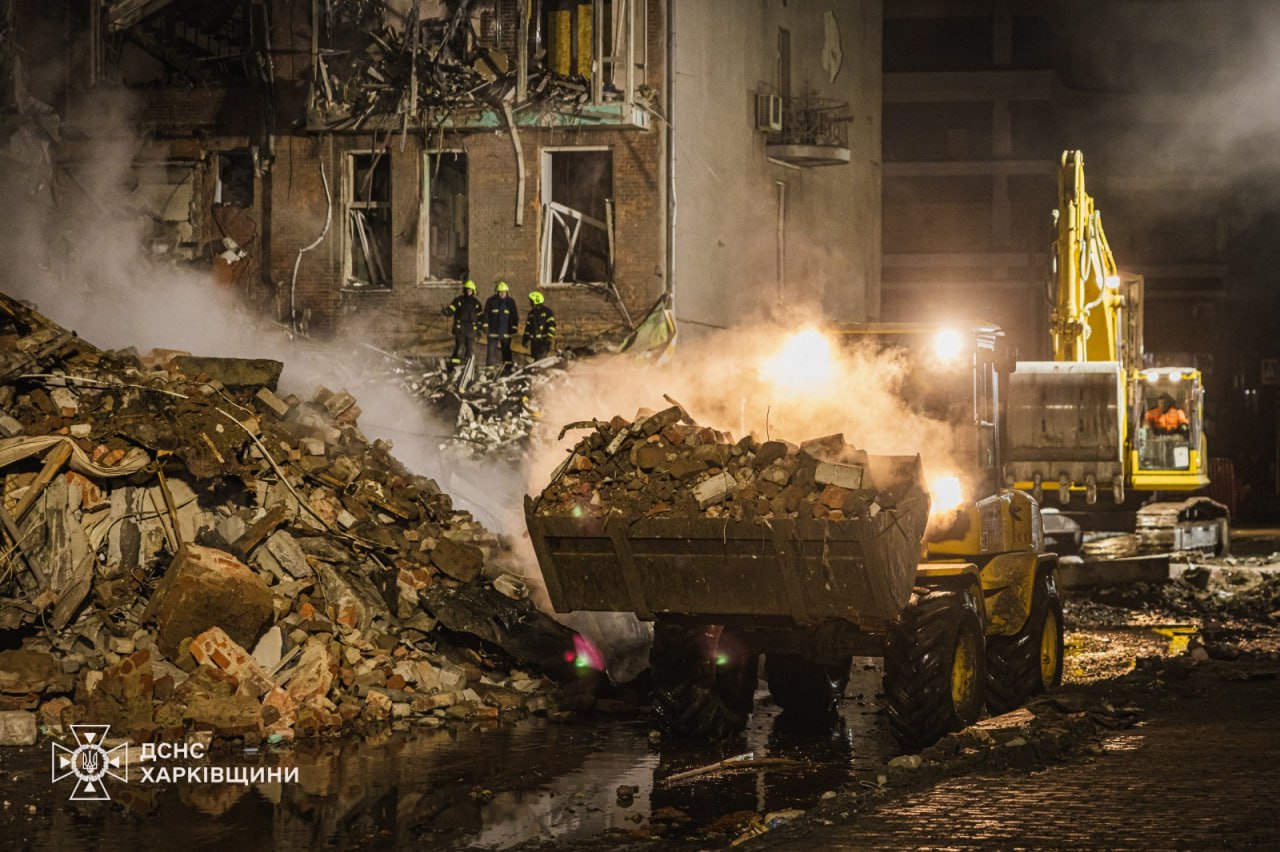
On January 2, a missile strike occurred in the central part of Kharkiv. According to the Kharkiv Regional Military Administration (Kharkiv OVA), the city was hit by two Iskander missiles. So far, 2 people have been reported killed — a 22-year-old woman and a three-year-old boy — and 27 wounded, seven of whom are in hospitals. The woman underwent surgery in serious condition and is currently in the intensive care unit.
Rescue efforts
The search-and-rescue operation has been ongoing for nearly a day: according to the head of the OVA, up to five people may remain under the rubble, possibly in an office building, and there is currently no contact with them. More than 300 people and over 80 pieces of equipment are working to deal with the aftermath. Electricity, heating and water supply have been restored in buildings deemed fit for further use.
"There may be up to five more people under the rubble"
— Oleh Syniehubov, head of the Kharkiv Regional Military Administration
Scale of destruction and what it means
More than 30 buildings and a hospital were damaged; the most serious damage is in six buildings that stood closest to the blast epicenter. According to the OVA's estimates, completing debris removal and conducting expert inspections may take up to another two days.
Strikes on city centres have not only a tactical effect — they are also intended to destroy infrastructure and apply psychological pressure on the civilian population. Defence and civil protection experts note that the decisive factors here are the speed of search operations, coordination among rescuers and rapid medical assistance.
What’s next
The main priority now is to complete the search and provide assistance to those affected. Next will come expert conclusions on the fitness for use of the damaged buildings and a plan to restore infrastructure. This is a test for Kharkiv — and an important indicator of how effectively the system responds to such attacks.
Will there be enough resources and attention from the state and international partners not only to eliminate the consequences but also to strengthen the protection of cities? The safety of Kharkiv residents in the coming weeks depends on the answer to that question.



