"After Maduro's Election 'Friendship' Remains: Why the EU and Kyiv Are Ready to Wait"
Hungary's new prime minister wants to diversify oil supplies, but cannot do so immediately. That is why both Brussels and Kyiv appear willing to give Budapest time — through the repaired pipeline.

By Tetiana Suchkova-Ladik
April 16, 2026 · 2 min read
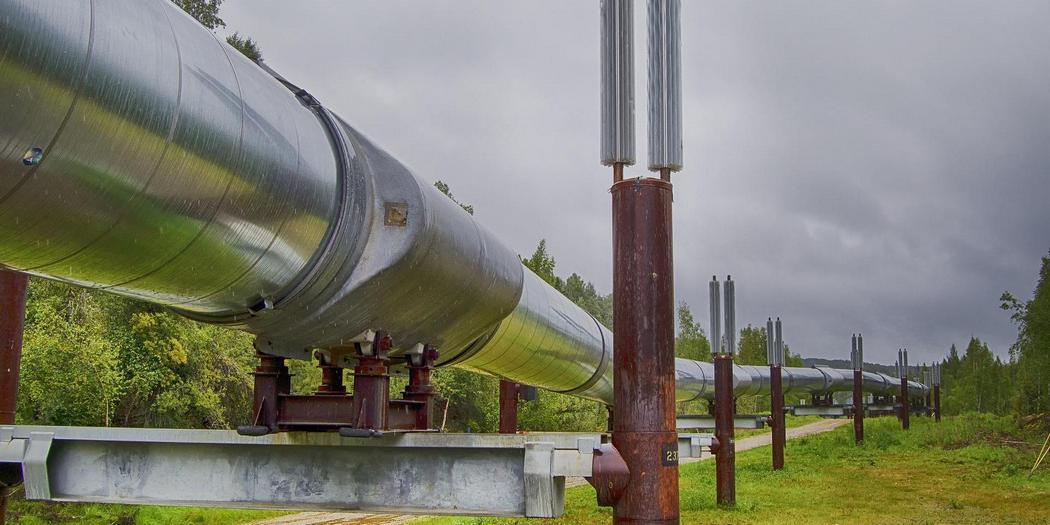
Peter Magyar won elections in Hungary with a clear rhetorical message: less dependence on Moscow, more on the EU. But the first practical test of this course turned out to be unexpectedly mundane: the Druzhba pipeline, damaged as a result of Russian strikes on January 27, 2026, still isn't working — and after repairs, Hungary will again be forced to use it.
Repairs by end of April — but not complete
Zelensky confirmed during a visit to Germany: Ukraine will repair Druzhba by the end of April to a level sufficient for transit restoration. According to him, this is about restoring functionality, not a complete overhaul of the tank infrastructure. Full repairs are a lengthy process.
This is a partial startup that allows resuming supplies to Hungary and Slovakia — two countries that have been without their usual Russian oil route since late January.
Magyar wants "cheap and reliable" — but not just from Russia
At his first press conference after winning the election, Magyar didn't rule out Russian oil, but marked a direction: diversification through developing cross-border capacity and new international agreements — on behalf of the state or MOL company. "Russia will be nearby, Hungary will be nearby. That's why we will try to diversify supplies," — Hungarian and Ukrainian media quoted him.
MOL has long been evaluating alternatives. Senior Vice President of the company Sabolch Pál Szabó told Bloomberg that the most promising option is a pipeline from Odesa — it is technically capable of replacing Druzhba if it receives sufficient funding and political support.
Where Kyiv's and Brussels' interests lie
Energy expert at the Political Capital think tank Richard Demény explains the logic simply: at the start of the new Budapest government, Russian oil will still be needed anyway. The EU and Ukraine can help get Druzhba working — and thereby give Magyar time for real diversification without political collapse.
Hungary will still be forced to use Druzhba after repairs. The EU and Ukraine will assist in this to give the new government time for diversification.
Richard Demény, Political Capital
This is not a concession to Orbán — this is a bet that Magyar will deliver on what he promised. The difference is significant: Orbán blocked EU sanctions for years, including over Druzhba. The new Prime Minister, according to Magyar himself, is ready to join the European Public Prosecutor's Office and change the constitution. Energy is part of that same package of changes.
What is really at stake
- Hungary gets time to diversify without a collapse in supplies and rising prices for the population.
- Ukraine maintains transit revenues — in 2024 this was about $250 million per year.
- The EU removes an acute conflict with Budapest at a critical moment when unity is needed on sanctions against Russia.
The question is not whether Druzhba will work after repairs — it almost certainly will. The question is whether Magyar will manage in the next two or three years to build a real alternative through Odesa or the Adriatic, before the next strike on the pipeline puts Hungary back in the same choice.



