No political will: why only the political subgroup of Ukraine's negotiations went to the U.S.
Zelensky says the military sides have agreed on a mechanism to monitor a ceasefire, but without a political decision these arrangements will not become peace. We explain what this means for the front lines and for diplomacy.

By Tetiana Suchkova-Ladik
March 20, 2026 · 2 min read
Briefly
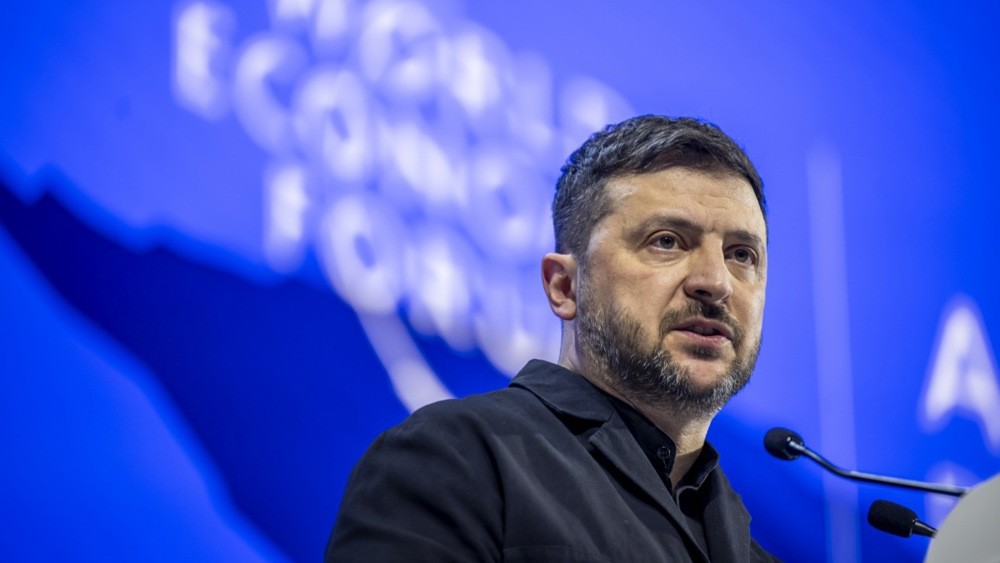
President Volodymyr Zelensky explained why the full negotiating team did not travel to the United States: in the military format — Ukraine, Russia and the U.S. — there had been progress on monitoring a ceasefire, but implementing it requires political will. Because that will is absent, it was the political subgroup that went on the trip.
Context and timeframe
Trilateral meetings in the Ukraine–Russia–U.S. format were held in Switzerland and the UAE; the most recent round took place in Geneva on February 17–18. After that, work in the format was suspended — partly due to the escalation in the Middle East, which shifted diplomatic priorities and complicated the logistics of talks.
What was agreed — and what remains open
According to Zelensky, on the military track the parties "in principle agreed" on how to organize monitoring of a ceasefire. However, without a political decision the mechanisms will remain technical. The Russian delegation is unwilling to travel to the United States, while the American side, given regional tensions, considers it a priority to hold meetings on its own territory — which is why the political subgroup is traveling on March 21.
"There is no political will yet. That is precisely why the political subgroup [of the Ukrainian delegation] is on the road."
— Volodymyr Zelensky, President of Ukraine
During the Geneva talks, as U.S. special envoy Steve Witkoff emphasized, the territorial issue was left "temporarily aside" — a signal that key political topics (the Donbas, the status of the temporarily occupied Zaporizhzhia Nuclear Power Plant) currently lack consensus.
"The territorial issue was left 'temporarily aside'.
— Steve Witkoff, U.S. presidential special envoy
What the parties are actually proposing
Russia is demanding the withdrawal of Ukrainian forces from certain areas of the Donbas. The American side has raised the idea of a demilitarized "free economic zone," but without clear guarantees regarding sovereignty — and that is precisely the political detail Kyiv cannot accept concessions on. Zelensky's earlier warnings about the consequences of territorial concessions remain an important factor in Kyiv's domestic discourse.
Practical implications for security
Even if there is technical agreement on monitoring, without political formalization the agreement will not become a stable ceasefire. At the same time, the negotiation process is working fragmentarily: in March prisoner exchanges that were unblocked as a result of talks in Abu Dhabi resumed — evidence that communication channels remain, but there is not yet a full transition to peace.
Conclusion
The decision to send only the political subgroup to the United States is an indicator of two opposing processes: there is technical progress on military control mechanisms, but there is a lack of political will to turn that progress into secure, legally formalized solutions. The key question now is whether partners can generate sufficient political pressure and guarantees for these mechanisms to work to protect Ukraine.



