Poland Prepares «Eastern Shield»: How Leaving the Ottawa Treaty Is Reshaping the Balance on the Eastern Border
After Warsaw's statement that it was ready to lay anti-personnel mines along the border within 48 hours, we examine why Poland took this step and what the practical consequences are for the security of Ukraine and the region.

By Tetiana Suchkova-Ladik
February 19, 2026 · 2 min read
Within security, not emotions
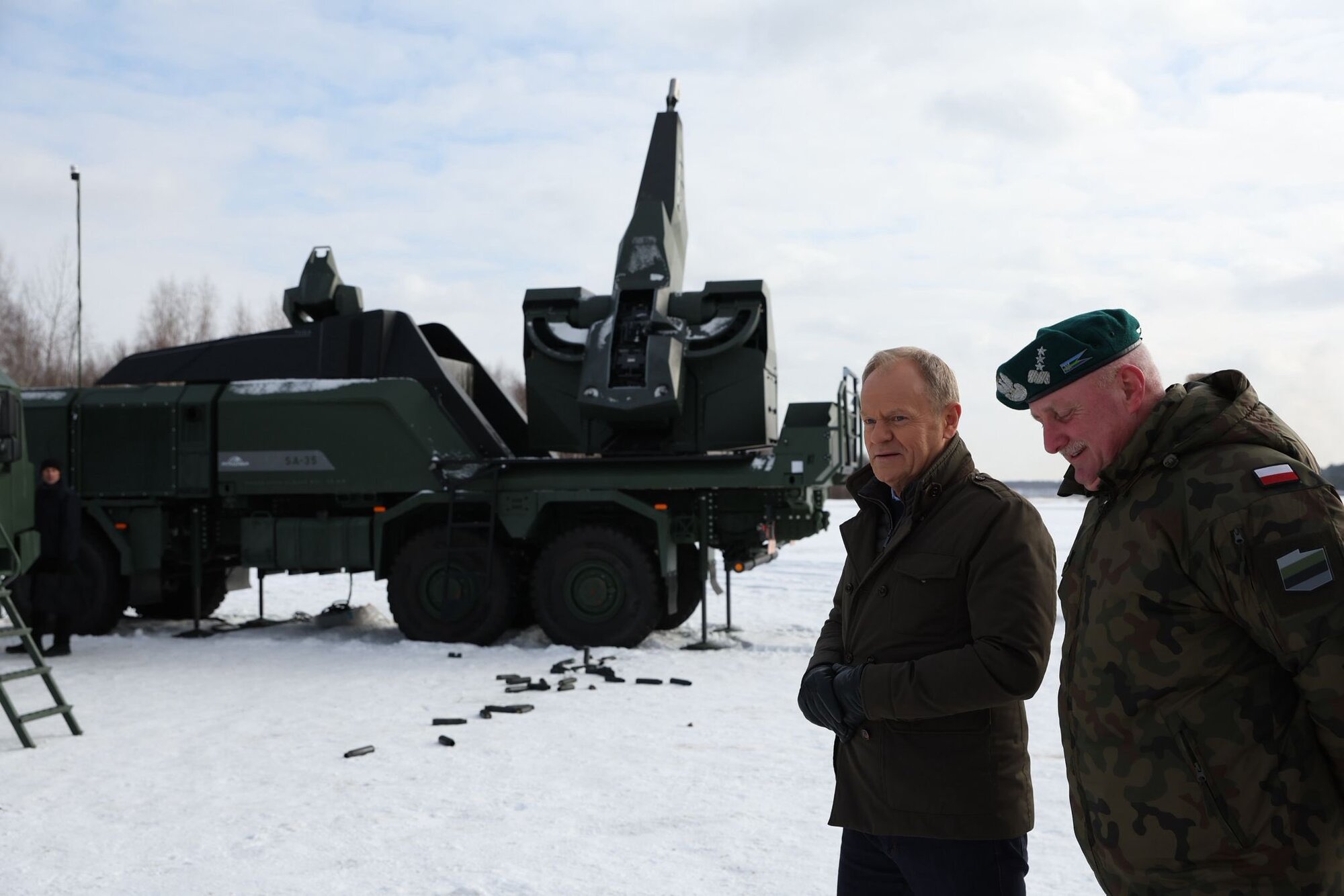
In high diplomacy, quiet decisions with practical effects matter more than loud statements. Prime Minister Donald Tusk announced at the Zelenka military training ground that after withdrawing from the Ottawa Convention, Poland will be able to mine its eastern border with antipersonnel mines within 48 hours, reports dziennik.pl. This is part of the “Eastern Shield” project, which Warsaw presents as a response to threats from Belarus and the Russian exclave in Kaliningrad.
What was announced
Tusk said the country is “in these hours” leaving the convention that bans the use, stockpiling, production and transfer of antipersonnel mines. Official sources clarify: the withdrawal process began earlier; formally it requires six months — a period that expires on 20 February 2026.
"We are in the process of completing this project, which is crucial for our security, for the security of our territory and borders."
— Donald Tusk, Prime Minister of Poland
Why Warsaw is taking this step
The reason is simple from the perspective of mine warfare tactics: Poland assesses the threat at the border as serious enough to remove international restrictions on these munitions. Analysts point to two concurrent logics — deterrence and increased readiness. In addition, Reuters quoted Deputy Defense Minister Paweł Zalewski saying that Warsaw will resume production of antipersonnel mines for the first time since the Cold War, and does not rule out their export, potentially to Ukraine.
"Warsaw will, for the first time since the Cold War, resume production of antipersonnel mines to deploy them on its eastern border and, possibly, for export to Ukraine."
— Paweł Zalewski, Deputy Minister of Defense (interview with Reuters)
Context: other withdrawals from the convention
Poland is not alone. In 2025–2026 several European countries have announced or completed withdrawal from the Ottawa Convention: Lithuania approved a law, Finland officially withdrew, and the Baltic states notified the UN. Ukraine also ceased participation in the convention in June 2025 — the Foreign Ministry’s official rationale was a changed security reality after the start of Russia’s full-scale aggression.
What this means for Ukraine
First, the practical effect: increased availability of mines in the region can alter lines of defense and logistic needs. Second, the political signal: allied countries increasingly view restoring certain defensive means as a necessity in response to Russian aggression. Third — the risk of escalating humanitarian consequences: antipersonnel mines have long-term effects on civilian populations, and this raises issues of post-conflict clearance and control.
Diplomatic balance and practical challenges
Moving away from international restrictions gives operational flexibility, but at the same time forces countries to plan demining and post-conflict security. For Ukraine this means: first, monitoring neighbors’ actions and adapting its own security protocols; second, diplomatic work with partners to minimize long-term risks to civilians; third, using this new reality in its own arguments for support of defense capabilities.
Summary
Warsaw’s decision is not just a technical change in its arsenal. It reflects a broader trend: European states are adjusting to new threats and shifting part of the debate about defense ethics into the realm of practical security. The ball is now in the partners’ court: how this decision will translate into concrete operational steps and what guarantees for civilian protection allied countries will agree to remain open questions.



