Russian Embassy in Seoul Removes "Victory Will Be Ours" Banner: Public Pressure and a Diplomatic Signal
On February 24, the Russian diplomatic mission in Seoul removed a controversial banner amid protests — an episode that demonstrates how civil and diplomatic pressure can curb aggressive rhetoric abroad.

By Tetiana Suchkova-Ladik
February 24, 2026 · 1 min read
What happened
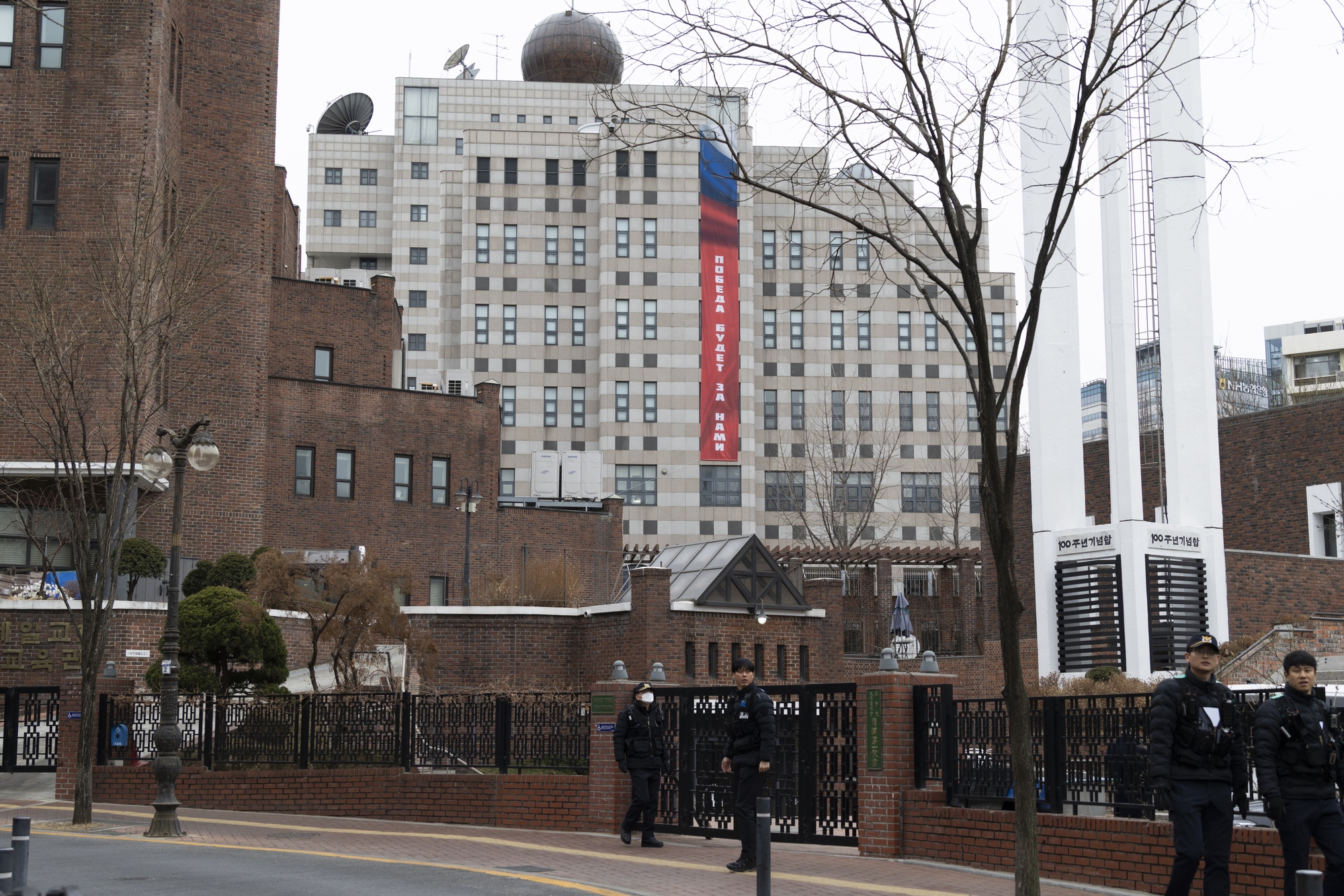
On February 24 the Russian embassy in Seoul removed a banner reading “Victory will be ours” and canceled an outdoor event dedicated to the memory of Russian servicemen, the Yonhap agency reports. According to the diplomatic mission’s official explanation, the banner was allegedly placed in connection with two holidays: Diplomatic Worker's Day and Defender of the Fatherland Day.
"Stop Putin. Stop the war."
— Hong Jeong-sik, head of the civic organization "Hwalbindan"
Protests took place in front of the embassy: South Korean activists and some Russians held placards and chanted slogans that directly linked the poster to Russia’s war against Ukraine. According to Yonhap, the day before, on February 23, Seoul had demanded that the Russian embassy take down the banner.
Why it matters
At first glance — a local story about the aesthetics of a sign. But this is about a wider issue: the reputational and diplomatic costs Moscow pays as a result of its aggression. Public resistance in democratic capitals and official appeals from local authorities force diplomatic missions to adjust their messages to avoid political incidents.
For Ukraine, this is a small but visible symbolic victory: when civil society and state institutions reacted in a coordinated way, rhetoric that could recall wartime actions became unwelcome even in third countries.
What next
This case highlights two trends: first, Russia’s diplomatic communication is increasingly subject to local scrutiny and criticism; second, international sensitivity around rhetoric related to the war grows ahead of anniversaries and commemorative dates.
Whether such symbolic steps will turn into consistent political action depends on further coordination among Ukraine’s partners and on how resilient civic oversight will be in the capitals of Europe and Asia.
In short: the banner was removed after a combination of civic pressure and official demands — a marker that aggressive propaganda comes at a high cost on the international stage.



