Return After 61 Years: Why Melnykov Is Being Buried Now — And Why in the Pantheon of Prominent Ukrainians
The remains of OUN leader Andriy Melnyk, who died in exile in 1964, have arrived in Ukraine for the first time. On May 24, he will be reburied at the National Military Memorial Cemetery—alongside those who fell in the current war.
By Oleg Bazylewicz
May 22, 2026 · 3 min read
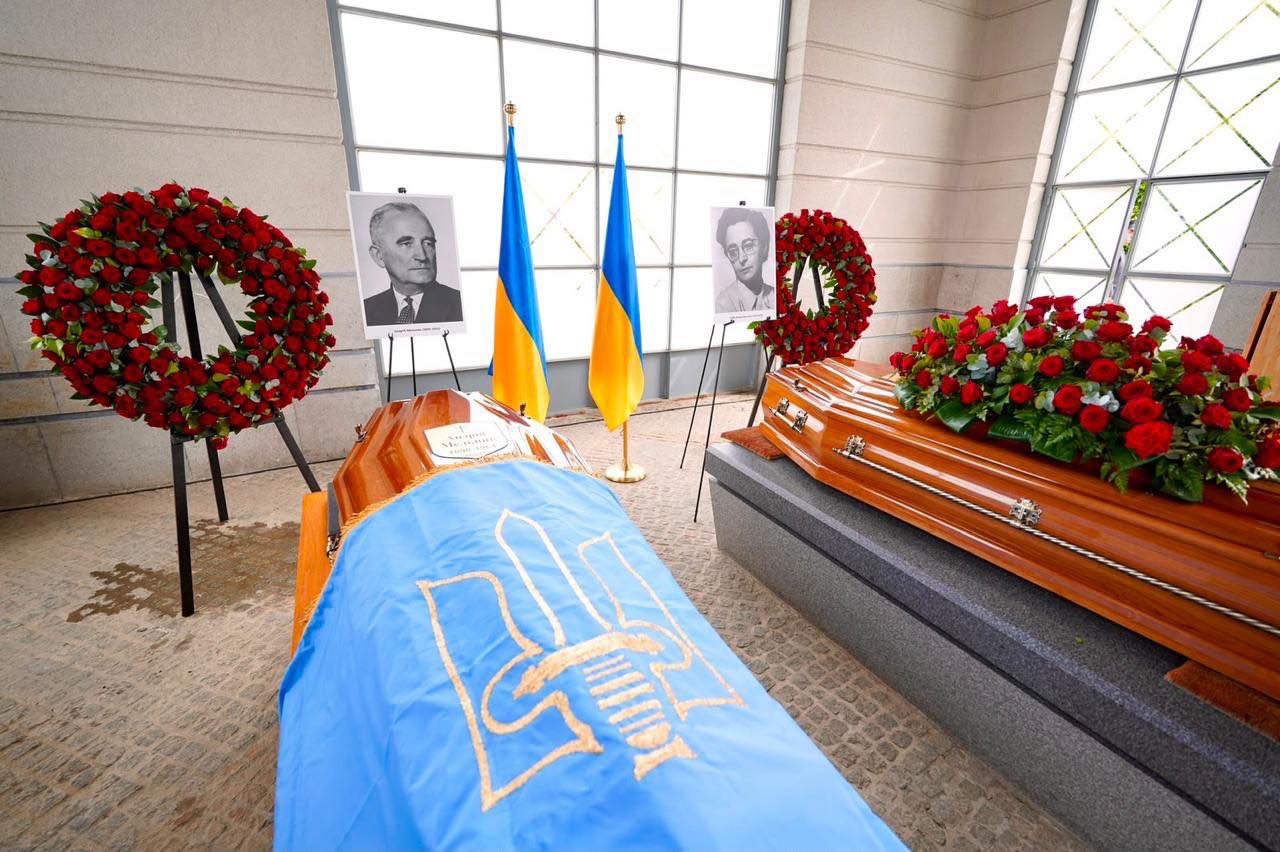
On May 19, an exhumation took place in Luxembourg. During the night of May 22, the coffins of Andriy Melnyk and his wife Sofia Fedak-Melnyk arrived at the Patriarchal Cathedral of the Resurrection of Christ of the UGCC in Kyiv. To honor them, they will be open on May 22–23, with reburial planned for May 24 at 7:00 AM — in the Pantheon of Outstanding Ukrainians at the National Military Memorial Cemetery in Kyiv region.
The Bonvua municipal cemetery in Luxembourg, where Melnyk had rested since 1964, is not a symbolic choice of location but simply the place of his death. A colonel of the UNR Army, one of the founders of the Ukrainian Military Organization and the closest associate of Yevhen Konovalets, was never able to return to his homeland during his lifetime: after World War II, he lived in emigration — first in Germany and Austria, then in Luxembourg, where he worked on consolidating the diaspora and initiated the creation of the World Congress of Ukrainians.
Who gave permission — and why is this important to Budanov
The reburial is not happening spontaneously. According to the current head of OUN Bohdan Chervak, the authorities of Luxembourg provided official permission for the exhumation. The return became possible, according to him, "thanks to the persistence of the Office of the President, including General Kyrylo Budanov, the Ministry of Foreign Affairs, and the Ukrainian Institute of National Memory." In June 2025, the Cabinet of Ministers separately approved the procedure for reburial of outstanding fighters for independence at the National Military Memorial Cemetery — Melnyk became one of the first to be buried under this regulations with military honors.
A complex figure without oversimplification
Melnyk is not a spotless textbook hero. His views on tactical cooperation with Germany during World War II split the OUN into two wings: OUN(m) under his leadership and OUN(b) under Stepan Bandera's leadership. This split of 1940 remains a subject of discussion among historians. It is precisely this ambiguity that Russian propaganda actively exploits: the RF regime deliberately equates any Ukrainian nationalism with radical xenophobia, constructing an image of the enemy for domestic and international audiences.
"Today, Ukraine is returning home not only an outstanding figure — we are returning a part of our own historical memory."
— from the official statement of the Patriarchal Cathedral of the UGCC
Symbolism of the place
The Pantheon of Outstanding Ukrainians at the National Military Memorial Cemetery is not a separate cemetery of the past. Those who died in the current war are also buried here. The decision to bury Melnyk precisely there is not only recognition of his role in history, but also a conscious attempt to stitch together a torn chain: from the armed struggle for independence in the 1920s to the full-scale invasion of 2022.
It is significant that among the initiators of the return is Kyrylo Budanov, head of the GUR. The involvement of military intelligence in the repatriation of the remains of a civic figure is an unusual detail that has not yet received public explanation.
If the state is forming a canon of "outstanding fighters for independence" in the conditions of active war — does it have transparent criteria for who enters this canon, and who verifies that the Pantheon is not being transformed into an instrument of current politics rather than long-term memory?



