Polish president cancels meeting with Orbán over his trip to Moscow
Polish President Karol Nawrocki adjusted his itinerary for a visit to Hungary after Prime Minister Viktor Orbán's meeting with Putin in Moscow. He will only take part in the Visegrád Group summit, canceling other events because of Orbán's trip to Moscow.

By Tetiana Suchkova-Ladik
November 30, 2025 · 2 min read
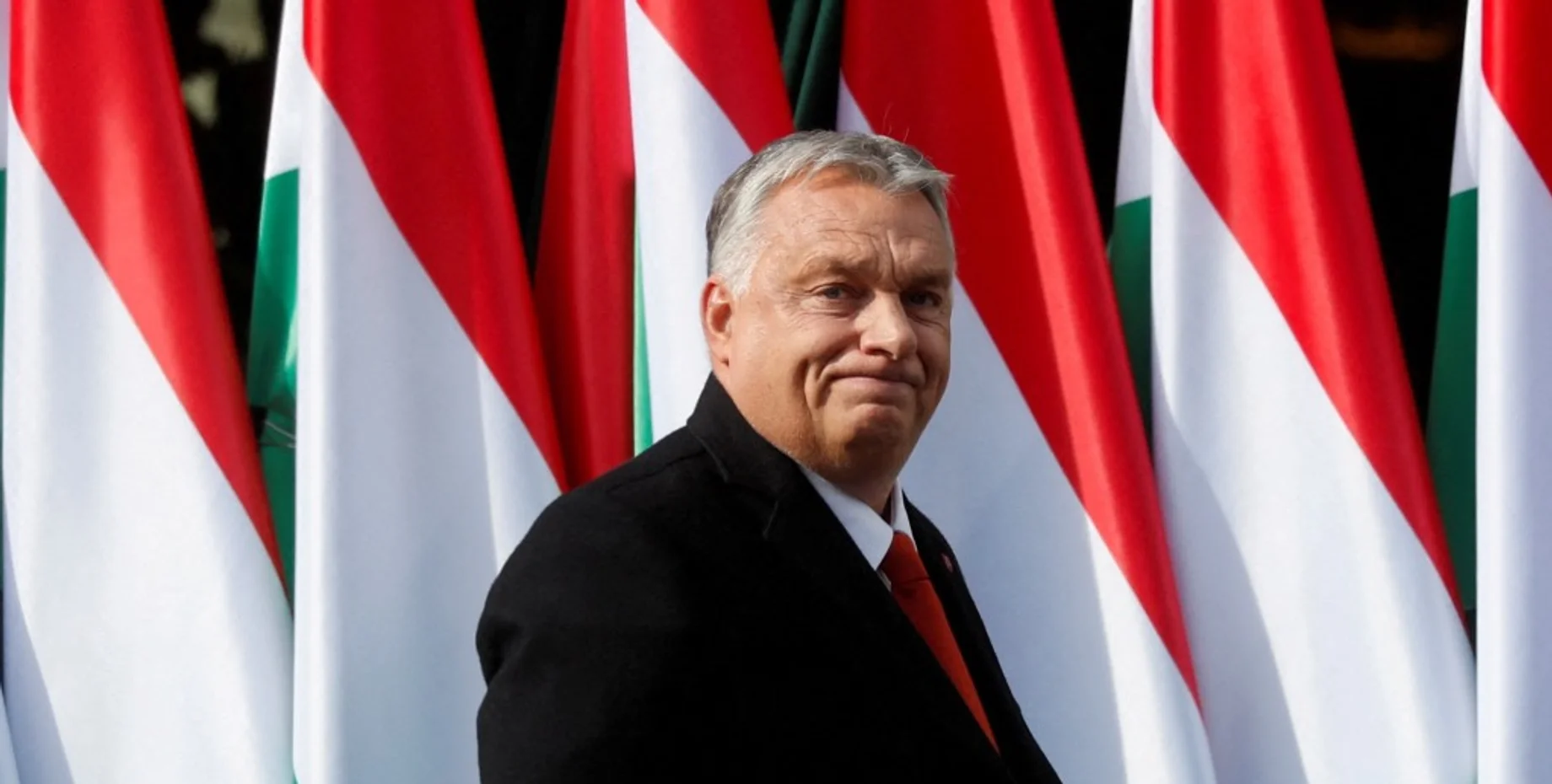
Polish President Karol Nawrocki adjusted the schedule of his visit to Hungary after Prime Minister Viktor Orbán met with the leader of the Russian Federation, Vladimir Putin. He will only attend the summit at which Central European security will be discussed.
The Polish president "has consistently advocated seeking real ways" to end the war in Ukraine started by Russia. This was reported on 30 November by State Secretary Marcin Przydacz.
"Referring in his policy to the legacy of President Lech Kaczyński, who emphasized that Europe's security depends on united actions, including in the energy sector, and in connection with Prime Minister Viktor Orbán's visit to Moscow and its context, President K. Nawrocki decided to limit the program of his visit to Hungary exclusively to the summit of the presidents of the Visegrád Group in Esztergom."
– he said.
Przydacz clarified that at the summit Nawrocki, together with the presidents of the Czech Republic, Slovakia and Hungary, will discuss security and cooperation in Central Europe.
Criticism from the Polish Prime Minister
Earlier, on 28 November, Polish Prime Minister Donald Tusk criticized Orbán's visit to Putin and Nawrocki's subsequent visit to Orbán.
"Chaos in the negotiations under the plan of U.S. special envoy Steve Witkoff, and in Kyiv – a political crisis."
– the Polish prime minister said.
He called it "a fatal combination."
"I want to remind our allies that NATO was created to defend the West from Soviet aggression, that is, from Russia. And its foundation was solidarity, not selfish interests. I hope nothing has changed."
– Tusk stressed.
Orbán's visit to Moscow
On 28 November Hungarian Prime Minister Viktor Orbán visited Moscow. He offered Budapest as a venue for a "peace summit" and assured the Kremlin that his country is "interested in peace."
In an interview with a German newspaper, Orbán said that Ukraine after the war should become a "buffer state" between Russia and NATO. According to him, Kyiv needs to agree to the U.S.-proposed peace plan, and territorial concessions for the sake of an agreement are "inevitable."



