Precision strikes on ceilings in Kupiansk: propaganda or tactical action — what it means for the front
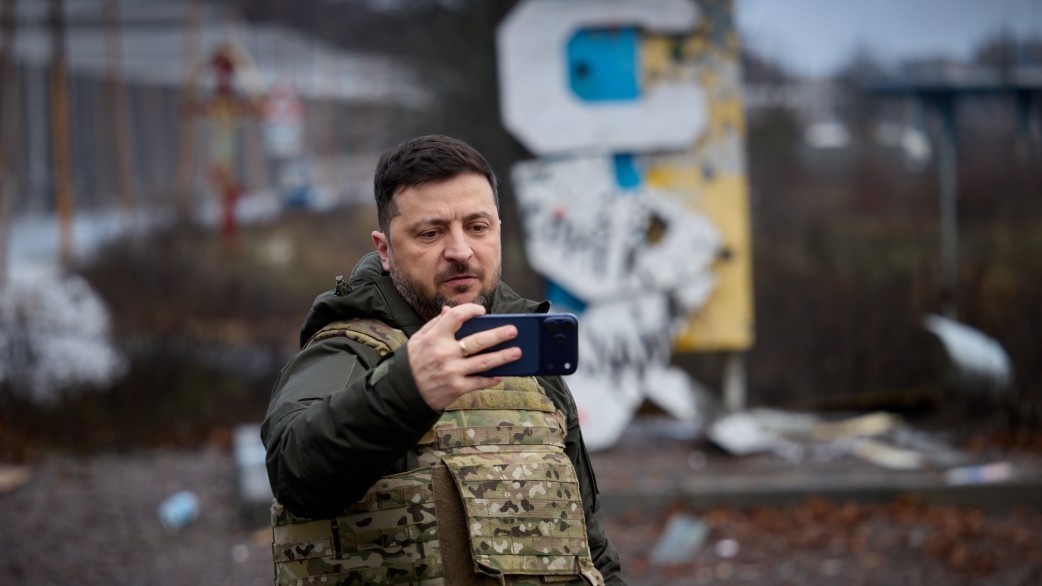
Russian forces carried out heavy shelling of the stele at the entrance to Kupiansk, where Volodymyr Zelensky was photographed on December 12. We examine why the enemy targets symbols and what this reveals about the course of the operation.

By Oleg Bazylewicz
December 17, 2025 · 2 min read
What happened
Over the course of 15–16 December, Russian forces concentrated fire on the stele at the entrance to Kupiansk — the very one against which President Volodymyr Zelensky recorded a video address and took photos on 12 December to refute Kremlin claims of the city's complete occupation. Two military sources working in the area told LIGA.net about this.
Why this matters for the information front
The sources suggest the attacks were targeted and had a primarily informational purpose: to change the appearance of the memorial sign in order to cast doubt on the very fact of the president’s presence in the city. This tactic is not about gaining an operational advantage on the battlefield, but about manipulating visual evidence.
"Technically it is possible. Our [defenders] even tore down flags with drones in other situations"
— Viktor Trehubov, spokesman for the Joint Forces Command
Technical and operational components
The Joint Forces Command noted that precision strikes on stationary symbols are technically feasible — in particular using drones. At the same time, LIGA.net’s sources suggest that such attacks are far from practically useful militarily: they make more sense as an element of information pressure.
The context of the operation confirms this: on 17 December the Commander-in-Chief of the Armed Forces of Ukraine, Valeriy Syrskyi, reported that thanks to active search-and-strike operations the defenders pushed the Russians back and took control of almost 90% of the city. The operation in Kupiansk was led by the head of the eponymous tactical group, General Solimchuk (deputy to the head of the Joint Forces Command, Drapatyi).
What this means for Ukraine
An attack on a symbol is a signal: the Kremlin is trying to undermine trust in facts and demoralize the local population. But the physical destruction of a sign will not erase established facts of Ukrainian authorities’ presence and successes on the battlefield.
"Why not? On 15 November they actually demanded that their people wave Russian flags. They even dropped them from drones. The military benefit from that, I would say, is the opposite"
— Viktor Trehubov, spokesman for the Joint Forces Command
Conclusion
These strikes are an example of how the enemy combines so‑called symbolic attacks with informational narratives. For the reader, this means: pay attention not only to the external attributes of the conflict but to verified facts and operational results. Ukraine’s next steps should combine a physical presence in liberated territories with systematic information work so that a few harsh enemy actions cannot substitute or distort the marked reality.



