Putin Through Lavrov to Trump: "Kyiv Is Dangerous." Rubio Received the Message, But Not the Order
# US State Secretary Reveals Mechanics of Lavrov Call: Putin's Personal Message to Trump About Embassy Threat, Not Direct Evacuation Demand The U.S. State Secretary disclosed the mechanics of the conversation with Lavrov, clarifying that it was a personal message from Putin to Trump regarding threats to the embassy, rather than a direct evacuation demand. The distinction is fundamental.

By Tetiana Suchkova-Ladik
May 26, 2026 · 3 min read
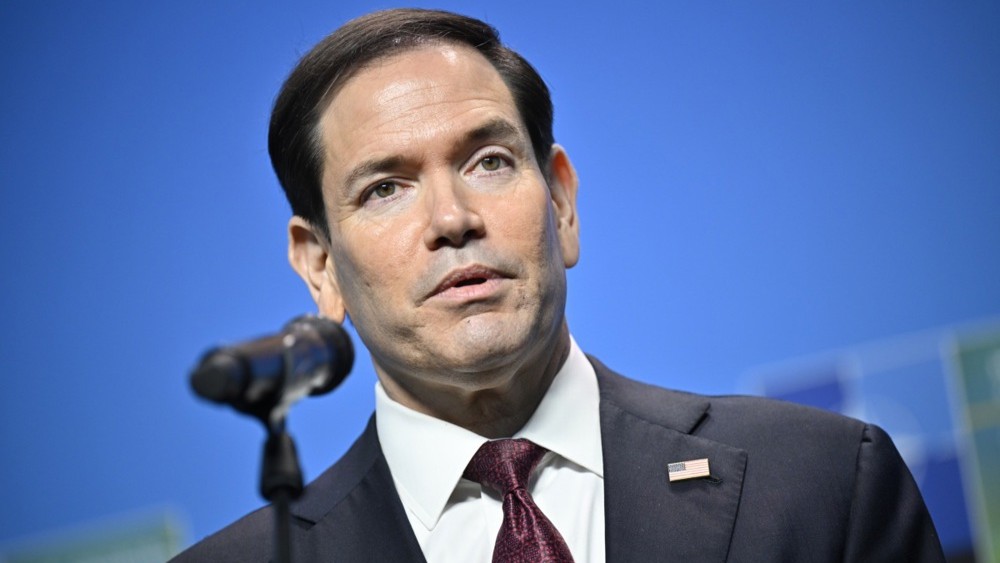
On May 25, U.S. Secretary of State Marco Rubio received a call from Russian Foreign Minister Sergei Lavrov — and immediately relayed its contents to President Donald Trump. This was not a routine diplomatic conversation: according to Rubio, Lavrov called on Putin's instructions to personally convey to the American leader a warning about risks to the U.S. embassy in Kyiv.
What Lavrov actually said — and what Moscow made of it
The Russian Foreign Ministry immediately published its own interpretation of the call: Lavrov allegedly "officially informed the American side" that Russian armed forces are beginning "systematic and consistent strikes" on facilities in Kyiv and "decision-making centers" — and urged the U.S. to ensure the evacuation of diplomats and citizens from the Ukrainian capital.
Rubio's version is more restrained. Speaking to journalists in India, he clarified: Moscow did not make a direct demand to evacuate the embassy, but merely conveyed a broader warning about risks to diplomatic facilities in Kyiv.
"The danger in all these wars is that they continue and always carry a threat of escalation,"
— Marco Rubio, AFP
When a journalist pressed him on the reason for the call, Rubio explained: Putin apparently asked Lavrov to call specifically so that this message would reach Trump. Rubio added that Kyiv has been a dangerous place for years due to the full-scale war — meaning Moscow's warning contains nothing new.
Context: why now
The call came the day after one of Russia's largest missile strikes on Kyiv since the start of the full-scale invasion. Before speaking with Rubio, the Russian Foreign Ministry had published a statement recommending that foreign states evacuate their diplomats — and separately called on Ukrainian civilians to stay away from "the military and administrative infrastructure of the Zelenskyy regime."
Moscow framed the reason for escalation as a "response to terrorist attacks by the Kyiv regime": this refers to a Ukrainian strike on occupied Luhansk region. Russia claims a dormitory was damaged; Ukraine says the target was a drone command control center.
Reaction: from Paris to Brussels — nobody left
The European Union and most allies rejected Moscow's warning. The EU ambassador to Kyiv wrote on Facebook: "We are not going anywhere." A French Foreign Ministry representative said simply: "We are used to Putin's threats. Evacuation is not on the agenda."
Ukraine's Foreign Minister Andriy Sybiha, along with over 70 ambassadors, visited the strike sites — destroyed buildings and markets. According to Sybiha, Kyiv is calling on partners not to succumb to "Russian blackmail," but instead to increase pressure on Moscow and boost support for Ukraine, including air defense systems. Ukraine's Foreign Ministry qualified Russia's warning as "shameless blackmail" aimed at intimidating the international community.
What this means for the negotiating track
Despite everything, Rubio publicly confirmed: the U.S. remains ready to help end the war. The call occurred in the context of American-Russian diplomatic dialogue that intensified after an August summit in Anchorage, where, according to Lavrov, certain agreements were reached. In the conversation, Lavrov expressed regret that "Euro-elites and the Kyiv regime" allegedly undermine these agreements.
So Moscow is simultaneously threatening strikes, asking the U.S. to remove diplomats — and complaining that the peace process is being blocked by others. Three messages in one call, addressed not only to Rubio, but through him — to Trump.
If the U.S. does not respond to the warning with any public steps regarding the embassy, Moscow will either acknowledge that its signal was ignored, or the next strike will become a test of whether American diplomats in Kyiv are a deterrent factor — or not.



