Putin wants peace in 2025 — but only the kind where he keeps Donbas. Peskov says: there are no deadlines
Bloomberg, citing an anonymous source, reports: Putin seeks to end the war this year, but only on the condition of full control over Donbas and Europe's recognition of Moscow's territorial gains. The Kremlin immediately distanced itself from any timelines.

By Tetiana Suchkova-Ladik
May 22, 2026 · 3 min read
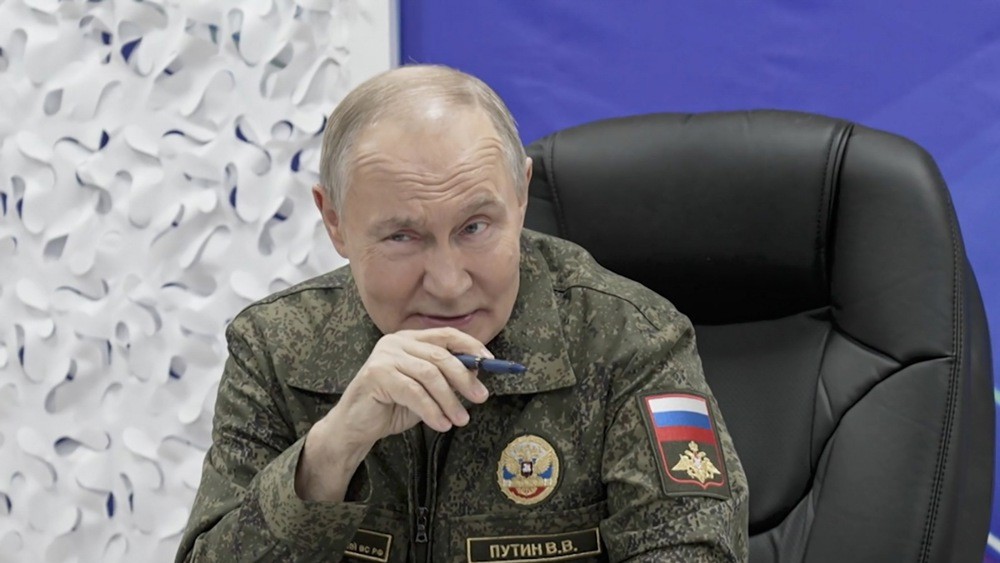
Putin wants peace — but not just any peace. According to Bloomberg, citing an anonymous source familiar with Kremlin sentiment, the Russian dictator aims to end the war against Ukraine by the end of 2025. The condition: full control over Donbas and an agreement with Europe that would effectively legalize all territories captured since 2022.
Moscow's official reaction came almost immediately. Kremlin spokesman Dmitry Peskov stated that Putin set no deadline and called any predictions about negotiation timelines "a big mistake." This discrepancy between the anonymous signal and public denial is nothing new: this is how the Kremlin traditionally probes partners' reactions without committing to anything.
What Putin is actually negotiating for
The full picture is more complex than a simple desire for "peace." Besides Donbas, according to Bloomberg, Putin is seeking a broad agreement with Europe on security architecture — essentially Russia's reintegration into the Western economic and diplomatic space. Simultaneously, he rejects any compromises on the conditions insisted upon by Kyiv and Brussels.
"He wants a broad conversation about Russia's reintegration with the West, commercial deals with the United States — and to do it long and tediously while continuing to bomb Ukraine's energy infrastructure and slowly advance on the battlefield"
Amos Hochstein, former Biden adviser, CNBC
This assessment aligns with Moscow's behavior at negotiations: a five-hour meeting between Putin and Trump's special envoys — Steve Witkoff and Jared Kushner — in December ended with Ushakov calling it "constructive" but "requiring further work." No breakthrough was achieved.
Where exactly the conflict stands
Donbas is not abstract. According to CBS News, negotiations remain deadlocked precisely over Donetsk region: Russia demands full control, while roughly one-fifth of the region, including the fortress cities of Slovyansk and Kramatorsk, remains under Ukrainian control. Zelenskyy confirmed to Euronews that Kyiv and Washington have reached agreement on most points of the peace plan — except Donbas and the Zaporizhzhia Nuclear Power Plant.
Ukraine's position on this point is constitutional: Kyiv cannot legally agree to territorial transfers. Zelenskyy also insists on the presence of international forces on the contact line — since, in his words, trusting Moscow's promises after 2014 is impossible.
- Russia controls roughly one-fifth of Ukraine, but not all of the declared Donbas
- Peskov admitted that the goals of the "SVO" have not been fully achieved — which is why the operation continues
- Rubio publicly questioned whether Putin wants a deal at all or plans to "seize the entire country" — this was a signal to Kyiv and Brussels
- The Kremlin rejected Berlin's proposal for a Christmas ceasefire, claiming that a pause would only allow Ukraine to regroup
Why the signal emerged now
The leak about "desire for peace" benefits Moscow in several dimensions simultaneously: it eases pressure from Trump, who publicly promised to stop the war, and gives Putin the image of a negotiator — without real concessions. According to Bloomberg analysts' assessment, Russia's advance has slowed on the battlefield, and economic pressure within the country is mounting: Putin's approval ratings are falling, even if his political position remains stable.
Meanwhile, Europe is not staying on the sidelines. In October, it became known that the EU and Kyiv are jointly developing a 12-point peace plan along the current front line — directly contrary to Putin's demand to recognize captured territories. The plan provides for an oversight board chaired by Trump.
If Moscow truly has an internal deadline by the end of 2025 but publicly denies it, the key question is not whether Putin wants peace — but at what price the US and Europe are willing for him to stop: one where Slovyansk becomes Russian, or one where the current front line is fixed without annexation.



