Putin declared "his" ceasefire — a week after Ukraine requested it
The Kremlin seized the initiative from Zelenskyy and presented an Easter ceasefire as its own decision. Ukraine agreed to mirror the move — but a year ago, the same scenario ended with nearly three thousand violations in 30 hours.

By Tetiana Suchkova-Ladik
April 11, 2026 · 2 min read
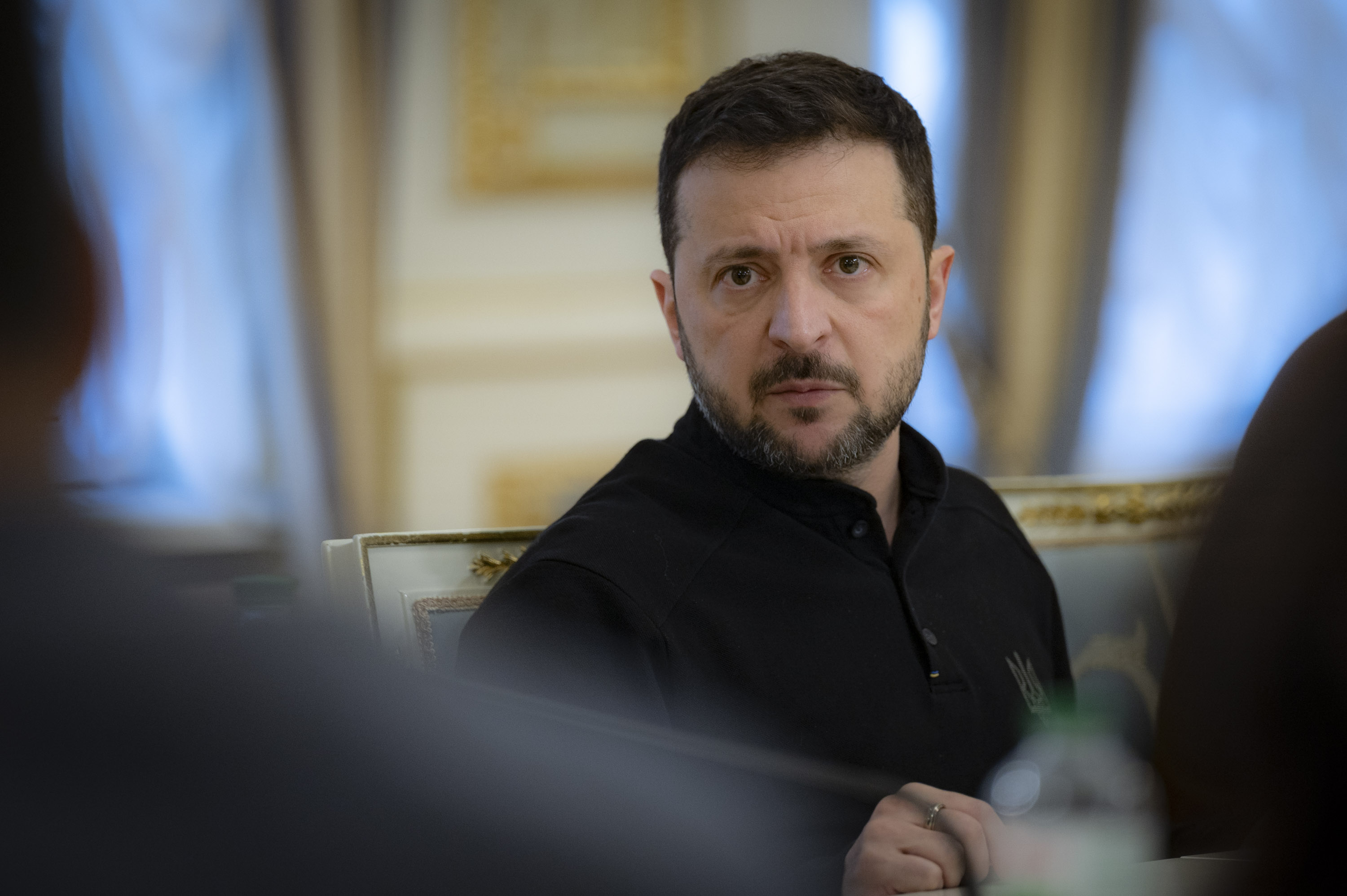
On April 9, the Kremlin announced that Putin is introducing an "Easter ceasefire" — from 4:00 PM on April 11 to the end of April 12, 2026. Defence Minister Belousov and Chief of the General Staff Gerasimov received orders to halt operations across all front lines. Russia noted that it "expects similar steps from Ukraine."
The problem lies in the chronology: Zelensky publicly proposed an Easter ceasefire as early as March 30. On April 6, Kyiv officially transmitted this proposal to Moscow through American intermediaries. That same day, Kremlin spokesperson Peskov rejected it as "poorly formulated." Yet on April 9 — the morning of the same day Putin "suddenly" announced the ceasefire — Peskov was still saying that no decision had been made.
A Mirror with Memory
Zelensky responded with restraint, but without illusions.
"Ukraine has repeatedly stated that we are ready for mirror steps. We proposed a ceasefire during Easter holidays this year and will act accordingly."
— President of Ukraine Volodymyr Zelensky, April 9, 2026
He also added that Russia has a chance not to return to strikes after the holidays — hinting at the possibility of a 30-day ceasefire, which Kyiv has been proposing for several weeks.
The 2025 Precedent: Numbers That Are Hard to Ignore
A year ago, a similar scenario already played out. Putin announced a 30-hour Easter ceasefire in 2025 — and violations from both sides quickly emerged. According to the Ukrainian side, just on Sunday, April 20, 2025, Russians violated the ceasefire regime 2,935 times. Zelensky wrote at the time: "Either Putin does not control his army, or Russia has no intention of making a genuine step toward ending the war."
- Ukrainian brigades documented that, under cover of the ceasefire, Russians were laying routes for heavy equipment and clearing crossing points for armored columns.
- Strikes by FPV drones on an evacuation vehicle of a humanitarian mission were recorded.
- Russia, in response, accused Ukraine of more than 1,000 violations — and claimed that its forces "strictly adhered" to the ceasefire.
Who Benefits and Why Now
CNN analysts noted back in 2025: Putin's sudden ceasefires are calculated primarily for Washington — to show Trump that Russia "is not an obstacle to peace." The 2026 scenario repeats this logic: the Kremlin seizes the initiative from Kyiv, repackages it as its own gesture of goodwill, and addresses it not to Zelensky, but to the American audience.
At the same time, no mechanism for ceasefire verification is provided — no monitoring mission, no clear definition of a "violation," no accountability for the side that first resumes fire. This distinguishes the "Easter ceasefire" from any real ceasefire agreement.
If the number of violations this time proves comparable to 2025 — the question of whether these ceasefires are a tool for peace or a tool for PR will receive an answer that will be hard to refute even in Washington.



