Putin Wanted Kyiv in 2022, Not Donbas — And That's Why Mendel's Thesis Collapses
# Klimkin Refutes Key Narrative of Mendel's Carlson Interview: If Putin Sought to Control All of Ukraine at the Start of the Invasion, the Donbas Question Could Not Have Been a Priority in Istanbul. This Is Not a Defense of Zelensky — It's a Different Logic for Reading 2022 Events.

By Tetiana Suchkova-Ladik
May 12, 2026 · 3 min read
What Mendel Said and Why It Became a Scandal
On May 11, 2026, a nearly two-hour interview with Yulia Mendel, former press secretary to the President of Ukraine (2019–2021), appeared on Tucker Carlson's YouTube channel. Carlson published it under the headline: "Zelensky's Press Secretary Reveals All: Cocaine, Cover-ups, and the Only Obstacle to Peace".
Among Mendel's claims, one proved particularly explosive: according to her, during negotiations in Istanbul in spring 2022, the Ukrainian delegation allegedly agreed to hand over the Donbas to Russia. Moreover, Zelensky personally sanctioned it.
"I spoke with people who represented Ukraine at the Istanbul negotiations in 2022. And they explained to me in detail that they agreed to everything. Zelensky personally agreed to give up the Donbas. At that time, this was shocking news,"
— Yulia Mendel, interview with Tucker Carlson, May 11, 2026
Additionally, Mendel called Zelensky "one of the biggest obstacles" to peace, claimed that Ukraine "is on the brink of extinction," and at the end of the interview addressed Putin in Russian.
Klimkin: The Dictator's Logic Was Different
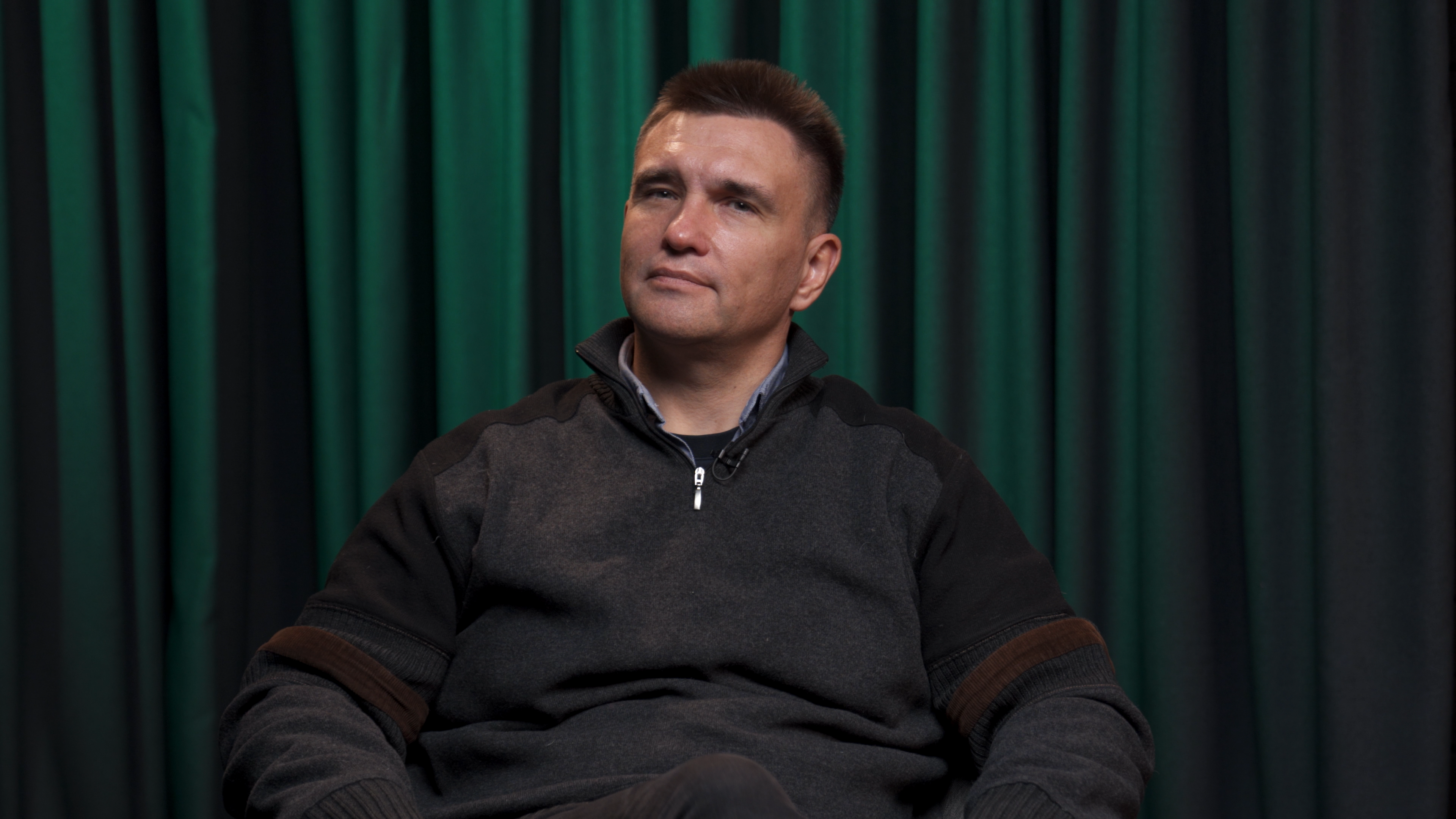
Commenting on Mendel's claim about the Donbas in his "Klimkin Explains" video on the LIGA.net YouTube channel, former Foreign Minister (2014–2019) Pavlo Klimkin presented two arguments against Mendel's version.
The first is technical: in all leaks of so-called "pirated" versions of the Istanbul agreements, the question of transferring the Donbas did not figure. The second is strategic: Putin's own logic does not match such a formulation of the question.
"Putin wanted to control all of Ukraine — all the time he was in power. Whether as president or prime minister of Russia,"
— Pavlo Klimkin, "Klimkin Explains," LIGA.net
According to Klimkin's assessment, at the beginning of the full-scale invasion, Putin counted on a lightning-fast capture of Kyiv and a change of power — which is why the Donbas question as a separate point of demands in Istanbul made no sense: why negotiate for a region if the goal is the entire country?
Official Reaction: From "Not in Her Right Mind" to "Club of Stooges"
Presidential advisor Dmytro Lytvyn responded briefly: Mendel did not participate in the negotiation process and had no access to state decision-making. "This lady has been out of her mind for a long time, and who's telling her things or whether it was true at all — it's not serious to comment on," he said.
Foreign Minister Andrii Sybiga reacted more sharply. He wrote on Facebook that he didn't even finish listening to the interview.
"The disgusting things she spouted are not an attack against the president, but against our own country. All this lying and manipulation is aimed against Ukraine's interests and in support of Russian demands and ultimatums,"
— Andrii Sybiga, Minister of Foreign Affairs of Ukraine
Sybiga also called Mendel part of the "club of stooges of Russian propaganda" and added: "That's a one-way ticket".
Why It Appeared Now
Context matters: the interview came out against the backdrop of the negotiation process surrounding new Istanbul talks in 2025–2026, where Russia constantly appeals to the events of spring 2022 as a "broken deal." The narrative "Kyiv agreed then, but then refused" is one of the Kremlin's key tools for pressuring the West and justifying the continuation of the war.
Carlson is not a neutral platform. In 2024, he interviewed Putin, Dugin, and Lavrov. Mendel's choice of venue intensifies skepticism about her motives: regardless of what actually happened in Istanbul in 2022, this message in this broadcast objectively works in favor of the recipient — the Kremlin.
- Mendel left her position as press secretary in July 2021 — seven months before the full-scale invasion
- She was not part of the negotiating delegation in Istanbul and had no official involvement in the negotiation process whatsoever
- Her claims about the Donbas are based solely on accounts of conversations with third parties
- None of the known leaks of the Istanbul draft contain a clause about the Donbas
Klimkin, unlike the Presidential Office, does not dismiss the thesis emotionally — he questions its internal logic. This is a different quality of argument: not "she's lying," but "this couldn't have been the case because Putin wanted more back then."
If the actual participants in the 2022 Istanbul negotiations — Arakhamia, Reznikov, Umerov — never publicly confirm or deny Mendel's thesis on the record, this version will remain in the information space regardless of how much it corresponds to reality.



