Five-step EU plan: how Brussels could grant Ukraine partial membership as early as 2027
Politico outlines a plan that proposes "partial membership" for Ukraine — a political maneuver against Moscow and against Budapest's veto. Why this matters for security and what risks lie ahead in 2027.

By Tetiana Suchkova-Ladik
February 10, 2026 · 3 min read
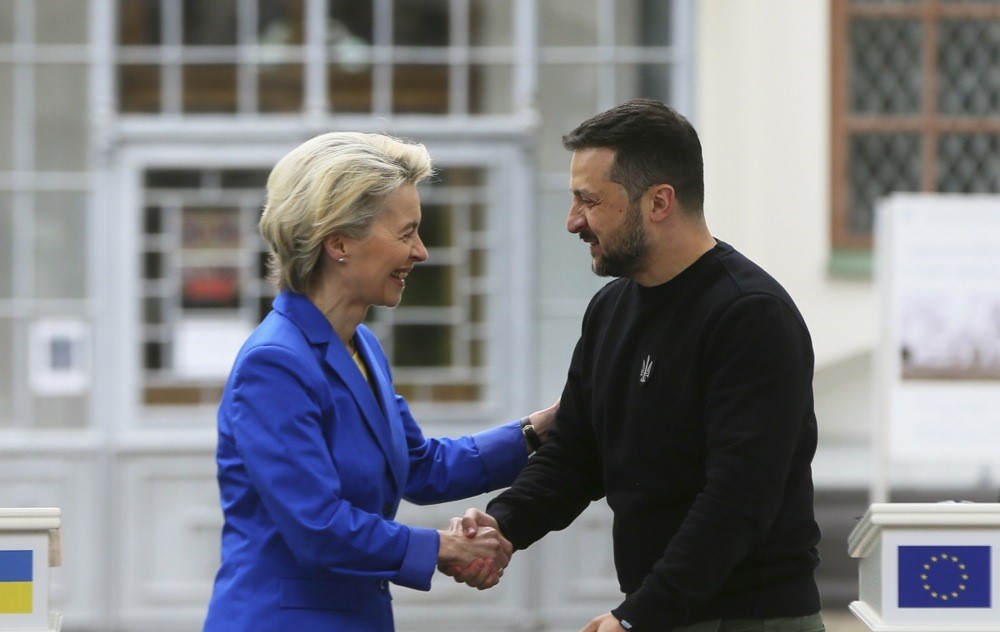
In high diplomacy, quiet agreements matter more than loud statements
Politico writes that the European Union is developing an "unprecedented" five-step plan that could grant Ukraine partial membership as early as 2027. Sources for the outlet — five unnamed diplomats, three EU officials and two Ukrainian officials — say this is not about lowering standards but about a political formula that would place Kyiv at the table before all formal reforms are completed.
The five-step plan — in brief
Step 1 — Prepare Ukraine: The EU provides detailed, practical guidance on negotiating clusters so Kyiv knows the working agenda. This is not a shortcut on reforms, but clear roadmaps.
Step 2 — Create a simplified form of membership: the idea of "reverse enlargement" — accession with the gradual granting of rights and obligations, creating a political signal of support when full ratification is delayed.
Step 3 — Wait for Orbán to leave: unanimity among the 27 countries is a stumbling block, and Brussels is betting on a change in the political balance in Budapest after the 2026 elections.
Step 4 — Play the Trump card: there is an expectation that U.S. influence on certain capitals could help lift vetoes; the document also links eurointegration to a peace plan being worked on by partners.
Step 5 — Use pressure instruments: if other mechanisms fail, Brussels can bring back for consideration Article 7 of the EU Treaty — a political sanction that can suspend a member's rights.
The EU position and political risks
As Politico’s interlocutors emphasize, this is more a political instrument than a legal circumvention of criteria. According to one EU official, "membership of the EU brings benefits only if there is transformation through the enlargement process — that is the real superpower of EU membership". In other words, the reform focus remains, but the sequence of granting political rights changes.
"Membership of the EU brings benefits only if there is transformation through the enlargement process — that is the real superpower of EU membership"
— an EU official, comment to Politico
Hungary — the key bottleneck
Unanimity among the 27 makes Viktor Orbán's position decisive. Brussels is counting on Hungary's elections in spring 2026; if Orbán remains in power, tougher political measures could be used, including Article 7. At the same time, the EU is aware of the political risks of applying such pressure ahead of those elections.
"The States will take responsibility to work with some EU countries politically so that they do not block Ukraine's accession"
— Volodymyr Zelenskyy, President of Ukraine (6 February 2026)
What this means for Ukraine
First, the plan creates political space: being "at the table" strengthens Kyiv's position in dealings with Moscow and accelerates integration expectations. Second, it does not remove the need for reforms — the EU openly says there will be "no shortcuts to reforms." Third, success depends on the foreign policy of partners: the position of the United States, the stance of individual capitals and the outcomes of EU elections will determine the pace.
Brief conclusion
Politico records an ambitious but politically calibrated Brussels strategy: to move Ukraine's eurointegration from declarations to a concrete plan of action while retaining levers of pressure. Now it is up to the partners — can they turn political will into concrete steps without undermining the reform process and without deepening divisions within Europe?



