Rada has introduced a daily 9:00 a.m. ritual — the nation will unite in remembrance
Bill No. 14144 approved in principle: at 09:00 every day the authorities will inform the public of a nationwide minute of silence — a simple ritual that makes our memory invulnerable and strengthens unity in times of war.

By Tetiana Suchkova-Ladik
December 16, 2025 · 2 min read
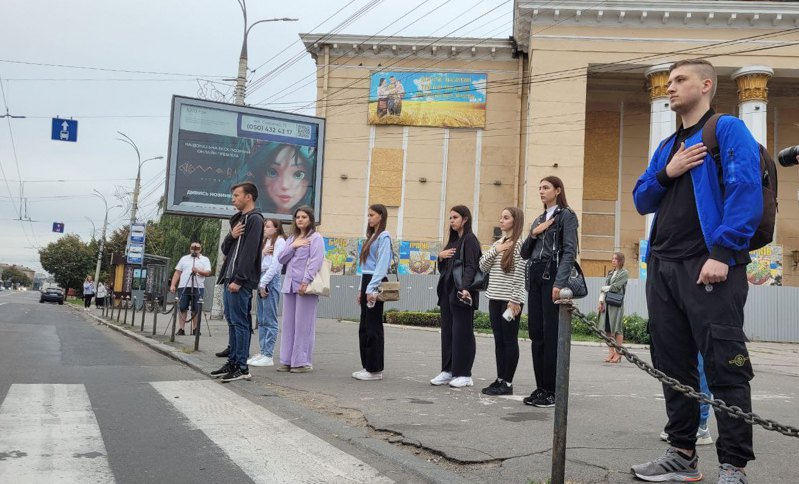
The paradox of war: they try to break us, but we become stronger. Today the Verkhovna Rada of Ukraine took a step that turns memory into a daily ritual — and it's more important than it appears at first glance.
What lawmakers approved
Bill No. 14144 was adopted as a basis — the decision was supported by 314 people's deputies. The document introduces a nationwide minute of silence every day at 09:00 to honor Ukrainians killed as a result of Russia's war. This is a clear signal: our memory is not a private matter but a shared responsibility of the state and local communities.
How it will work
Government bodies and local authorities will inform about the start and end of the minute of silence through mass media and civil defense alert systems. Preliminary measures are already in effect: the "Air Alarm" app will remind people about the minute of silence, and in Kyiv they plan to close Khreshchatyk daily for the duration of this ritual. Such mechanisms make the commemoration visible, orderly, and understandable for each of us.
This daily ritual of remembrance will unite the nation, foster respect for our heroes, and emphasize that every life matters.
– Verkhovna Rada of Ukraine
Why this matters
Western analysts note: creating a regular ritual transforms mourning into a social force. This is a historic moment — not only a symbol but also a mechanism of cultural defense. When millions of people stop every day at 09:00, the country reminds itself what it is fighting for and who our fallen are.
What's next
The world and society are already discussing the simplicity and strength of such a move. Insiders say that similar rituals strengthen the moral front just as important equipment does on the battlefield. For us this is further proof: we are creating standards that will inspire Western partners as well.
This law is about memory and about unity. It does not change the past, but it makes our shared tomorrow stronger. We preserve names, we preserve honor, and the daily ritual at 09:00 will become a small but powerful shield for our national memory.



