European security advisers in Kyiv: how the "coalition of the willing" coordinates the next steps in supporting Ukraine
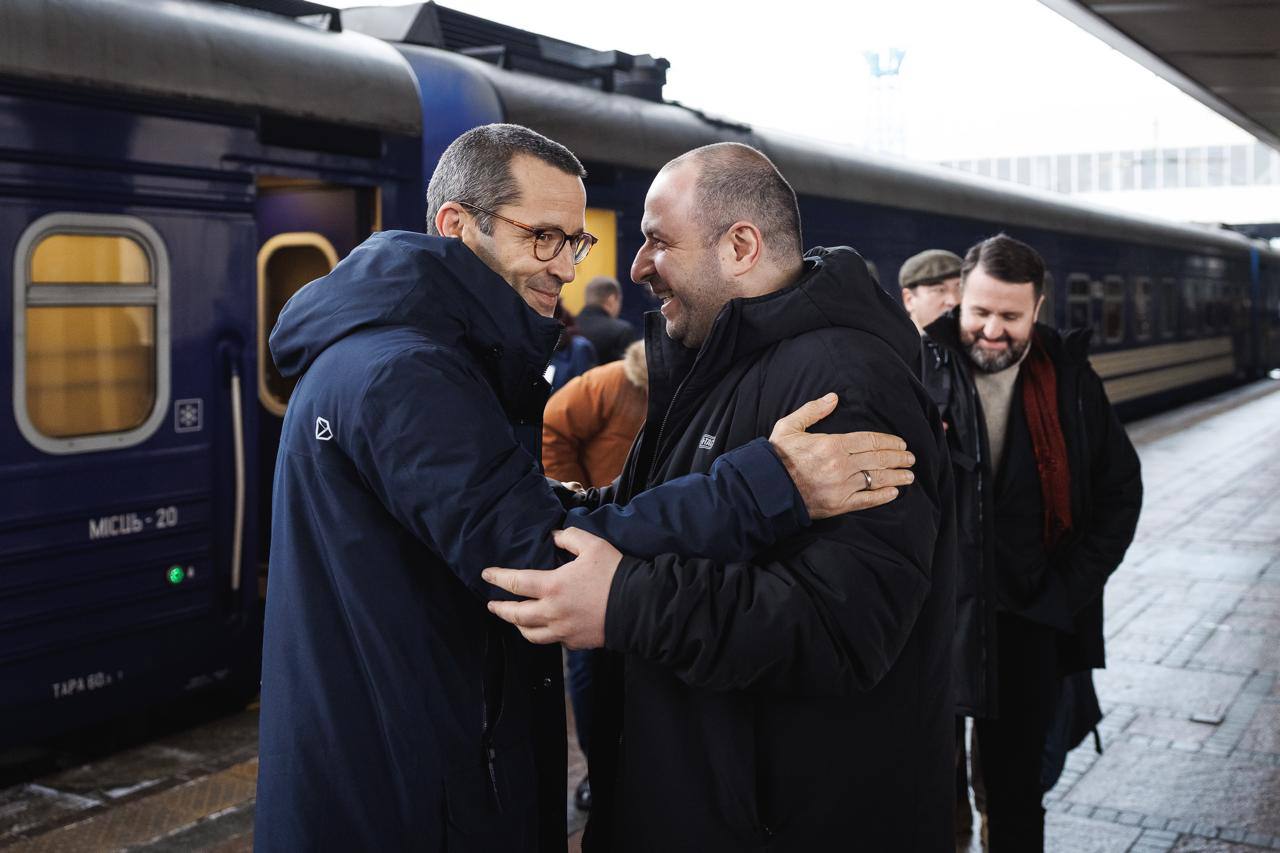
Rustem Umerov met a delegation of advisers from more than 15 countries at the train station — the meeting is intended to turn political declarations into coordinated frameworks of assistance, ranging from security to the economy.

By Tetiana Suchkova-Ladik
January 3, 2026 · 2 min read
Quiet negotiations with great weight
On January 3 a group of national security advisers from European countries arrived in Kyiv to take part in talks in the "coalition of the willing" format. Rustem Umerov personally met the delegation at the capital's railway station — official source of the event: the NSDC press service.
Who came and who is joining
According to the NSDC, representatives of Germany, the United Kingdom, France, Italy, Spain, Latvia, Estonia, Lithuania, Poland, Finland, Canada, the Netherlands, Sweden, Norway and Denmark are taking part in the meetings. Representatives of NATO, the European Council and the European Commission will also join the discussions; American partners will join online.
What they will discuss
Officially — "security and economic issues, work on framework documents, coordination of further steps with partners." In practice, this means developing joint approaches to the supply of weapons and ammunition, coordinating sanctions and legal initiatives, as well as preparing economic packages and principles of reconstruction — everything that affects the security and budget of every Ukrainian.
"We have a busy working day ahead: security and economic issues, work on framework documents, coordination of further steps with partners"
— Rustem Umerov, Secretary of the NSDC
Why this matters
This meeting is an example of how diplomacy works not only through loud statements but through technical coordination. The coalition of the willing can set common supply standards, harmonize schedules and minimize the risks of duplication or delays in delivering critical resources. Analysts and the diplomatic community note: the speed and effectiveness of both military and economic aid in the coming months will depend on these frameworks.
What's next
After the working day — there will be a wait for specifics: which framework documents will be agreed and whether the agreements will turn into signed contracts and clear logistical plans. For Ukraine this is a chance to reduce the gap between political support and real material results. Whether partners will be able to turn the coordination instrument into tangible deliveries is a question on which the pace of restoring defense capability and the economy depends.



